Category: Books

  • The Life-Changing Magic of Tidying Up

    You would not think that you need a book to learn how to tidy up. When your mother asks you to tidy your room, you tidy the room. When you think back, you had not paid enough attention to remember how you learnt to tidy the way you did. You either picked it up from here and there – mostly from your parents and then improved over the years if you paid any attention or it became worse.

    I picked up the book The Life-Changing Magic of Tidying Up: The Japanese Art of Decluttering and Organizing from the Kindle store after watching a couple of videos of it’s author, Marie Kondo. I first saw the video on Talks @ Google and two NHK videos featuring her work with two clients(#1 & #2).

    The English translation of the Japanese book is a pleasant easy read. The book takes you through all the steps in a clear and concise manner, if you want to try the method for a few days. I read the book in totem before deciding to try it out. My parents had just moved out of home and left it to me and my wife.

    After reading the book, I spent the afternoon explaining KonMarie’s whole process to my wife. We disposed a lot of clothes and began to try folding clothes as explained in the book. My wife though, kept tidying the way she always went about doing it. After a few more tries, I reverted as well. I think the book is best read by someone who actually tidies the home. It’s probably good to watch the #1 or #2 video that I pointed above to you before reading the book. Else it’s just another book read this year and you keep tidying the way you always did.


  • Interview with Ruskin Bond

    Ruskin Bond wasn’t the first book I read or the book that got me reading but after my engineering, he’s one author along with Murakami who helped me handle my solitude. Interview in the Mint by Elizabeth Kuruvilla.

    Ruskin Bond: In Love with Solitude

  • The Bestseller She Wrote

    It had the bestseller she wrotecompletely skipped my mind that Ravi Subramanium’s latest book would be out in mid-October. As soon as I saw that his latest book was available, I boug
    ht it on my Kindle and finished it in less than 3 days, as I have the other books that he has written.

    I have enjoyed his writing style from the second book that he wrote. His writing is pacy while engaging. You begin the book and with his short chapters, there is immediate reading progress that you enjoy. In these short chapters or bursts he develops the broad sketches of the outline of his story and continues in the same speed till almost the very end. Then he begins slowing down and his finer strokes make their appearance and then the string weaves through all the threads to complete a beautiful fabric of a story.

    To this, he adds a set of contemporary characters and events that makes his work easier to relate to to a contemporary audience.

    His storytelling is a way of unravelling that I can enjoy once in a while. To me, it offered a nice change in pace and subject and I thoroughly enjoyed reading Ravi Subramanium’s latest offering.

  • DROP

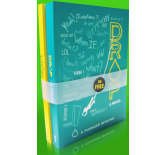
    dropOver the whole of last week I was watching a set of videos posted on YouTube of talks given by the brahmacharis of the Chinmaya Mission. This Dusshera, Dhanya and I visited the Chinmaya Mission campus in Powai, Mumbai. It was from the bookstore there that we picked up the novel, DROP. Dusshera is about dropping your negative qualities and attachments, picking up positive qualities and then fortifying it all with knowledge, as per one of the videos I watched. This was perhaps in the back of my mind as I picked up DROP.

    The book was written by a group of Chinmaya Yuvaveers and weaves a story around a journey that a bunch of young people take as they travel “within”.

    I liked the book as a whole and would definitely recommend that other people read it as well. It comes bundled with a sort of workbook that I am yet to go through.

    I think the book has a Hinduism under-current that I am not sure if the authors were trying to fight against in some stage and were trying to glorify in certain stages. Weaving together principles of Hinduism, facts and fiction is a very tight rope walk and I think that these Chinmaya Yuvaveers have done it pretty well.

    The book offers a nice parallel between the journey inwards and the outward journey one along the banks of the Ganges to it’s source.

  • To the Brink and Back

    In December, I finish 3 years working in the banking sector. I spent my teenage years reading books about the history of science. I always had an interest in understanding the reasons for why things are the way they are.

    For some time now, I have been looking for some book on the historical facts behind the Indian economy. I have been reading Mint for a year and quite a few of the columnists there made references to the significant events that happened in India in 1991. It was there that my interest in learning about 1991 was piqued.

    I first picked up the book by Gurcharan Das, India Unbound. The book, however, turned to look at the consequences of the events of 1991 and had fairly little to offer on the 1991 events themselves, where my interest lay. It was an interview in Mint with the author that got me to this book, To the Brink and Back.

    The book is by Congressman, Jairam Ramesh and the book does have a fair amount of a biased narrative. I think Ramesh is quite frank about this. The book is about the political action taken in 1991 by Dr. Narasimha Rao and Dr. Manmohan Singh to take India through a transition period.

    The first thing this book taught me was that the reforms was one in a series of reforms measures that had been carried out since 1966. To be sure, there are many books suggested for reading in this book which make quite a handsome list. These measures were seemingly not effective or did not work out. The break from the past that 1991 created seems to be visible more as we look back at it 25 years on with changes still unravelling, as though we opened a Pandora’s box. I did not see many books on the changes that 1991 wrought written by economists and am on the lookout for the same.

    The book is one of the first accounts that I have read and Ramesh does a good job of it politically. He has also been promoting the book with the political angle that one of the most revolutionary economic changes that helped India propel into the 21st century was the unshackling of the economy and asks his fellow Congressmen to wear it as a badge. The Congress, though, still requires some unshackling of its own. The book is a good read and I think Ramesh has been quite frank and eloquent in the presentation of his books. I also loved reading his footnotes and annexures which are as good a read as the book itself and hence, don’t give that a miss like you usually do in other books.


  • Book Review: Governance and the Sclerosis That has set in

    I haven’t read non-fiction as a genre for quite some time. Picking up Sidin Vadukut’s book recently re-ignited my interest in the genre. I have also been working up an interest in learning about recent Indian history. Books about this era starting from post-liberalization have now been emerging for quite some time now.

    Arun Shourie is one of the authors who has written about India’s post-liberalization era. He was also a cabinet minister in the Vajpayee government. He covers three broad areas in this book – bureaucracy, environment and immigration. He shows through examples how the thinking within the government is not directed at solving the issue at hand but in ensuring that one is not held responsible for any errors in the resolution of such issues.

    To be sure, some of these issues are complex. He also faces the same difficulty that his predecessors had in resolving the issues at hand. He tends to defend the delay caused during his own regime in the various Ministries whilst not really defending the actions taken by his predecessors in the same Ministries.

    The book, otherwise, is a wonderful collection of reflection and insight into the working and the thinking inside the Government towards the end of the twentieth century and that in transition from the license raj to liberalisation. It is also a pretty breezy read despite being a book that cites a lot of correspondence and timelines to back up his assertions and observations, which are few, short and sometimes satirical to drive the point through.

    Strangely, there were a lot of Arun Shourie interviews that got aired around the time I was reading this book. Again getting access to the government will hopefully push him to write more books that will help Indian citizens understand the issues with more clarity and depth.

  • Book Review: Dance Dance Dance by Haruki Murakami

    I just finished this book today morning. I just took a couple of hours to synthesize it all. Below is the review as I wrote on Goodreads.

    Dance Dance Dance (The Rat, #4)Dance Dance Dance by Haruki Murakami

    My rating: 4 of 5 stars

    I am forcing myself to write this. To wrap my head around what I read. This was the 10th book by Murakami that I am reading. He has an ordinariness in his writing that comes through even in his English translations. Mixed with some fantastical elements that I have witnessed in Kurt Vonnegut’s writings that I have read like Cat’s Cradle. His stories have for a fact that everyone is unique. That fact is then laced with emotions of loneliness and sometimes, helplessness.

    The Wikipedia page for Murakami tells me that this is one of his earlier work as a writer. To me, this book made more sense, perhaps because I read some of his later works. I don’t know. It also makes his some of his latest works like 1Q84 make more sense too. I am almost a fan now.

    View all my reviews

  • Book Review: The Sceptical Patriot by Sidin Vadukut

    (Posted here from Goodreads. Just in case. Although it seems more likely that the review will stay on Goodreads and vanish from here than vice versa. For posterity, perhaps. I also need to get much better at writing book reviews. I’m working on it!)

    The Sceptical Patriot: Exploring the Truths Behind the Zero and Other Indian GloriesThe Sceptical Patriot: Exploring the Truths Behind the Zero and Other Indian Glories by Sidin Vadukut

    My rating: 4 of 5 stars

    I’ve read Sidin Vadukut’s Dork books and his column in Mint, the newspaper. I don’t think he writes there and more or less jokes around. Those are fun to read. With The Sceptical Patriot, I think Sidin’s writing reaches the narrative style that shines through in some of his blog posts. The versatility of that narration has never ceased to amaze me.

    I think this book of myth busting comes around at the right time. After a decade where India was lauded for many things – its achievements, people are slowly sobering up to the fact that India is just another country with its share of issues and strengths. It is during the previous decade that people suddenly started sharing wild assertions of the greatness of India. Some true. Some false.

    Sidin does a good job of picking up a few of these assertions and applying rational thinking, researching on the Internet and reading from libraries (I love this!) and illustrating how one could apply the same technique to other facts that one reads everyday on Facebook and Whatsapp (notice how this is absent on Twitter?) if only one spent a little time. Skepticism is what India needs a little more of.

    I don’t think Sidin was trying to or reaches the superb awesomeness of Mythbusters or Phil Plait or even Bill Bryson. I hope he doesn’t. I wish he’d go off a bit and explore more genres and doesn’t stick to one. I like this wandering interest that he shows in his work.

    View all my reviews

    My favourite quote from the book?

    (It is truly remarkable how NASA has become the ‘India fact’certifying agency of choice.)

    This was said in reference to a 1985 paper written by a Rick Briggs who considered Sanskrit to be one of the few languages worth considering for use in computer programming. He was working with a company that worked as a contractor with NASA. This probably was the start of Indians looking at NASA for bolstering various ‘India facts’.

  • Book Review: Revolution Highway by Dilip Simeon

    Note: I wrote this on my earlier blog hosted as https://parallelspirals.wordpress.com. I recovered the text from the WayBack Machine. This post appeared on June 25, 2013 as per the permalink. I’m trying to collect here again all my old writings spread on various blogs.

    Some time back, I had acquired the habit of writing down reviews of the book that I had recently read. The practice lost steam as I got caught up in the desire to read more. Writing a review gives pause for consideration for a book that has passed through one’s life. It is with these thoughts that I pick up the practice again.

    A membership with the British Library in Mumbai gave me access to this book called Revolution Highway. It is written by labour historian Dilip Simeon. The book is a work of fiction that considers the 1960s and the 1970s India and the rush of ideas and idealism that flowed through India at the time. The time witnessed the sprouting of the Naxalite movement in the extreme left of the political spectrum and the Rashtriya Swayamsevak Sangh in the extreme right of the political spectrum. The book concentrates on the revolution that the Naxalite movement bred, the brief belief in the Revolution followed by disillusionment.

    I read the book in a unique juncture in my life as well. It was a moment when I heard of the left movement within Bombay in the early 1960s and 1970s. I too went through a phase of disillusionment and have now emerged with a more balanced viewpoint of politics than what I had earlier.

    Given this back drop, I found the book a fascinating read. It gives one an insightful reading of the history of the Indian Left given the world situation. It provides and reveals aspects of India’s own revolutionaries and how they get intertwined with the Revolutionaries who struggled in the pre-Independence era. Other than the world histories it has several asides that seem to stand alone and do not fully integrate with the story line. They seem like stand alone pieces of non-fiction inserted into a work of fiction. It provides some very insightful critique of the Left struggle. I especially enjoyed the criticisms leveled at the Left by Rathin, a character in the book. The interspersed bits of world history might have served as a better back drop if they were briefer.


  • On History

    In a recent public lit festSidin Vadukut announced his intention of writing a book on Indian history. In reply to an audience question, he described an Indians typical understanding of history as being one where India had this golden period, that was disrupted by the Mughals and then another smaller golden period disrupted by the British and now of being a country headed again towards a golden period. I confess that this had been my view of Indian history too.

    This changed fundamentally first when I read an article by Sanjay Subrahmanyam in the Outlook. Following this, I watched a video on YouTube video of a talk that Subrahmanyam gave. In it he outlines various perceptions that different peoples had depending on the various routes that people took to get to India. My own perception is that this influenced greatly our history. Our history is not extraordinary. It is simple and straightforward.

    With this new insight in the back of my head, I have begun re-reading Ramchandra Guha’s book India After Gandhi. The book I am looking forward to next is Ananya Vajpeyi’s The Righteous Republic. Whilst waiting for Sidin’s book, I am currently enjoying his podcast series, A New Republic, around the history of the Indian Constitution. All three play with timelines beginning with the Indian Constitution, before or after it. As we celebrate the birth anniversary of it’s architect, Dr. Babasaheb Ambedkar, it is time, perhaps to take another look at Indian history through a new glass.