Category: Geography

  • Trackside – A Collection of Railway Stories (2013)

    This book came out in March 2013. I purchased it in September 2013 on my Kindle then. I follow the author of this book on Twitter and probably learned about the book from there.

    I was in a reading rut after my son was born. I could listen to audiobooks on Audible but couldn’t pay attention when I read any book (physical or digital). I wanted to break this rut. So, I went back to my Kindle device and searched back to the first book I purchased on the Kindle. It turned out to be this book.

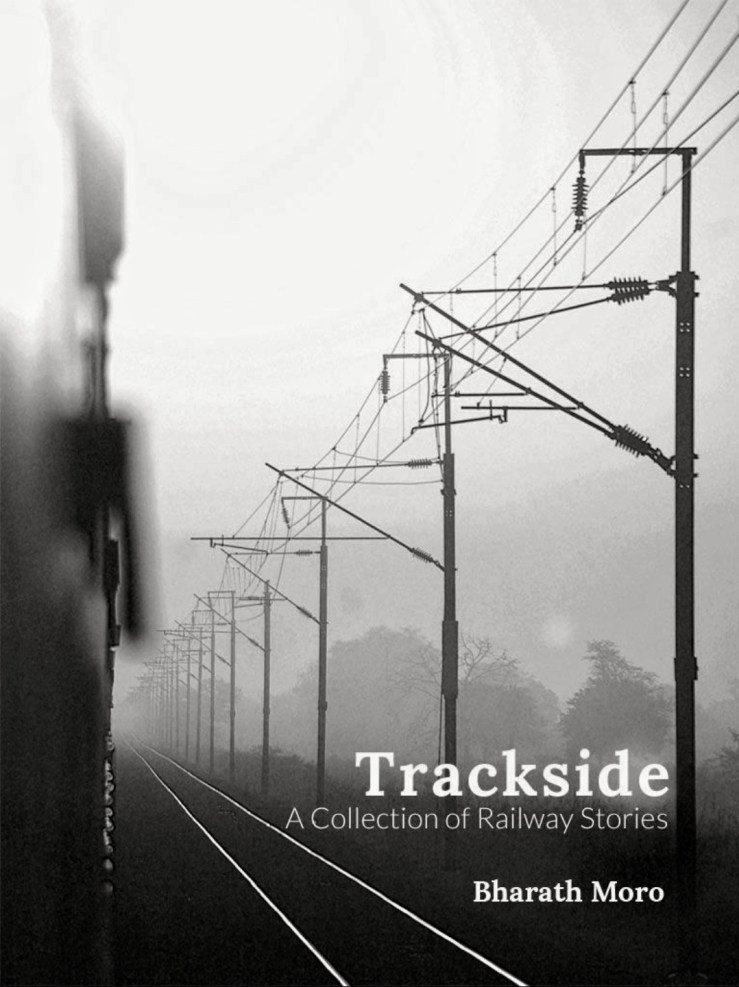
    Cover of the book, Trackside: A Collection of Railway Stories, by Bharath Moro

    I loved some of the descriptions that he uses to describe the trains and railway buildings. He gave me the vocabulary to talk about sights that I see in my travels.

    The red and cream locomotive screams into the platform with its assortment of coaches bobbing wildly.

    Chapter 1: In Favour of Koraput and Bodinayakannur

    Unlike the disjointed feeling one gets after a long flight, the railways allows for a gradual takeover. The landscape keeps changing, the houses seem different after a while, the food on the platform becomes less palatable (or the reverse) and the tea tastes better (or worse). And, by the time you arrive, you haven’t so much arrived as you have assimilated the destination.

    Chapter 1: In Favour of Koraput and Bodinayakannur

    The quaint old structures that used to house the station master’s office and booking counters have been demolished and replaced by banal, CPWD type boxy buildings, painted in a hideous urine yellow hue.

    Chapter 7 : Dispatches from the Cauvery Delta

    The book was an absorbing read and got me unstuck from my reading rut.

  • About Narayan

    When I first stumble on a blog, I love to read the about me page.

    WordPress sent me a notification when Narayan liked a post on my blog. His about me page is one of the most breath-taking page I’ve read in quite a while. I think anything more I write here is just keeping you away from reading that page.

  • Cyclone Nisarga Effect – Pune

    Yesterday, the Chief Minister of Maharashtra addressed the State about the upcoming cyclone likely to hit the coast of Maharashtra today (June 3).

    The address was in the native language, Marathi. Above is the link to the Twitter thread of the address in English.

    There has been torrential rain since 3 pm yesterday. The rain subsided late yesterday evening and was since a drizzle. We went to check that our vehicles were secure. We put the two-wheelers on the center stand.

    Today morning there has been no rain but has been particularly windy. I recorded a short video of the fast moving clouds I was noticing since today morning:

    Cyclone Nisarga Effect

    People have been used a site called Windy.com to follow the storm. Friends and relatives shared the link to the site via WhatsApp and Twitter. The site is built by a few people in the Czech Republic and seems to perform well even on mobile. I think that’s the reason why it has become quite popular.

    While we brace for the storm, I hope you stay safe too.

  • How Chembur’s Changed

    It has been a little over nine months since I returned from my old workplace in Bharuch, Gujarat. In this time, I’ve been lazy enough to not go out for my evening stroll through Chembur. Today, I finally made the time. I am totally amazed at the ongoing change in what was once a lazy eastern suburb of Mumbai.

    Walking out of Chheda Nagar, I see concrete and steel rise up into the air, the beginning of the Santacruz – Chembur Link Road. The project was scheduled to open in 2008 and recent reports suggest that it will not be open even in 2013. The World Bank funded project that is being built to enhance East to West connectivity has also marred some of the stunning views of sunsets and the visual observation of the planet Venus that I was offered on my evening walks. But, as the board says, Thank you for putting up with this inconvenience now to enjoy a better tomorrow.

    The Sky Walks are the next treat. The concept conceived by the Mumbai Metropolitan Region Development Authority (MMRDA) in 2007 as a way of de-congesting the area near the railway stations has been built over old shady roads that were my walking ground in days of college. It has also made me change my decade old walking path. To it’s credit, it’s not as shoddily designed and is built over a route that commuters are used to and helps them avoid going down and climbing up a flight of stairs each.

    The old BEST bus stand at Ambedkar Garden now has a commercial complex consisting of shops at the ground level and houses hospitals and coaching classes at the upper levels. It now becomes easier for kids stressed out at coaching classes to visit the doctor, I guess. The bus goes beyond this structure at the back of which the pass counters and conductors rest places have been built.

    The Central Avenue Road that stretches from the Chembur Railway Station to Diamond Garden on the Sion – Panvel Highway. This road, once a road sided with shade trees and independence era bungalows on both sides of the road, are now lined with high rises and buildings which houses several banks that have opened branches here.

    On the return road through Ahobila Mutt, Sandu Garden, Chembur Head Post Office down to the market, things almost remain the same. Here too, there are some changes. The hall where my first year birthday party was held stands torn down. The hall, my father jokes, would not have seen any event more important than my birthday party. Through the gap one can see the Monorail station coming up. Usually I was able to see the Fine Arts Society, where I gained training in carnatic vocal music as a kid. As I go to the base of the Chembur market bridge I see a skeleton of the Sky walk that would connect the monorail station to the railway station.

    As I walk to the corner store at Amar Mahal to grab a Coke, I am thankful for something remaining the same in the past decade. I do not believe that humans are built to witness this speed or scale of change around us. I think we need these things – parks, buildings and corner stores that are permanent so that we can sit, observe and contemplate on the fast changes that have been transforming Chembur. Whether for good or bad, now, only time will tell.
  • How the City Moves

    I watched Parag Khanna’s TED talk recently. This gave me a new way of thinking about how Mumbai has been changing recently.

    A slew of infrastructure projects now seek to connect Mumbai East to West. These include to some extent the Monorail, the Link Roads and the Metro. These connecting roads passing through the slums, the old industrial belt and through hills are getting widened.

    Mumbai is tilting on its axis – which was exceedingly North to South from the suburbs to the city. With the move of bulk of the government institutions and private offices to the Bandra Kurla Complex and to the western suburbs, the tilt seems to be getting more clearer. The middle class which worked in the town are now moving to the western suburbs. The local railway lines and the road infrastructure has not been built to take this tilt yet. Hence the traffic jams in the western suburbs and the link roads. The tilt is interesting because in the central suburbs are vast amount of industries and the thriving unofficial economy of the city that keeps the North South link oiled. It will be interesting to see what happens to these in the days to come.

  • On Reading Scholarly Papers and Mumbai’s Urban Renewal

    Reading scholarly papers is not a hot subject among youth in India. By this, I mean that nobody reads these papers “for fun”. The idea of reading scholarly works for fun seems like a strange pass-time to have. This is one of my pass-times that I let pass under the broad category of reading. This is not something that I can share on goodreads.

    Rating and reviewing scholarly papers is difficult compared to works of fiction. For one, scholarly papers are works of non-fiction. They are written more for a specific audience than for the general populace. I had a habit of reading scholarly papers in astronomy through Current Science, a publication of the Indian Academy of Sciences besides the Journal of Astronomy and Astrophysics. Once I started working in Bharuch, this was a habit I could not carry on. I replaced it instead by watching videos on YouTube on my mobile phone or listening to podcasts.

    Once back in Mumbai, I have now started reading the Economic & Political Weekly, published out of Mumbai. The May 4 edition of the Weekly has an interesting paper titled Caste and Gender in a Mumbai Resettlement Site [the paper will go behind a firewall in about 4 weeks]. The paper is by Varsha Ayyar at the School for Labour Studies in the Tata Institute of Social Sciences. The paper is principally concerning the role that gender and caste play in the rehabilitation of slums to a particular location in Lallubhai Compound, Mankhurd, Mumbai. People were moved to the spot around 2005 onwards from different parts of the city under several projects meant to improve conditions for Mumbaikars.

    The relocation is still an ongoing process. Yet, the people who have been relocated have not been given basic amenities. Despite being able to plan where these people were to be re-located, this was not done. This also does not get coverage in the local media, much less national newspapers.

    People from various localities of Mumbai and different castes were all put together in a close space without amenities and with poor infrastructure and were expected to exist here. Throughout the paper, there were allusions to slums being better than these buildings – 72 5 stories buildings. The poor infrastructure was a story in itself. Added to this were the dynamics of caste and religion which get hightened in such close quarters.

    What is interesting in this paper is that mention is made of particular NGO which goes unnamed that has been working with the Compound, forming housing societies and what I understood to be self help groups which played a role in the power politics in the Compound through supporting certain castes over others. 

    Do read the paper, which delves more into how caste and gender are shaped in the Compound caused by forced displacement. Also, found this interesting photographic work on the Lallubhai Compound on the web.

  • Visting all National Parks in India by 35

    National Parks in India are not as famous as they are in the United States, where there is a good National Park Service. However, this is not surprising given the fact that most national parks came into existence in the 1980s. They did not exist in the youth of our parents. They now exist and travelling pioneers are visiting these national parks and slowly word is spreading among the general public about their existence.

    As per Wikipedia, India has proposed 166 National Parks. Of these it had established only 96 by the year 2007. You see the hidden potential?

    In contrast, the US opened national parks in 1872.

    I wanted a challenge in my life that combined geography and the challenge for travel. I have enunciated it in my expectation of visiting all the National Parks in India before I turn 35. This is a strange claim for me to make – a person who has not visited a National Park which was less than 20 km away from me – the Borivali National Park. However, when I go to a National Park I would like to explore several things – interactions with villages and towns in the peripheries, the attitude of the current generation of Indian Forest Services officials, the flora and fauna of these parks and above all, enjoying the whole Park experience – knowing I am among the first few exploring these areas.

  • Vertical Urbanism

    This was originally posted on my blog http://pradx.posterous.com on December 25, 2011. Found this post on the Wayback Machine.

    For the last few days, I have been hunting for two things – various clubs/hang outs/societies related to Geography and how I can become a professional geographer. In my search, I found out this beauty of a website that speaks about the geography of flyovers and walkways of Mumbai. The website is an effort to document these features by Andrew Harris of the Urban Labs at the University College London.

    It contains lots of photographs and sound recordings from various parts of the city.

  • Hello World!

    This was originally posted on https://pradx.posterous.com on 24 December, 2011. Found again using the Wayback Machine.

    Last week, I re-discovered my love for geography. Here are my evolving 
    thoughts and how I hope to move from the pursuit of geography from my 
    background in mechanical engineering.

  • #pincodegeo

    This article originally appeared on my blog http://lifeofpradeep.wordpress.com. I recovered the post using Wayback Machine.

    During preparations of WikiConference India 2011, I had wanted to do an OpenStreetMap workshop. Lack of internet stopped us from doing it at the Conference venue as well.

    After the Conference, I’m now trying to learn and edit OpenStreetMap myself. As I thought of basic things that could be mapped, I was reminded about my frustration of not being able to put a different (and correct) pin code for my locality in Google MapMaker. I have stopped editing Google MapMaker since there are a few issues there that are still not being sorted out. That’s a different blog post.

    So, I started asking around on Twitter on whether there was a list of pincodes for all states of India. I found this from Gautam John via Sengupta who remembered that this data had been shared on a Googlegroup called Datameet.

    :)

    I have now uploaded the same onto Google Docs (thanks to Mehul Ved for reminding me this existed  ) where I have enabled public editing of this data so that we can geotag it (i.e. get latitude and longitude of the post office) and then perhaps even add it on the town/locality’s article on Wikipedia, where I hope the data will be useful.

    Use this short link – http://goo.gl/c9ksz – to share the data set.

    How this data can be edited and utilised is being discussed on a Google Group that I created for this purpose. Do join it if you like.

    Google docs also allows you to download the data so that you can play with it as well in a format you like. Do play with it and let us know on the Google Group.