Since writing yesterday, the cyclone missed Mumbai and passed South of the city via the town of Alibaug. The Indian Meteorological Department said that the town faced wind speeds of 100-120 kmph. There was destruction but no loss of life.
Billboards torn away by the winds associated with Cyclone Nisarga
I posted two videos on YouTube. One of them showed a billboard near our home that was torn by the winds that lashed Pune as the outer envelope of the cyclone passed through the city.
India is under Lockdown 4.0. There are more than one lakh COVID-19 positive patients in India. There are about 400 in the ward of the city where I live. The Lockdown has been extended up to May 31 in the state.
After struggling with the Lockdown through March and April, I feel that I have some more control and the processes that I laid out for work and home have started showing some benefits. That many of the Lockdown requirements were eased added to the sense of control I felt.
I got myself a desk and two chairs. We had not purchased these since I did not feel the need for a table when I was working from office. I spent most of my time at home using my mobile phone. With working from home, I was spending 8 to 10 hours on the laptop. Other than a place to keep it also helped in ergonomics and lends itself to multiple other uses.
I continued consuming news only through 3 Things and The Moving Curve. I have started adding other news through newsletter, blogs and tweets but reduced it’s consumption through May. But, I try to keep away from news of the pandemic but that has been difficult.
I started packing my work laptop after completing a day at work. I also practiced locking up the room I used for work. This gave me a sense of separation between work and home. I also tried to limit working hour whenever possible. This also helped family understand when I could be disturbed.
We upgraded the internet connection at home which has helped with multiple people using the wifi at home.
Changes outside also helped. Before May 17, government announcements frequently changed when shops would be open and when not. These notifications changed in 2-3 days. This had led to a lot of anxiety. Shops staying open for longer hours and more shops opening up since May 17 has returned a sense of certainty. Power and Internet connections have also become more reliable in May.
Jeff Bezos says – “I very frequently get the question: ‘What’s going to change in the next 10 years?’ And that is a very interesting question; it’s a very common one. I almost never get the question: ‘What’s not going to change in the next 10 years?’ And I submit to you that that second question is actually the more important of the two — because you can build a business strategy around the things that are stable in time. …[I]n our retail business, we know that customers want low prices, and I know that’s going to be true 10 years from now. They want fast delivery; they want vast selection. It’s impossible to imagine a future 10 years from now where a customer comes up and says, ‘Jeff I love Amazon; I just wish the prices were a little higher,’ [or] ‘I love Amazon; I just wish you’d deliver a little more slowly.’ Impossible. And so the effort we put into those things, spinning those things up, we know the energy we put into it today will still be paying off dividends for our customers 10 years from now. When you have something that you know is true, even over the long term, you can afford to put a lot of energy into it.”
I first heard of him on Tim Ferriss’ 5 Bullet Friday (dated April 17, 2020). This is the text that Tim adds:
Podcast episode I’m listening to —Billionaire Chamath Palihapitiya on How to Invest in This Crisis. This was sent to me by one of the better investors I know, someone who has been exceptionally successful in startups, public equities, and cryptocurrencies. Here is the description: “This is an episode of The Pomp Podcast with host Anthony Pompliano (@APompliano) and guest Chamath Palihapitiya (@chamath), the CEO of Social Capital, the Chairman of Virgin Galactic, and the owner of the Golden State Warriors. In this conversation, Chamath and Anthony discuss … where Chamath currently has capital invested, how he thinks we can solve the structural issues in health and economics, why being a patient investor will pay off, where he is looking for opportunity right now, what he thinks should happen with the NBA, and how the world is going to change after the pandemic is over.” Term that pops up in this episode: fiat currency. The term “fiat” derives from the Latin fiat (“let it be done”). For more on fiat currency as related to the US economy, I quite enjoyed Biography of the Dollar when I read it in 2009.
Tim Ferriss, 5 Bullet Friday, April 17, 2020
While following YouTube’s suggestion, I also enjoyed listening to this interview with him for the View from the Top podcast. There is a nice summary of the episode on their website.
I gather that many of his appearances on television has been controversial but he has some interesting insights into the present scenario. He also has an annual letter to his investors where he shares his thesis of the present condition.
It’s been more than a month since my last post about Working from Home. I thought this was a nice time to look back at how things went.
Information Overload
News about COVID-19 was everywhere. Television news, newspapers, podcast episodes, TikTok, Twitter, Facebook, WhatsApp group and email newsletters. It was information overload. Eventually, I limited the sources of information that I relied upon.
These are the resources that I turned to over the last one month while I tuned out all the rest to maintain my sanity.
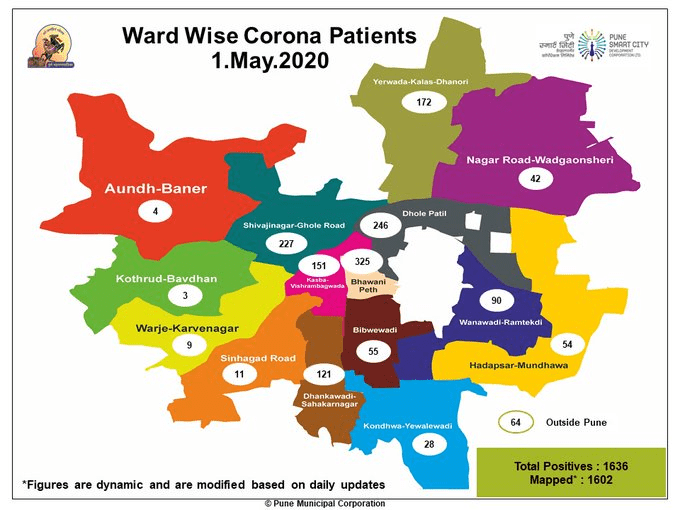
Ward-wise COVID-19 active case numbers shared by Smart Pune tweet, embedded below. Image Credit: Smart Pune.
For local information related to Pune, I followed the Smart Pune Twitter handle. This provided ward-level data about the spread of the disease – number of positive cases and death – in my ward.
There were two podcasts that I followed for COVID-19. The 3 Things podcast from the Indian Express provided news stories from across the country. It covers only a single or 3 topics at the maximum. These deep dives gave enough back ground and insight about the news stories that I slowly ended consumption of other news sources which were covering very little other than COVID-19.
A data based podcast comes from a data journalist, Rukmini S called The Moving Curve (also available on Spotify now).
I also have access to some office-related resources which are not accessible publically.
Working from Home setup
Since the last update, I have become better at separating time between home and work. I tried to setup my working time according to better internet speeds. However, I found that this affected my output and left me feeling groggy most of the time.
As time passed, the internet and power supply stabilized. This allowed me to go back to my office timings for work. When I reset this, it improved my productivity at work and happiness at home.
But, perhaps, by the time people get used to working from home it may well be time to return back to a workplace. Personally, I would welcome it even if we maintain social distancing.
For the past three weeks, I have been working from home. We are faced with a global pandemic that, as on today, has affected more than 5,00,000 people all across the globe and more than 800 people in India. My work place allowed us to work from home during the period. The period of work from home was extended after the Prime Minister of India announced a 21-day national lock down.
Before I got to work from home, schools and colleges shut down. Then IT companies in Pune asked its employees to work from home. Our fiber optic cable based internet provider faced issues for a few days but seems to have stabilized two days into the 21 day lock down. Over the last few days, there have been power outages where I had to switch to my Jio hotspot to access the Internet to continue to work.
My nearly 3 year old daughter does not understand why things are shut down. The concept of a lock down is alien to her. Her explanation for why the school is shut is that her teacher is asleep. At the rate at which the lock down is getting extended, I think her class teacher will soon compete with Kumbhakarna.
Despite having heard podcasts about working from home and having read various articles and online websites about working from home, I did not find myself prepared for this transition. Since we live in a 2 bedroom apartment, I was able to assign one bedroom for me. However, it has been getting more and more difficult to demarcate work time and home time. They have been fluid so far.
Internet speed and power outages have affected my productivity besides the usual transition time to getting used to a new setting. Focusing on work when you can hear your family members next door is difficult. I have been getting better at tuning out the noise as time passes.
A few months back, I had started listening to the Distributed podcast started by Matt Mullenweg (co-founder of WordPress, that powers this blog) that spoke of how to re-imagine the work place of the future when everyone was at home. His company, Automattic is totally distributed.
Om Malik, founder of GigaOm, wrote a piece a few days back about working from home. The article links to further resources that might help in your quest to work from home. He had started a website called WebWorkerDaily way back in 2006 to think about the distributed future of our work place.
I’ve subscribed to Ryan Holiday’s daily email newsletter, Daily Dad since I heard about it on his podcast with Peter Attia. Before this, I had struggled with answering questions related to bringing kids into such a violent world and the curbs on our freedom that they impose. In his newsletter edition on March 13, titled The Trade off is worth it (you can listen to the edition as a podcast) answered this question for me.
This is the last paragraph in the newsletter:
“Most of the freedom I had before kids,” Paul Graham wrote, “I never used. I paid for it in loneliness, but I never used it.” It’s true for you too. It’s true for all of us. We’ve paid a high price for these kids, but we have gotten—we will keep getting—so much.
The quote above is from Paul Graham’s essay on Having Kids, which is also a great read. That is a longer answer to Holiday’s concise one.
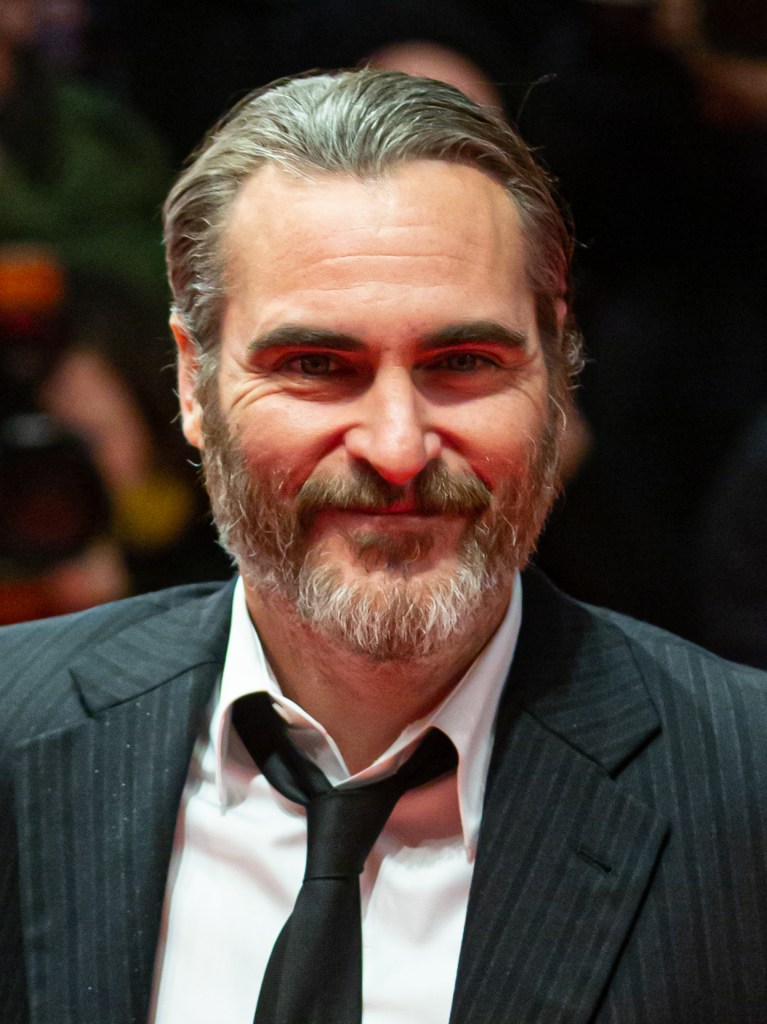
Joaquin Phoenix won the Oscar 2020 for the Actor in the Leading Role for his performance as Arthur Fleck in the Hollywood movie, JOKER! But, what I liked was this insight into the current world scenario:
I think at times we feel, or were made to feel, that we champion different causes, but for me, I see commonality. I think, whether we’re talking about gender inequality or racism or queer rights or indigenous rights or animal rights, we’re talking about the fight against injustice. We’re talking about the fight against the belief that one nation, one people, one race, one gender or one species has the right to dominate, control and use and exploit another with impunity.
But human beings, at our best, are so inventive and creative and ingenious, and I think that when we use love and compassion as our guiding principles, we can create, develop and implement systems of change that are beneficial to all sentient beings and to the environment.
I first heard of coffee brewers when I read Mehul’s Twitter update that he was participating in a brewing competition and came in at no 3. Coffee brewing is basically the process of making coffee from the stage of coffee beans to a concoction that you can consume.
Today, we met at The Fat Labrador, a cafe situated in Bavdhan, Pune.
Coffee devices and brewing paraphernalia that we used today. Image Credit: Pradeep Mohandas
This is the second meetup of Pune’s Coffee Brewers Club. We started out with discussing coffee recipes that some of the brewers had arrived at ostensibly after a lot of experimentation with a lot of coffee devices. There was a lot of talk of mgs of coffee, minute-second readings of the time they allowed it to brew and broadly methods by which coffee was brewed (immersion and pour over).
After that introduction, Mehul spoke of the factors that affected a good coffee output: temperature, pressure and time. We then got to try both the methods using a pour over method and an Aeropress.
We tried tasting different beans that Mehul had carried with him from Mumbai. After a few rounds of this, we got to try out an espresso from a hand pressed espresso machine.
Mehul ended the session on how us newcomers could begin getting a glimpse into the world of coffee brewing. He suggested getting the coffee that is freshly roasted (3-4 days old roasted coffee). I was assured that Indian roasters do not usually sell stale coffee. This is to be consumed over the period of next 3-4 weeks for best effect.
He suggested beginning with a simple process of coffee brewing. Get fresh ground coffee put it in a cup of boiling water, let it brew for about 3-4 minutes and then consume. The next step would be to have an aeropress to make the coffee. Aeropress is considered a very versatile, cheap and easy to carry device that does most of the functions that a coffee brewer is looking at and hence quite highly recommended. It comes at a price range of about three to four thousand.
The next step up is getting a simple grinder. Mehul had got his off AliExpress for about INR 900. When we reach a place where we can’t turn the grinder anymore, we reach the zero setting. As we turn, the grinder churns out coarser coffee. If you plan to go ahead, you can invest in better grinders as they turn out more consistent and get control over the size of the coarseness of the coffee beans. Prefer manual over electronics.
The next investment is in a measuring pad. The cheapest one is off Amazon that costs INR 200-300. This helps to measure the amount of coffee beans you take. This too gets complicated with higher price where a timer gets added on which helps you measure brewing time.
The next investment suggested for your upward spiral into the world of coffee brewing is a goose-neck kettle. This is useful to control the way in which water is poured on the ground coffee beans. These comes with insertable thermometers that helps you control the temperature of water that is used for your coffee.
I am not sure whether I am going to personally follow through with coffee brewing beyond say South Indian filter coffee. However, I’ll let these notes remain for future reference. I also got hold of ground filter coffee powder from the Fat Labrador that I will try out. I had a good filter coffee and Bombay Masala sandwich after the meetup.
Great to meet Mehul after a long time and nice to meet fellow coffee enthusiasts in a new city. If you find any errors in the notes above, they are most likely mine, and request you to leave them in the comment section to help me fix them.
(added later) Mehul shared links on the Pune CBC WhatsApp group for some of the products he recommended. Sharing here for the sense of completion:


 Parallel Spirals
