I recently discovered the beautiful poetry of Tukaram, one of the Poet Saints of Maharashtra. This poetry resonates deeply with me, especially living in the Lohegaon area of Pune.
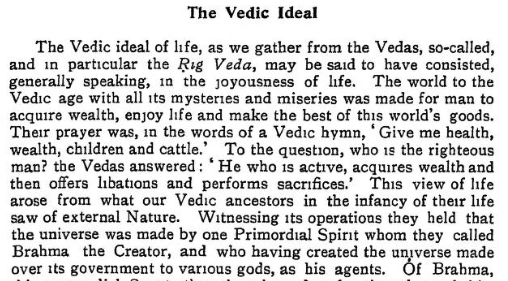
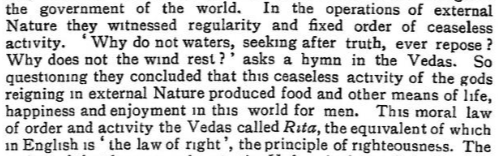
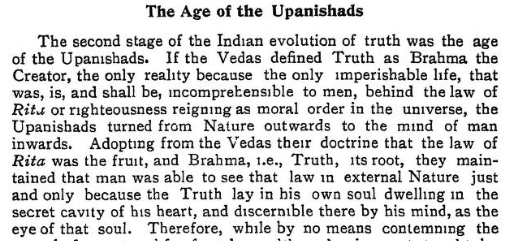
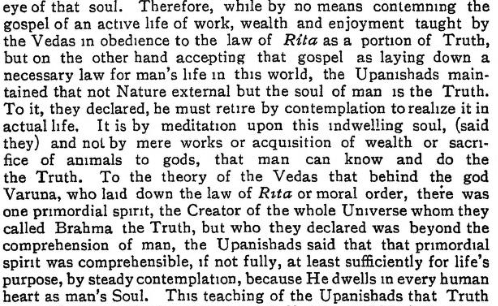
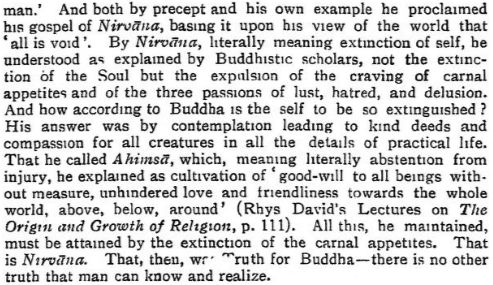
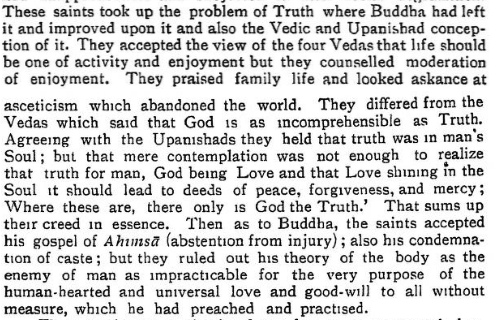
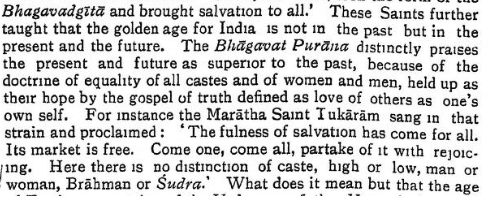
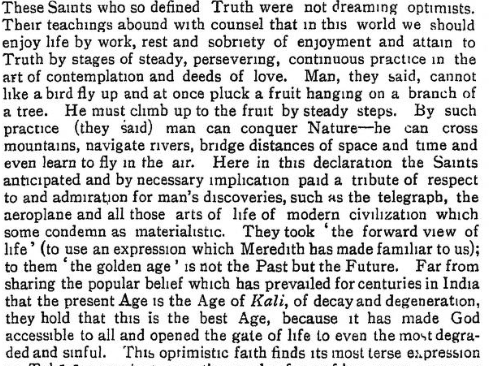
I found a book titled, Life and Teachings of Tukaram on the Internet Archive. The book is written by J Nelson Fraser and Rev. J F Edwards. The book contains a brilliant Foreward by Dr. Sir Narayan G. Chandavarkar (I want to learn more about him). While I suggest that you read the Foreword in full, I have pasted some of my favourite excerpts from the Foreword so that it may entice you to read the Foreword in full.
This Foreword presented a much better introduction to the School of Devotion than that I read in the book on Indian Philosophy. It provides a much better perspective and understanding about the School when set in it’s historical context.
You can read this blog on your favorite RSS feed reader or via e-mail by subscribing below.
The wari passed through Pune last week, just like it did every month. As always, it disrupted life in the city but people have been used to it for centuries. The wari reminds me to look up about the lives and teachings of the saints of Maharashtra.
A surprisingly large number of these saints had their samadhi in places close to Pune. This added to my fascination to learn about them and to understand their teachings. When we had visited our pediatrician last week, he had mentioned that my daughter’s school name was a name for Sant Tukaram, part of the Warkari tradition. We get similar reminders about the existence of these saints in various parts of Pune.
Mani Rao wrote in Scroll about a chat that she had with Priya Sarukkai Chabria, the editor of the e-journal, Poetry at Sangam, which was going to shut after beginning in 2013. Among the various questions was about the fact that the e-journal contained English translations present in the e-journal from various Indian languages, besides poetry in the English language.
I did not find mention of poems in Malayalam but did find poems in Marathi. Poetry at Sangam had English translations of poetry in Marathi by Anjali Purohit, Jerry Pinto, and Neela Bhagwat. The translation of a riddle in the Bharoods of Sant Eknath (1533-1599) specifically caught my eye. And thereafter, I read each one of them.
Contradiction is the sign of Natha’s home Where the water is parched with thirst.
The pot goes in, surrounded by water Water submerges in water.
Today I saw the strangest sight: Water flowing backwards from the eves to the ridge. The farmer sowed the field and The field swallowed up the guard.
The cooking pot was eaten and the rice thrown away God slaughtered in sacrifice before the goat.
Says Eka, Janardan’s path is antithetical He that understands this is a true follower.
I am also trying to place them in my understanding of Indian philosophy and the various philosophical darsanas. As I understand them, these are songs called abhangs which explain Vedantic philosophy in the format of songs made famous by the bhakti saints. Vedanta seems to have moved from explanations through debate with other philosophical systems to explanations in terms of analogies to this form.
It was after listening to the talks of Swami Boddhananda when I wondered if Hinduism is to be practiced in a particular lineage. That is, if to practice Hinduism, one has to select from among the darsanas.
It was then that I rediscovered Devdutt Pattanaik when he was interviewed in Hindi by Ranveer Allahbadia.
The screenshot is unfortunate and misleading. Pattanaik actually is against Hindutva and is often trolled for his statements. He goes on, nevertheless. This video led me to his channel where I watched many of his videos. This was followed by many videos with him suggested by the YouTube algorithm. He does not claim to be a guru nor does he accept any guru. He says that he consumes information and then write books and then you can take from it what you want.
I enjoy listening to and reading his 21st century interpretation of an ancient idea or way of life. The notes below are not only from the video above. These notes also get information from other videos of his posted on his channel.
He says Western scholars interpreted myths as untrue stories in the 19th century. The present thinking is trying to put myths into the realm of history but he would like myths to be interpreted in the 21st centuries as believed stories. These stories are believed to be true. It’s characters are alive not just in history but are alive today and will be alive in the future.
In one particular video, he mentions that Hinduism is to be practiced just like having a thali. A little bit of karma yoga, a little bit of njana yoga and a little bit of bhakti yog mixed in a proportion as per your liking. No one can say that the way you practice is wrong, just the way no one criticizes you for the way you eat.
He says Hindu thinking is cyclical. Hence, the concept of karma. Abrahamic traditions have the concept of justice because their thinking is linear. So, things can move from injustice to justice. Hindu thinking believes things are as they were, will be as they are and will remain as they are. As they say, some things just don’t change and only the characters change. Hence Indian gods smile when injustices occur because they are compassionate to the doer who is performing these actions trapped by his own ego and misunderstanding of his situation. The concept of karma necessitates belief in the concept of rebirths.
The other thinking he argues against is the difference between Hinduism and Buddhism. Buddhism looks at the world as filled with suffering caused by desire. Hence, they call for a rejection of desire. He says that this is a rejection of the real for the theoretical. He says Hinduism looks at suffering akin to hunger. So, the solutions to suffering is not rejection but trying to feed the hunger.
I had read from his book, Myth/Mithya about yajna being an exchange. His thinking on this has solidified now. He says the translation of jajna as sacrifice by Western scholars was due to their limited understanding. Hinduism sees yajna as an exchange. We give to get (as against give and take). The West sees exchange as a sort of commercialization of a spiritual practice. Hence, they translated as sacrifice which is giving without expecting anything in exchange. But, really, if we do not get, how can we give? We take from nature and give to others, as if we are doing something noble. The equation changes in the yajna where we give to get.
He has worked with corporations like Future Group and Reliance. He claims that businesses in India must not look to scale but to diversify. Allow each person to have a unique experience just like Hinduism offers. He says this diversity will bring profits in India. He says that no country can manage diversity the way India can. Europe and the US finds it challenging even with a few refugees.
Ranveer, in the video above, gets really good guests but asks really poor questions. He asked the standard how India can become a country like China and Korea. Pattanaik says that China can only live within walls. He quotes the Great Wall of China and Great Firewall of China as examples. China grows on obedience and conformity. Such a process would not work in India. We are also hence less likely to give up our freedom in conformity to a King or a ruler. He says that the Chinese do not understand India. He says one of the words used to describe India is luan which stands for chaos.
We are trying to order this chaos believing that everything cannot be many and needs to be one. We are trying to move from pantheism to monotheism because we think the West is better than us. Pattanaik says that China adopted Taoism and Confucianism, and rejected Western thought. India on the other hand adopted Western thought and rejected Indian thought.
I was reading the Wikipedia page on Hinduism when a link in the section, “External Links” caught my eye. The link lead to an article on Advaita Vedanta Hinduism by Dr. Sangeetha Menon. While I did not read that post, I scrolled down to see that Dr. Menon was from the National Institute for Advanced Sciences, where she leads the NIAS Consciousness Studies Programme.
Scrolling down on her homepage, I found a reference to the Sambodh Foundation and her spiritual guru, Swami Bodhananda. He is from the lineage of Advaita Vedanta. I reached the website of the Sambodh Foundation. It was here under the “Lectures” tab that I found a programme he had done in 2016 in association with Ahmedabad Management Association (AMA). AMA has a centre called Mamta, a Centre for Indian Wisdom for Management. It was Mamta that had organised this event.
The event sought to cover the entire spectrum of Indian philosophy including Buddhism and Jainism. The talk linked above was on Samkhya. I had last year written about my interest in Samkhya.
This post records how I found this video and some of the notes that I took from the video, for my reference. Once you see this video, I am sure you can find the rest of the series on the Sambodh Foundation’s YouTube channel.
Notes from the video:
Nyaya-Vaisheshika is pluralistic – Samkhya was searching for 1.
Kapila is the founder.
3 references available
15th century – Samkhya Sutras (gleamed from other commentaries)
Tattva-samasa – probably a Buddhist work
5th century – Eswara Krishna’s Samkhya Karika (poem) – most authentic.
Important to understand for thought leaders from India today.
2 tattvas (principles) – Prakriti (matter) and Purusha (consciousness)
Samkhyans believed that these two could not be further sub-divided. Their inter-play produces our world.
Swami comments that the artificial intillegence we produce will be without a purusha
24 tattvas – unfoldment of Prakriti
You have to learn to side-step his science references which are not full understanding of a subject or may feel out-dated. Some of his insights are interesting. He also continually almost says Patanjali instead of Samkhyans/Kapila.
In 2010, I wrote a blog post called Going back to the temple. A recent reading of the ISKCON’s version of Bhagvad Gita As It Is, felt like a push towards a non-questioning worship of Lord Krishna and it’s interpretation of the Gita felt like an effort to turn people towards the ISKCON movement rather than to enlighten people about the Gita itself.
I have also been reading the Stoics lately. I have read about them in Tim Ferriss’ videos on YouTube, Ryan Holiday’s newsletter called the Daily Stoic, a book on the Stoic Philosophy – William Irvine’s book on Stoicism.
These made me wonder about Indian systems of philosophy. This led me to this wonderful Wikipedia page. This further led me to Samkhya. Many have called Samkhya the philosophical backing for Yoga.
Like most Indian philosophical schools, the original works are lost. These seem to have either been not taken forward as an oral tradition at some point. There is likely to have been misinterpretations as these have passed down centuries.
I was comparatively reading two translations of Samkhya Karika, which survived since there was a Chinese translation from the 6th century that survived. The two are –
The second book led me to this website of Brahmrishi Vishvatma Bawra. The site does not appear to have been updated since 2015.
It led me to look for modern Samkhya teachers. This led to a book called Modern Samkhya by D E Osto
This is where I am at learning about a rationalist and atheistic school of Hindu thought. Since, today is Buddha Pournima, I thought linking to this blog post which compares the study of Buddhism and Samkhya might be a good addition. The parallels are striking.
As D E Osto writes on his website about the book:
The ancient philosophy of Sāṃkhya can be applied to modern life in a number of valuable ways. Rather than becoming overly concerned with the metaphysics of the system, Sāṃkhya can be seen as a psychological tool to overcome suffering. Through rigorous philosophical and psychological analysis, a person can learn to detach or disassociate from the psychophysical entity, and realize witness consciousness or what I refer to as the transcendental subject.
Philosopher Alain de Botton’s School of Life has a chapter on making New Year resolutions. They say it is important to make these resolution to improve ourselves as human beings but we need to be empathetic with ourselves. Hence, we should not be aiming to write good New Year resolutions but just good enough New Year resolutions.
You can read about good enough New Year resolutions on the School of Life website here.
Their newsletter had a three step process on writing on these resolutions which I did not find on their website. Hence, putting it here for reference:
First, write your list of resolutions in the usual way.
1. I will quit drinking 2. I will learn the guitar 3. I will get a 5k pay rise at work
Next, rather than thinking about the end result, try to distil the motivating value that lies behind them.
1. Prioritising my health 2. Making time for creative pursuits 3. Gaining recognition for my efforts at work
Finally, working solely from this value, applying a little strategic pessimism, set yourself a less lofty, more achievable goal to strive for.
1. I will aim not to drink 1 night each week 2. I will set aside 15 minutes every other day to do something creative 3. I will try to demonstrate added value in my work
Hope that helps you make good (enough) resolutions this New Year.
I just took advantage of the fact that I was down with a fever-cough-cold combination to listen to Time Machine with Neelesh Misra. I stumbled on to the show while looking for something to listen to whilst lying bored in bed.
Mystical retelling of the Mahabharata and Ramayana like those of Ashok Banker’s Prince of Ayodhya and Ten Kings are finding favour with a growing audience, it is sometimes lovely to hear these mythic story in their original. Neelesh Misra narrates stories written by members of his writer’s group called Mandali in this series on Saavn. The story telling is compelling with sound effects that we would have imagined as kids listening to the tale from our grandmothers lending the dramatic touch. Misra made me feel that in losing the art of storytelling, we have lost something significant in our busy life.
I shared it both with my wife and my brother and thought I should share it with you as well. If reading is not your thing, maybe listening to these stories might bring back fond memories.
Towards the end of 2015, I slowly began to loose interest in reading religious texts. They seemed repetitive to the extent I began to wonder that if the texts were so similar, what was there to fight about. D introduced me to Sandeep Maheshwari, an entrepreneur from Delhi who gave talks inspiring students. The first video of Sandeep that I watched was “Last Life-Changing Seminar” on YouTube.
Till then the only things I used to watch on YouTube are TED talks and Talks at Google. The Life-Changing Seminar was the first Hindi video that I heard from start to end. The full hour or so.
Slowly, Sandeep’s videos started to move towards the spiritual. This started, in my opinion with a how-to video on basic meditation. He understood that not everyone was interested in the spiritual and hence started a separate channel on YouTube for his spiritual stuff. This is the channel that interests me. His inspirational video and videos related to personal excellence continue. The first few times I watched the spiritual videos, I spent them trying to pin down what teaching he followed. I wanted to categorise them so that I could then read the books myself.
While I am still getting the hang of the basic meditation video through daily practice, I have continued watching his videos on his spirituality channel. Slowly, I concentrated more on what he was saying than trying to classify his talk. His spiritual talk, also in Hindi, seek to clarify and are linked to examples befitting the twenty first century.
These talks helped revive my own spiritual interest, helped clear my understanding and understand some things much better in Hindi than while reading some texts in English.


 Parallel Spirals