Parallel Spirals

Standing on the shores of space-time…

Blog

  • Remote sensing in India

    I wrote an article for The Wire on India’s remote sensing programme, that got published today.

    While writing the article I discovered the orphaned Wikipedia page that was once updated with launches of Indian remote sensing satellites. The article had not been updated for a very long time. The focus now seems to be on the List of Indian satellites launched by the decade. Working on the article helped me get back into Wikipedia editing and helped me discover one of the points that I raised in the article.

    ,
  • Shared: The enemy of the Free Market

    Seth Godin had an interesting podcast on the enemy of the free market. He says that capitalism is the enemy of the free market. He discusses how he comes to that conclusion, provides examples and discusses how Free Market can escape from it’s enemy.

    This has been an important learning for my own economic learning that has gone from supporting communism at age 17 to now the free markets at age 33.

  • Share: Reliance Jio Tariffs Seem Stupid

    Karthik S writes about Jio’s intention of charging it’s customers for a call to another network. I agree with Karthik’s solution that there are better ways to charge the customer. The hassle may have me move operators.

  • Share: Review: ‘Salam – The First ****** Nobel Laureate’ (2018)

    VM has been prolifically blogging the past few days. In this piece, he reviews the book about Pakistan’s first Nobel laureate and physicist, Abdus Salam. The book traces his work as he fumbles to make a mark in Pakistan’s history and is denied it because of his religious identity. I love VM’s observation on how he could have been Pakistan’s Abdul Kalam.

  • Share: Marc Benioff on Why We Need New Capitalism

    Om Malik links to an editorial in The New York Times by Marc Benioff calling for a more fair, equal and sustainable capitalism. He also cites pieces by Ray Dalio and Kazuo Ishiguro.

  • Cansats

    Today, we see many engineering colleges that are keen to work on a cubesat or a micro satellite project. However, what happens practically is that components are obtained Commercial off the shelf (COTS). This means that when working on the project, you get exposure to the project at a systems level and understanding how things work with each other but not really working too much on testing the limits of the payload.

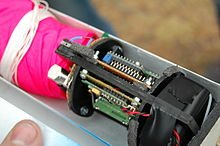
    Image: Internal mechanism of a cansat

    The payload is the heart of any project. Everything else is just effort taken to take the payload to a destination. If you want to develop your skills regarding developing payloads in very cramped environments, cansats may give you much more challenging problems. In this post, I am exploring the world of cansats.

    Cansats carry payloads inside a Coca-Cola can. It can be a can of any other soft drink too. Today, we get cans of varying types and I think it would be more interesting to test these before or while working on your project. A cansat lets you think outside the box, no can. It also lets you work within restrictions.

    Most of the payloads for cansats look at measuring temperature, altitude, attitude, pressure or a combination of these. You could also check for more complex things like chemical composition as well but the complexity of the payload goes up. These deliver scientific data from your payload. These payloads make sense if you belong to a science department.

    There are engineering experiments you can do with cansats as well. You could carry payloads that work on attitude control as well. These try to keep the can pointed straight up as they descend. You could design ways to store and deploy parachutes to slow down the cansat as it comes down. This increases the time for which the payload remains active and collects data. At the end, you could devise ways on how to find the cansat on the ground using things like light or radio beacons. These make sense if you belong to an engineering college or department.

    The question is – how do you launch cansats? It could be using a model rocket, trace a parabolic path and land somewhere. There could be other innovative launching methods as well, within the boundaries of safety. You could drop them from the top of a skyscraper or just a building. If you can get your hands on a drone, maybe launch it from the top of a drone. If you have access to a small airplane, maybe drop them from the window of a small airplane. You could drop one down from the top of a telephone tower. TIFR in Hyderabad has a balloon facility that you could use or piggyback on. In launches safety is an important consideration. Alert people about what you are going to do. Better safe than sorry.

  • The God Who Loved Motorbikes (2019)

    Cover of The God Who Loved Motorbikes

    I picked up the book written by Murali K Menon after seeing that the book was launched by John Abraham on September 25. The book is a Juggernaut publication and I saw that the book was available at a low cost on the day of the launch. Hence, I picked it up without giving a second thought.

    The book takes on a usual motorcycle enthusiast story and stretches it into the realm beyond time and space. The enthusiast in this case is one of the small shrine gods that dot the landscape of Kollengode in Kerala. The story revolves around how the god, KK Swamy, follows his dreams of riding several motorcycles. The premise makes sense at some level. However, things get a little hazy here while considering the plot.

    The story then hops several steps and we enter another story. The storyline begins quite naturally but then gets stranger and weirder as time passes. Then, things get so weird that I paused reading to think that the story has gone from a motorcycle story to a sci-fi genre. There are a few plot twists but none that surprise you too much. There is a lot going on, action wise but they are mostly just moving things forward.

    When the story ends, there are many things left hanging. The plot fails to tie things up at the end. There are many loose ends. The story takes off in so many directions that I wonder what the author was thinking about while developing the plot of the story.

    You could consider picking up the book to give it a read if you love this genre of motorcycle storytelling and sci-fi. It was a good way to while away time but at the end you are left asking if reading through it was a worthy investment of your time or not.

  • Let’s Talk Money (2018) – Monika Halan

    In 2015, I discovered The Dave Ramsey Show on YouTube while trying to figure out how not to live pay cheque to pay cheque. I did not follow his plan, called the Baby Steps, because I thought it did not apply to the Indian condition. There was no 401k tax free investing in mutual funds, no 329B to invest in your kid’s education, no Roth IRA, no good expense tracking or budgeting apps.

    However, the principles were the same. I believed that my income freed up from debt would be the no 1 wealth building tool. I believed debt was bad and broke marriages. I believed that finance was 80% habits and just 20% head knowledge. That did not stop me from incurring debt, though. My budgeting system broke frequently and I didn’t have 100% faith in the Dave Ramsey plan because at the back of my mind I kept thinking that his system would work only in the USA and not in India. Also, the program had a whole ecosystem of people involved – books you could buy, offline courses in churches, a whole spiritual dimension, a radio talk show for constant reinforcement and web resources to help in your struggle with yourself.

    When I searched for a similar programme in India, I stumbled onto Bloomberg UTV’s Smart Money programme’s YouTube version. Here she spoke of stuff that we were very familiar with in India like gold, real estate, PPF, ELSS, mutual funds, endowment insurance policies, ULIP policies, etc. Like Dave Ramsey, she suggested term life insurance only, mutual funds for building long term wealth and a dislike for debt. A Google search told me that she had written a book way back in 2005 called the Seven Steps to Financial Freedom. The book was hard to get and I could eventually manage only a physical copy of the book.

    So, when she announced her new book was out in July 2018, I bought the book immediately. July turned out to be a month for a lot of changes. I got a promotion at my old job and moved from an urban locality to a rural locality. While I read the book there was no coherence in my strategy in arranging my financial life. I felt the book lacked a coherent strategy of moving from a place where one was to a place where the book wanted us to be. It was good for a person arranging his finances for the first time.

    The financial advice in the book is simple in substance but difficult to implement – get term life insurance, get medical insurance for you and your family other than what you get at your workplace, have 3 bank accounts for income, spending and investing, invest in mutual funds of various kinds as per your goals (index fund if you don’t want to go through the hassle), invest in PPF, PF, ELSS and NPS for tax savings and have a will. The details are in the book.

    Despite being in banking for six and a half years, I felt I did not have a good grasp of financial concepts and even clarify certain concepts. This book helped me with the same. I certainly recommend this book to everyone who wants to put their financial house in order. I am currently in the process of applying Dave Ramsey’s Baby Steps and walking through those using the concepts that I learnt from Let’s Talk Money.

  • Jack & Jill

    [This story is the fleshed out version of the outline I created at the STC Pune’s Storytelling lesson. I presented a short version of this to the audience there as part of one of the sessions. – Pradeep]

    Jack had just finished his morning run. He was listening to a podcast on childhood memories. Something they said had struck a chord in him. They were discussing how entertainment had moved from video parlours and circuses to Netflix and TikTok. They were nostalgic about the old times.

    The interviewer had asked if circuses could still be experienced. The interviewee had answered yes. But, he had said something more important. One of the last travelling circuses in America had just moved to his hometown and would be performing in his home town. He had left his home town when he was 18. He was now 32.

    He showered and then cycled to work. He walked into his office mechanically. Swipe in, security check, took the elevator to the seventh floor, swiped in to his office, went to the coffee machine and then sat at his terminal. He powered up his terminal and the first thing he rechecked was the route to his hometown. Then, he sent an email to his boss. His first paid vacation in three years. One month long.

    He didn’t wait for the day to get over. He rode into his home town that afternoon and reached on the morning after. He stayed at a motel overnight.

    As he drove in to his hometown, only one word came to his mind. Desolate. The town had old unoccupied houses, overgrown lawns, no kids playing in the playground and the playground itself was desolate.  There were only a couple of shops on Main Street that were open. They too had seen better days. It had been so long that no one recognised him. He passed by his old home and saw that the new occupants had done little to keep up the look. The weeds were taking over his old house and the swing set in the garden out front was rusted and broken.

    He pulled into the pump and walked into the store. He asked if there was a place to crash for a few days. The owner looked up. He said he had a place upstairs. It would be basic but had a bathroom and toilet attached and a bed. Jack said that would be enough.  In the evening he had a basic sandwich and was driving around town.

    The town once supplied auto peripherals and had three or four industries to some of the big auto companies in Detroit. They had a coal mine and a thermal power plant. The thermal power plant was the only one that existed now and provided some sort of employment for the people there. The managers all lived 30 miles out in a new suburb that the company was building. There were global warming protesters at the gate.

    He saw that the circus was pitched on the outskirts of town. He enquired when the next show would be. The girl at the ticket counter told him it would open this Friday. He went back to Main Street and went to a coffee shop.

    There was a power cut. Despite having a power plant in their background, the town was facing power cuts. In the dark, when he looked out of the window, the only lights he saw were at the circus in the distance. It probably ran on a generator. The huge Circus sign was on top of the tent. All around, there were parked campers. The campers were home for animals and performers. They too would soon be out of a job because the circus owner was planning to shut down the circus after this tour through the American hinterland. People didn’t come to a circus anymore. There were always better tricks on the internet. Setting up the circus in any town was too much of a hassle nowadays. Permits, permissions, local laws, angry neighbours, etc.

    On Friday evening, Jack went to the circus. He was amazed to see a full parking lot. There were people who had come in from the company and from the towns nearby. When he got to his seat, the circus was full. There were mostly adults with very few kids in the circus. He got some pop corn, sandwich and a Diet Coke. He was enjoying the performance. As he was drinking, he got a call of nature.

    He moved out of his row and took the closest exit out. There were no signs for where the toilet was. He wondered if there was one. A feeling of concern arose on his face. If he had to go to town to get to reach a toilet, that was a 3 mile drive. That would mean he might miss the rest of the show. There had to be a toilet here somewhere. It was then he saw her. She seemed equally concerned.

    “Do you know where the restrooms are?” she asked him.

    “I’m looking for them as well,” he answered.

    Just then he spotted a bored security guard walking along the periphery of the circus on his rounds. He asked for directions and was relieved to hear that there was one close by. Yes, the ladies room was also there. He signalled for her to follow him. They rushed to the rest rooms and each went to the respective rest rooms. It provided very basic facilities but at the time it was a god sent.

    After relieving himself, he combed his hair, tucked in his shirt properly and washed his hands and face properly. He made sure his shoes were knotted and ironed out the crease on his jeans with his hands. He then gave himself a general look over. He got a tissue and wiped his hands clean.

    In the ladies room, she was giving her make up the final touches and making sure she looked good.

    They both stepped out of the rest room at the same time and came face to face. Both looked at each other for a long time.

    “Enjoy the circus,” he asked.

    “That’s why I’m here,” she said.

    “I’m Jack,” he said.

    “I’m Jill,” she said and laughed. He knew then that he loved her.

    After the circus was over, they went to a coffee shop nearby. As they spoke to each other, they realised just how much they had in common.  They both loved the Big City. They had grown up in opposite sides of the same town. Both had moved to the Big City for employment and lived just blocks away from each other. He was a technical writer in a boutique engineering services firm. She was a freelance features writer. He could see they shared a special chemistry. At the end of the conversation, Jack asked, “Will you marry me?”

    “Yes”, said Jill.

  • Storytelling by Hemant Baliwala

    Society for Technical Communication Pune arranged for a learning session on Storytelling by Hemant Baliwala on August 14, 2019 . I attended the session hoping this would help me improve my blogging skills a bit.

    The first session had all of us (about 37 of us) introduce ourselves with our name, favourite food, favourite place, happiest moment of our life and the saddest moment of our life. 

    While I shared the above information openly, the second session took my saddest moment and tore it apart. In Hemant’s defence, he asked for my permission on whether he could take this apart publicly in class. He also said that he would also try and help me to find closure on this life event. People in the room were encouraged to see the moment through various lens (sarcastic, best case or positive scenarios, negative scenarios like imagining a dead man as a bad man etc). The idea was to openly map everything about the event in details unbiased or with little of my own bias of this experience using something akin to a mind-map.

    I did not know while agreeing to this that I would be submitting myself to relive the event through such excruciating detail. While for others this was merely an event, for me it was a lived experience. They were trying to come up with all the factors that led up to the event as a story. Hemant asked us to present the story as is without judgement. He said the audience would judge and that we need not judge on behalf of the audience. I can’t say this gave me closure. It disturbed me a bit and took me a nice lunch in the company of friends to find my balance again.

    Answers I gave from the first and third session of the Learning Session on Storytelling. Image: Pradeep Mohandas

    The third session used device prompts. We were divided into teams of six. We were given photographs as device prompts. We were given two photographs – one of a circus and another of a toilet sign. We were asked to prepare mind maps like we had for the second session. We were then asked to outline a story based on the same. 

    In the photo above, I’ve shared answers I gave on the first session and the mind map and the story outline I created for the third session. I will flesh out the story here in a future blog post.