Tag: 2020

  • Litanies of Dutch Battery (Malayalam, 2003)

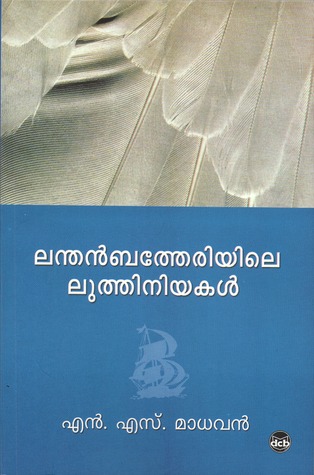
    ലന്തൻബത്തേരിയിലെ ലുത്തിനിയകൾ (2003, Litanies of Dutch Battery) is a Malayalam novel written by N S Madhavan (twitter: @NSMLive). N S Madhavan is a short story writer and a columnist. This is the first novel he wrote 33 years after he started writing. This is the first Malayalam novel that I listened to on the Storytel app.

    The novel traces the life of a little girl born and raised on an imaginary island off the coast of Kochi. The novel, has for its back drop the period between 1951 to 1967. It looks at the influences of the rise of Communism in Kerala and the Church in the locality through the eyes of the girl. It goes through various histories that affect the area and various oral stories that the people here spoke of and are perhaps now forgotten.

    The narrator on the app is Edakochi Salim Kumar, who is a kadhaprasangam artist. It took me quite a while getting used to his pronunciation of Malayalam words. But, once I got the hang of it, it was a great listening experience.

    I have mostly read English translations of Malayalam novels. This is perhaps the first time that I had the patience to sit down and listen through an entire novel in the original Malayalam.

    I am not going to review the book since I don’t feel qualified to do it justice. There are two parts that I liked in the book and I am going to put them down here for future reference.

    The year is 1957 and news arrives in India of the Soviet success in launching the Sputnik satellite. The Communist party cadre in Dutch Battery are celebrating the win over America. Kids make fun of the cadre saying they launched balloons into the sky and hence the Soviet achievement is no big deal. The cadre explains that balloons fall back to the ground after travelling some distance but the Soviets used a rocket that flies at a high speed to escape Earth’s gravity and put a satellite into orbit.

    There are quite a few references to ship building around Kochi and also references to war stories including one about Pakistan bombing Kochi and how one bomb fell on a newly reclaimed part of Willingdon Island in Kochi. People claim to have experienced a lights out but no one ever saw the bomb being dropped nor explosions.

    There is a nice interview with N S Madhavan where he talks about his novel and some of the historical references that make it into his novel.

  • Do Nothing (2020)

    The following are notes of a podcast interview Brett McKay did with Celeste Headlee. Headlee is a radio journalist and author of the books We Need to Talk and Heard Mentality besides Do Nothing.

    Do Nothing
    Image Credit: Celeste Headlee

    It has only been about 200 years since the industrial revolution that human beings are living the way we do now. Before the industrial revolution and for a large part of human history, human beings worked in spurts. There were spurts of intense activity and work and then there were long periods of relaxation. As an example, Headlee says that peons and serfs worked less than a year.

    From Task-based to Time-based Work

    With the onset of the industrial revolution, work switched from being task based to being time based. Before the revolution, people worked on a task and then rested till they got their next task. With the coming of factories, people worked by the hour. Their pay was not by the output they produced but by the amount of hours they worked.

    Earlier people demonstrated their wealth by the amount of time they spent in leisure. Now, people demonstrate their wealth by showing off how busy they are. Headlee says that people were almost brainwashed, perhaps by the education system, to believe that we are considered more productive by working more hours. This belief is unsubstantiated by research.

    Research, even from the 1950s, show that people who worked 12-20 hours per week were more productive than people who worked 50-60 hours per week. It was noticed that employees who work 50-60 hours per week and took little time-off, vacations and paid leaves were less effective and got only a 6% pay-raise compared to employees who worked 12-20 hours per week.

    Also, changing pay from a time-based method to a task-based method has advantages for both the employer and the employee. Task based methods are more efficient as the employee tries to spend the least time to get the work done and leave. Task-based method is considered more humane, boosts morale on accomplishment of task and gives joy on completion of the task. Employees on time-based method of payment may spend more time on other pursuits while completing the task.

    Taking a Break

    Headlee says that taking a break should involve a break from all screens. She says that when we open our smartphones and check email, shop or stay on social media, our brain thinks that we are still working. It cannot distinguish between these activities, done for work or pleasure. So, when we think we have taken rest, we have actually not taken any. When we keep pings from our email program or notifications on our smartphone on, the brain goes into a ready mode all the time expecting and ready to do a task.

    Home Work

    Headlee says that at the end of a long day at work, we don’t look forward to coming back home. She says that the reason could be not having anything to do at home. Some people fell lonely at home or even isolated. Some also treat home as something they have to work on or even as a chore. They treat all home work to be top of the class with each thing to be shared with the world. As an example, it can’t just be a simple garden, it has to be the ultimate garden with all the bells and whistles. We are not satisfied with what we have.

    Earlier, people used to return home to spend time with family and participated in tasks or hobbies that did not have a capitalist value. Women sew and men worked on their workbenches and fixed things. Now, when the call came for stitching cloth masks at home, we didn’t have sewing machines at home and if anything broke, we could not fix our own stuff without help from a technician. Headlee suggests that we do something that you simply enjoy as a hobby and which may not have any capitalistic value.

    Means Goals and End Goals

    Time-based tasks created the efficiency cults we see today. One way to escape this based on examples like sewing and fixing our own stuff is to understand the difference between Means Goals and End goals. Means goal follow the SMART acronym whereas End Goals do not follow the SMART acronym. We must try to create End Goals and use it to trim the Means Goals by seeing if the latter helps in the accomplishment of the former.

    Using a Phone as a Phone

    One of the radical ideas that Headlee suggests based on research is that one uses the phone as a phone. As discussed above, a smart phone tricks the brain into thinking that we are working when we think that we’re taking rest. Besides this, she says that the human voice carries information and depth that other humans know to identify immediately. Text can lead to a lot of misinterpretation that a call can solve in minutes. She says that listening to a person making a case for a point of view makes a person with an opposing view more considerate about the person’s stance. It fosters connection.

    Headlee thinks that people are getting disenchanted by the over-use of video calling services like Zoom because the presence of a screen indicates to the brain that it is work. This makes us feel more tired after a video call. Teleconferencing has been proven to be as effective as being in the same room with other people.

    Human connection

    Humans are pack animals. We need a sense of belonging-ness. If the need for human connection is not fulfilled, it has been shown to lead to earlier death besides having several health consequences during a person’s lifetime.

    Headlee thinks that when we re-emerge after the COVID-19 pandemic, we need to rethink the human connection to work. She hopes there is a global reconsideration of working hours, having a healthy work-life balance and creation of more pro-human habits (habits that don’t kill us).

    She hopes that in going back, we don’t just go back to an era before smart phones but to an era before the industrial revolution.
  • The Money Tree – Chris Guillebeau (2020)

    I first read about Chris Guillebeau when I read his first book – The Art of Non-Conformity and read the blog of the same name. Then, I was bitten by the travel bug and had dreamed of travelling far and wide. I did not want to go to all the countries in the world as Chris had but wanted to learn about what that life would be like.

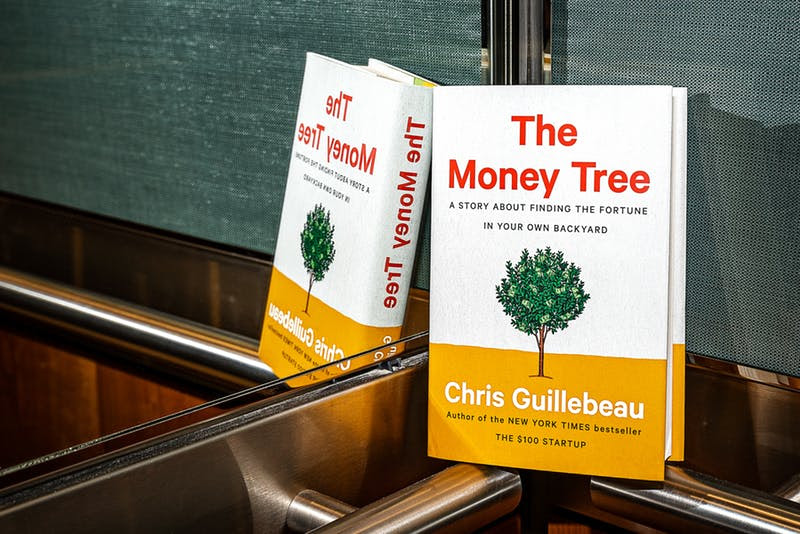
    The Money Tree, 2020. Image Credit: Chris Guillebeau

    Having a steady government job then meant that I did not read his follow-up books about The $100 Startup and Side Hustle School. When I moved back to a private firm, I dusted out my old links and newsletter subscriptions and re-discovered Chris.

    I bought his new book, The Money Tree (Amazon Affiliate Link to buy the book) knowing that relying on one stream of income is not a sustainable way to make a living nor does it give enough savings to save for the future. I purchased it on Audible and finished listening to it in a day.

    The book is written in the form of a story. The thesis of the book is that having a source of income other than the job you have at hand is not a bad thing. He says that working on your own, doing something you enjoy gives you a high. It gives you confidence and impacts other areas of your life.

    The book gives ideas, builds a first person experience of going through the journey that you as a reader might have. The protagonist, Jake, goes on this journey from being in debt, relationships in ruins and perennially forgetting the important things in life to a place where he has confidence, has more courage in his personal and work relationships and has things in perspective. He does this with a help of a support group that meets to discuss these ideas under the able guidance of a guy, Clarence.

    Chris wrote this book before the COVID-19 pandemic. But, given the lock down and expected downturn in the economic conditions, I think this book deserves your time. His insights attempt to take you through a space between a full time corporate job and the gig economy. I already see many people offering their services online and some even earning for these services.

    Think of something you’re good at, help people and earn money.

  • Working from Home

    For the past three weeks, I have been working from home. We are faced with a global pandemic that, as on today, has affected more than 5,00,000 people all across the globe and more than 800 people in India. My work place allowed us to work from home during the period. The period of work from home was extended after the Prime Minister of India announced a 21-day national lock down.

    Photo by bongkarn thanyakij on Pexels.com

    Before I got to work from home, schools and colleges shut down. Then IT companies in Pune asked its employees to work from home. Our fiber optic cable based internet provider faced issues for a few days but seems to have stabilized two days into the 21 day lock down. Over the last few days, there have been power outages where I had to switch to my Jio hotspot to access the Internet to continue to work.

    My nearly 3 year old daughter does not understand why things are shut down. The concept of a lock down is alien to her. Her explanation for why the school is shut is that her teacher is asleep. At the rate at which the lock down is getting extended, I think her class teacher will soon compete with Kumbhakarna.

    Despite having heard podcasts about working from home and having read various articles and online websites about working from home, I did not find myself prepared for this transition. Since we live in a 2 bedroom apartment, I was able to assign one bedroom for me. However, it has been getting more and more difficult to demarcate work time and home time. They have been fluid so far.

    Internet speed and power outages have affected my productivity besides the usual transition time to getting used to a new setting. Focusing on work when you can hear your family members next door is difficult. I have been getting better at tuning out the noise as time passes.

    A few months back, I had started listening to the Distributed podcast started by Matt Mullenweg (co-founder of WordPress, that powers this blog) that spoke of how to re-imagine the work place of the future when everyone was at home. His company, Automattic is totally distributed.

    Om Malik, founder of GigaOm, wrote a piece a few days back about working from home. The article links to further resources that might help in your quest to work from home. He had started a website called WebWorkerDaily way back in 2006 to think about the distributed future of our work place.

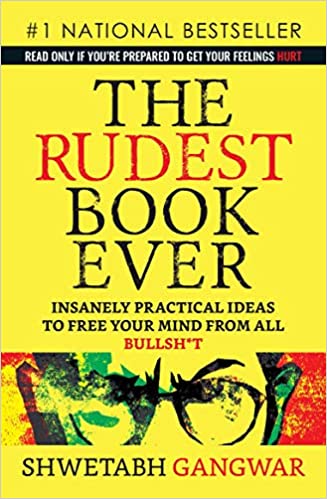
  • The Rudest Book Ever (2020) – Shwetabh Gangwar

    I heard of Shwetabh Gangwar on the day my credit got added to my Audible account as a suggested book for me. Reading about him, found out that he was a professional problem solver on Instagram using the handle @mensutra. He also has his own YouTube channel where he has been more active lately.

    His book, The Rudest Book Ever (Amazon Affiliate Link) is built around three ideas –

    • People are weird
    • Rejections are common
    • We are not special

    He then builds these three ideas up throughout the book applying it for fields like relationships, career advise, use of social media etc. Personally, I really loved the Chapter on how to think.

    To me, with my limited experience came across as someone who apes the style of GaryVee and applies principles that I have heard on some Osho talks but falls vaguely in between. An interesting book to browse through especially if you have the airs about you being someone special and who are not used to accepting rejections easily.

  • Kids

    I’ve subscribed to Ryan Holiday’s daily email newsletter, Daily Dad since I heard about it on his podcast with Peter Attia. Before this, I had struggled with answering questions related to bringing kids into such a violent world and the curbs on our freedom that they impose. In his newsletter edition on March 13, titled The Trade off is worth it (you can listen to the edition as a podcast) answered this question for me.

    This is the last paragraph in the newsletter:

    Most of the freedom I had before kids,” Paul Graham wrote, “I never used. I paid for it in loneliness, but I never used it.” It’s true for you too. It’s true for all of us. We’ve paid a high price for these kids, but we have gotten—we will keep getting—so much. 

    The quote above is from Paul Graham’s essay on Having Kids, which is also a great read. That is a longer answer to Holiday’s concise one.

  • Ayyappanum Koshiyum (2020)

    When AK released in theaters, our daughter and financial priorities meant that we decided to wait for the movie to release on an OTT platform. AK came out on Amazon Prime this Friday (March 13, 2020). We decided to watch the movie at home. We streamed it on our television set using Chromecast.

    The COVID-19 virus had hit Pune with 9 positive cases. People were being wary of visiting malls and theaters. So, we decided not to catch any of the new movies in the theater over the weekend.

    I had watched YouTube interviews (one and two) of the cast which included Biju Menon and Prithviraj before watching the movie.

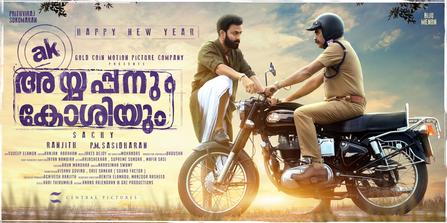
    Poster art for the movie. Image: Wikimedia Commons

    Ayyappan Nair is a Sub-Inspector in a tribal area of Attappadi in Palakkad. Koshy is a retired havildar with an ego of having served in the Indian Army. The Police and Customs joint team arrest Koshy with liquor in a no-liquor zone. Upon arrest, Koshy makes his contacts known and the police are worried about the influence. Ayyappan Nair comforts Koshy with tactful words and seeks to appraise Koshy about the seriousness of his offence. Koshy now sobered by the realisation that he might have to spend time in jail, appeals to Ayyappan Nair’s humanity and the fact that he has a bedridden mother and two children at home, near Christmas time. Ayyappan Nair says he cannot help in the situation since it is a joint operation. Koshy acts as if he won’t be able to control himself if he can’t have a glass of alcohol. Ayyappan Nair commits a faux pas with encouragement from his superior of offering a glass of alcohol to Koshy who captures this on video in his phone.

    This is the premise from which the whole movie starts. What follows are complications because of Koshy’s ego and Ayyappan Nair’s sense of justice that a person with influence can get away with so much in our society while the poor who have little or no-influence are made to suffer. Nair and his subordinate are suspended despite 27 years of unblemished Police service. Ayyappan Nair’s dismissal from police service returns him to his old ways – his wild animal self unleashed by knowledge of what a person with influence is able to accomplish. His wife is branded a Maoist and sought to be arrested. Ayyappan Nair’s good faith and trust built in his community, knowledge of the law and some good snooping skills are probably what saves him.

    I find it hard to believe that Ayyappan Nair lets his guard down as Koshy films him at the beginning of the movie. He mistakes it for the fact that Koshy is looking for a contact on his phone. There wouldn’t be a movie if this didn’t happen.

    As Koshy’s character develops, that his actions are not only ego-driven but are also a reflection of his relationship with his father. He seeks to gain his father’s approval which seems to drive his machismo. He soon learns of this, reprimands his wife for not having acted earlier despite living in fear and decides to teach his father a lesson.

    Koshy also tries to teach Ayyappan Nair a lesson but interference by his father complicates a simple issue that the two men could deal with. Koshy admits defeat and claims that Police uniform is the only thing that would tame Ayyappan Nair’s wild animal reaction.

    Ayyapan Nair’s tribal wife is one of those confident female characters who shatters Koshy’s machismo. It probably begins Koshy’s journey of self-realization and moderation. Ayyappan Nair’s journey back to moderation begins at the end of the movie.

    The best way to end this review is to quote from another review:

    This is a movie of two men and their egos. If you need an adrenaline rush and enjoy larger than life images venting out animalistic urges, go for this. It is a good watch for this day and age.

    Anjana George, The Times of India

    I’d recommend watching the movie.

  • Tiny Habits

    Brett McKay talks to Dr B J Fogg for Episode 581 of the Art of Manliness podcast. Below are my show notes for the episode. The episode discusses Tiny Habits (Amazon Affiliates link), a book that Fogg has written.

    Tiny Habits

    Fogg proposes the Tiny Habits method of behavior change. He talks of habits not in terms of breaking them but in terms of untangling them. Think of behavior change the way you would untangle the mess of wires to straighten out your headphones. Changing habits is a process where you move from the easiest to the most difficult.

    Fogg suggests that long lasting behavior change happens by changing really small habits as part of a routine. Imagine you want to make a tiny change. Fogg suggests identifying a routine attached to the change that you require. Inserting the habit as part of the routine and then slowly increasing the number of repetitions.

    As an example, if you want to inculcate the habit of flossing your teeth, he suggests flossing just one tooth after brushing your teeth (routine). He suggests that we stay with one tooth as long as we want. He also gives us the freedom to do more when we want to. The number can go up. You can floss three teeth or just one. The over-achievement on the day you flossed three teeth acts as motivation for you to do just a little more. This turns this into a behavior change of flossing the teeth after you brush it.

    The Three Elements – Motivation, Ability and Prompt

    Behavior change here involves three elements – motivation, ability and prompt. Fogg defines motivation as the driving force which energizes you to certain behavior. He suggests that there is a compensatory relationship between motivation and ability. Ability here stands for you knowing how to do a certain task. He says that when it is harder to do something, the motivation needed is more. When it is easier to do something, you don’t need too much motivation. He recognized this compensatory relationship over an eight year period of study! He warns us that we over-estimate our future motivation to do certain things. Hence he warns us from depending on motivation as a way to change habits.

    He also warns us from thinking of our aims in abstract terms. Losing weight, reducing stress etc are outcomes. He suggests that tweaking systems and processes will lead to these desired outputs. He believes that the habits should involve less time, less effort and little cost to implement to be successful.

    Here, he brings the concept of prompts. He thinks that there are three types of prompts – personal prompt, context prompt and action prompt. He says that personal prompt involves you or someone else reminding you that you need to do a habit. Context prompt is a notification that alerts you to do a habit. An action prompt involves using a routine as a prompt. In our example above, brushing your teeth is a prompt for flossing them. He says personal and context prompts are not effective. He thinks that action prompts are the most effective way to initiate long lasting habit change.

    In My Opinion…

    Listening to this podcast, this seemed like a more scientific version of Leo Babauta’s Zen Habits. It also seemed similar to James Clear’s Atomic Habits but with different terminology. Saurabh also spoke in his blog about changing habits for the new year and hence I thought this might be worth sharing. I would personally, rather follow James Clear method.

    I loved what he says about celebration, though. This is his value addition to the habit change journey, in my opinion. He suggests that celebrating these small habit changes with a celebration make you feel successful. He says that these emotions get attached to the habits and re-wires your brain that converts these habits into part of your life. He suggests teaching children to celebrate after their every small habit change.

  • The Phone in our Pockets

    My wife has accused me of being addicted to the mobile phone. She, therefore, ensures that our daughter watches YouTube videos via Chromecast on the television. She is determined to make sure she doesn’t get hooked to mobile phones early on in life. It’s inevitable I say, but she’s fighting to keep this menace away from her daughter as long as she can.

    Photo by Magnus Mueller on Pexels.com

    My search to quit this addiction, online has led me to various resources. There was writing by Seth Godin, Cal Newport, Brett McKay and Ryan Holiday that contributed to ideas. There is also a r/nosurf sub-Reddit that addresses this issue.

    I tried deleting the applications from my phone – Facebook, Instagram and Twitter. I didn’t stay off these for long, ending up installing them again almost instantaneously.

    Before, I share my reading about this topic, let me share my current status. I have switched off all notifications except for phone and SMS. I have removed Facebook, LinkedIn and Instagram from my phone. I access them only on my laptop at home. I was able to hold this for about a week now.

    I was listening to Peter Attia’s podcast, The Drive with Ryan Holiday today. Holiday, answering a question on how the connected life has affected our life, says that we reached a right about place in 2010 and then went overboard. He says that there was a time when we used social media just enough and then went over. Attia likens it to a tuning issue that went to the max setting after passing the optimum level. The max setting makes sense for some people but not for all the people in the world.

    Further along the podcast, he talks about he keeps his smart phone in the other room and does not pick it up until almost after lunch. It makes for productive mornings and he lets people know that phone, SMS and email are the best way to reach him. Just earlier, he has read a comprehensive blog post about spending less time on the phone. Following one of the suggestions there, I am planning to move both of our smart phones out of our bedroom tonight.

    Seth Godin also wrote a blog post today about that thing in your pocket that has an infinite options that are much better than what you’re doing right now. The idea is to prioritize what you have to do right now.

    I have written earlier on the blog here about Cal Newport’s work on how social media has been designed to be addictive here. Brett McKay had called to build a Social Internet instead of being addicted to Social Media. Om Malik called for a decade of self-control. So, I’ve started on my own little journey. What about you?

  • Caring for Yourselves

    Perhaps the greatest delusion of my life has been the belief that the world in which I was a child may have been the dark ages, but the world in which I have grown up to be an adult has to be far more enlightened and equitable than before.

    Social norms and attitudes that perpetuate injustice have remained tenacious. The news remains the same. Questions that had remained unanswered when I was a child still demand answers. If I do not want my daughters to internalize that violence is the inevitable fate of women in our society, I have to find a new language to speak to them.

    ‘Caring for myself is not self-indulgence, it is self-preservation, and that is an act of political warfare,’ Audre Lorde wrote in her book of essays, A Burst Of Light. The first time I had read this sentence, it cut through my cultural conditioning like a sheath of light. It demolished the notion that putting everyone else’s needs before one’s own is a virtue to be extolled.

    Natasha Badhwar, Children must triumph over their parents, Immortal for a Moment (2018,Amazon Affiliate Link)