Dhanya and I became parents again to a baby boy on 20 December 2022 at 11 am. The boy was born at Cloudnine Hospital, Pune.
Tag: 2022
-
India’s Space Policy – Sowing Now to Reap Later
Note from the Author: I wrote this piece in March 2022. I did not get around to publishing it anywhere. Hence, posting it here. Some of the information mentioned here is outdated.
Introduction
India has pursued a space program since the 1960s with the intention of benefitting its people for the past sixty years. For this period, the program was dominated by a single government player with an innovative production capability nurtured through these years. But, the Indian government now wants private players to play a bigger role – to design products, develop them, and market them to the world. Against this backdrop, the Indian Government opened up the space sector in 2020. This led to the need to make policies and institutions that would help India tap into this hidden potential.
Opening up India’s Space Sector
The Union Finance Minister, Nirmala Sitharaman announced the opening of eight sectors in May 2020 as part of the INR 20 lakh crore (USD 300 billion) Atmanirbhar Bharat Abhiyan (Self-reliant India Campaign). Space was one of the sectors that opened up as part of these reforms.
The Government said that it wanted the private sector to be a player in the space sector. She said that the Government would provide a level playing field for the non-governmental private entities to build satellites, launch vehicles, and provide space-based services. She promised that future planetary exploration and human outer space travel opportunities would be open to non-governmental private entities. Towards this, she promised access to facilities of India’s space agency, the Indian Space Research Organisation (ISRO), and a liberal geospatial policy.
India identified that space held a huge commercial potential for growth. It wanted non-governmental private entities (NGPEs) to be part of this growth. When the Government says NGPEs it is referring to academic institutions, start-ups, and industry.
As a part of opening up the space sector, NewSpace India Ltd (NSIL), which was set up in the previous year, was repurposed to drive a move from a supply-driven to a demand-driven model. NSIL would act as an aggregator of demands from the market. It would then supply the services provided earlier by ISRO. For this, it would take over ownership of ISRO’s operational launch vehicle and satellite fleet. It would commercialize the production of the launch vehicle fleet by handing it over to a private consortium.
The opening up also involved setting up a regulator, Indian National Space Promotion and Authorisation Centre (IN-SPACe). IN-SPACe would provide a one-stop shop for all space-related activities in India. ISRO would then concern itself with the research and development of various space technologies and applications.
IN-SPACe would “promote, hand hold, permit, monitor and supervise space activities by NGPEs and accord necessary permissions as per the regulatory provisions, exemptions and statutory guidelines”.
Developments since the Announcement
A draft Space Activities Bill, 2017 had been floated for comments from stakeholders and the public. This bill was to provide an overall legal framework for the space sector. As of February 2022, the bill has completed public and legal consultations and has been sent to the various Ministries for their approval.
IN-SPACe was established. Pawan Goenka, a former Managing Director of the Indian automobile major, Mahindra & Mahindra, was made Chairman of IN-SPACe. It was reported in February 2022 that ISRO facilities and expertise were extended to the NGPEs. ISRO facilities are being shared with these private entities at no or reasonable cost basis.
NSIL undertook its first fully commercial launch for Brazil’s Amazonia 1 and fourteen ride-share satellites in February 2021, on the Polar Satellite Launch Vehicle’s (PSLV) PSLV-C51 mission. It is also undertaking the first demand-driven communication satellite [PDF] launch. It will launch the GSAT-24 communications satellite to fulfill the demand of Direct-to-Home company, Tata Sky (now Tata Play). The launch is expected to take place on board the European Ariane V in the first half of this year.
The Department of Space had provided various draft policies on its website for comments. These include draft policies on Space Communications, Remote Sensing, Technology Transfer, Navigation, Space Transportation, Space exploration and Space Situational Awareness, and Human Spaceflight through 2020 and 2021. India, at present, has, only Space Communications and Remote Sensing policies.
Although space startups have been present in India since 2011, there was a real acceleration in the number of startups that started following the opening up of the space sector. As per statistics shared by the Indian Government in February 2022, there are more than 50 space startups presently in India. These work in areas such as building satellites, launch vehicles, satellite subsystems like electric propulsion systems, as well as various space-based applications in remote sensing, agriculture, fisheries, economic growth forecasting, etc. The Indian Government hopes to attract foreign direct investment (FDI) in the space sector.
Obstacles in the Way
As with any reform, there is a feeling that the reforms are not being implemented fast enough. It is not known when the draft Space Activities bill would be cleared by the Union Government and tabled in Parliament. The Space Communications policy is expected to be finalized by April 2022. The status of the other policy drafts is currently not known.
In the interim, ISRO is tasked with clearing the backlog of remote sensing, communication, navigation, scientific, and interplanetary missions of national importance which have been delayed as a result of the COVID-19 pandemic. India has only had 5 launches from India since 2020. One of them was a failure. There are limits on the number of launches ISRO is able to do in a financial year (March to April). This period of transition would be a difficult one to manage at ISRO, as it would have to fulfill launches for NSIL as well.
NSIL floated tenders for the commercialization of the PSLV in 2019. It has still not been announced as to who the tender is awarded to. There are two other operational launch vehicles, the Geosynchronous Satellite Launch Vehicle (GSLV) and the Geosynchronous Satellite Launch Vehicle Mark III (GSLV Mk-III) that also need to be similarly commercialized.
All these delays then make the regulator, In-SPACe ineffective to do much other than provide access to DoS facilities until there is regulatory clarity with the publication of draft policies and the passage of the draft Space Activities Bill in Parliament.
Hopeful Future?
While it is expected that the infrastructure put in place after the announcement of the space reforms, would take anywhere from half a decade to a decade, the future remains hopeful.
In the decade, India expects to launch interplanetary missions to the Moon, Mars, and Venus. It also expects to operationalize its human spaceflight program in the first half of this decade. In addition, it expects to launch missions for communications, remote sensing, navigation, and scientific applications.
It is expected that these reforms would bear fruit in the future decades. India hopes to participate and play a bigger role in the global space economy. It hopes that its start-ups today will provide goods and services not only for India but also for the world.
-
An Introduction to Indian Philosophy (2007)
I began reading about Indian Philosophy in 2020. I was reading through the notes of Nitin Pai, when I got the link to Chatterjee and Datta’s An Introduction to Indian Philosophy in 2022. This is when I decided to purchase the book and listen to it.
Cover of Chatterjee and Dutta’s book, An Introduction to Philosophy. Image: Pradeep Mohandas/Audible.in Before I began reading the book, I had approached the Samkhya school of Hindu philosophy in 2020 and 2021. I thought that it would help look at the whole, before looking at the parts.
As I had written here:
In comparison, the various darsanas of Indian Philosophy seem to say that there is only one theme that plays the central role – the reduction of or end of suffering.
https://pradx.in/2022/01/18/suffering-and-tranquility/After reading the book, I understand better the approaches each school of philosophy took to end suffering. But, I am still puzzled by why the Indian philosophies placed the end of suffering at the center of all it’s philosophical aims. By this, I feel like I have lost an enormous part of the listening of the book.
The book’s tone helped me put my 5-year-old daughter to sleep on two nights. But, after that she developed the same thick skin to the narrator’s tone as I did.
-
NaPoWriMo 2022 #10
This is #10 in the prompts for NaPoWriMo.
Photo by Bhavesh Jain on Pexels.com Reflection/Shadow It's all a play of light. It's a reflection, When it comes back at you. It's a shadow, When it's behind where you are. A reflection let's you think about yourself. Yourself, in terms of how you look, Yourself, in terms of how you feel, But, more importantly, Reflection confirms what you feel about yourself. A shadow tells us about ourselves, Ourselves, in terms of what we fear, Ourselves, in terms of what we don't expect. But, more importantly, Shadow tells us that fear is just a play of light. -
Replace satellites before they die
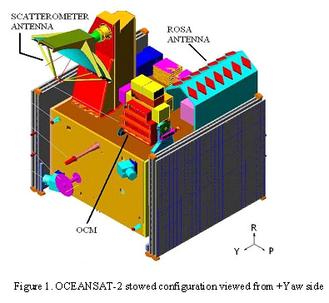
Image of Oceansat-2 from ISRO. Source: Wikimedia Commons There was news recently that an issue with the attitude control system caused the end of life of the Megha-Tropiques mission. The satellite had completed more than ten years in orbit. This reminded me of a comment we had submitted to the Parliamentary Standing Committee.
One of the comments I had written as part of The Takshashila Institution’s comments to the Parliamentary Standing Committee on Science and Technology, Environment, Forests, and Climate Change addressed said:
The Department of Space must aim to put in orbit replacements for operational satellites before they reach end-of-mission life and not of end-of-design life.
pg 7, Comments to the Parliamentary Standing Committee on Science and Technology, Environment, Forests and Climate Change on Demand for Grants (DFGs) in the Union Budget for FY 2022-23With reference to Megha-Tropiques, which had a mission life of three years, I meant that we seek to replace them before the end of three years and not the ten years it eventually served because its parts were designed to last this long.
Perhaps, replacing Megha-Tropiques was not top of mind at ISRO or CNES, the French space agency. But, consider a satellite that we plan to launch in the near future, Oceansat-3.
Oceansat-1 was launched in 1999 and had a mission life of 5 years. Oceansat-2, the replacement for Oceansat-1, was launched in September 2009, six months after 10 years of Oceansat-1’s launch anniversary. Oceansat-1 survived for 11 years.
Oceansat-2 had a mission life of 5 years. The scanning scatterometer (SCAT) on board the Oceansat-2 failed after 4.5 years. In 2016, India launched a satellite, SCATSat-1, to replace the functionality. Oceansat-2 has now been functional for 12.5 years. Oceansat-3 has been plagued with delays. The new launch date for Oceansat-3 is now August-September 2022.
The pandemic played a role in the delay. If Oceansat-2 had failed after 11 years like it’s predecessor, we would not have a Oceansat. What would that mean? The Wikipedia page says:
Oceansat satellites facilitate a range of applications including documenting chlorophyll concentration, phytoplankton blooms, atmospheric aerosols and particulate matter as well as marine weather forecast to predict cyclones.
Oceansat Wikipedia pageForget if the others don’t make sense to you but imagine not being able to predict cyclones with accuracy. Remember the claims of being able to predict cyclones much earlier and hence being able to save more lives? What happens if that function goes kaput?
It was that functionality that was lost and was replaced by SCATSat-1 in 2016. That instrument has now been running for 5.5 years. It has crossed six months since end of it’s five year mission life. Maybe it will survive eleven years like other satellites in the series. Maybe not. Hence, replace satellites before they die.
Update on April 10 @ 2126 hrs IST: @zingaroo on Twitter had an update on SCATSat-1:
Many other things could also go wrong. This is why redundancy is good. But, there are constraints. There are budgetary and people constraints. I think that is why we must work towards replacing the satellite as close as possible to the end of mission life.
This is not the first time I am making this point. I had written an article for The Wire Science in 2019 where this was one of the issues that I had raised. In the article, I applauded ISRO because it was doing much better at replacing satellites of the CARTOSAT series compared to other remote sensing satellites just after mission life.
I thought of putting the suggestion again in the comments to the Parliamentary Committee because I thought the pandemic reinforced the lesson. In case of an unforeseen incident because of which we are not able to replace a satellite before mission life, we have some tolerance before if we launch it before end of design life. But, it we launch it close to end of design life, there is a possibility that there may be a loss of the satellite before we can launch the replacement.
-
NaPoWriMo 2022 #5
This is #5 in the prompts for NaPoWriMo.
Spices and Seasonings She remembered a time, When the food wasn't bland and dry, It had spices and seasonings, And accompaniments and fries. She remembered a time, When rain poured from the dark sky, When children played in puddles, Without a worry, nor wondering why. Now the food was bland, As spices were lost to a fire, Neither were there seasonings, Because there was no one to hire. It was just her, Alone on Earth, Wondering if anyone would come to save her, Or at least get her some spices and seasonings. -
NaPoWriMo 2022 #4
This is #4 in the prompts for NaPoWriMo.
the taste of an emotion My therapist and I, Had tried so many things, We had had so many sessions, That my wife thought we were havin' flings. I was getting desperate, Will there ever be any cure, We had tried so many things, But there wasn't anything but a lot of furore. Finally she looked at me, Asked me point blank, What's the taste of your emotions, I tasted nothing, I said, being quite frank. But then having food at home, Quite anxious what my wife would say, About my session with the therapist, I felt anxiety taste bitter for the first time that day. -
NaPoWriMo 2022 #3
I missed #2 in the prompts for NaPoWriMo. The numbering scheme is the prompt number and not the poetry number.
a broken object you continue to hold onto... I am a minimalist, So, I don't hold on to objects. I am a spiritualist, So, objects don't really hold me. But, there was this one broken object, I held it and it held me. It was a simple Swiss knife. It was just loose, Although everyone else insisted That it was broken The knife was with me, Through several highs and Many more lows. It was with me when I, Used it to uncork that wine bottle, On our beautiful honeymoon. It was with me when I, Had to tear open the letters, When I was separated from my lover. It was with me when I, Wanted to fix my daughter's, Broken toys and odds and ends. It was with me when I, Had forgotten to clean my nails, Jus' before a work meeting. It was with me when I, Had to open a bottle, Of jam for my daughter. But now, when it is broken, It is they, who ask me to throw it away, They know not all that it has taken. While I hold it and it holds me! -
NaPoWriMo 2022 #1
April is celebrated as National Poetry Writing Month. An Instagram user I follow, @literarychills helped with a daily prompt for each of the thirty days. These are just my practice off-the-cuff efforts.
An Overrated Adjective Do not use adjectives, That was the simple directive, I used the word overrated, Realized too late that it's an adjective. I was taken to a Remedial Room, Where a machine went zip-zap-zoom, The next thing that I realized, Was that I had forgotten all adjectives. -
Space, Nuclear and Quantum
I recently tweeted looking out for people in the civilian nuclear energy space:
Do share any people you may know about on Twitter. Thanks in advance.
Space
India has developed reasonable capabilities in space. It is now embarking on developing a civilian space sector. In the strategic sector, India has developed a Defence Space Agency and Defence Research and Development Organisation (DRDO). It has secured communication and remote sensing capabilities.
The importance of the space sector is to continue reliable communication, navigation and remote sensing capabilities without having to depend on foreign countries. It is also to build and develop products and services in India that can be provided to the world at competitive prices.
I think we may be late on this path but we are on the right path with respect to space.
Nuclear
India needs to grow. India needs energy for this growth. Meeting these energy needs using hydrocarbons is not sustainable.
I think nuclear will form a large percentage of sustainable energy production in the country.
Quantum
Quantum is important for research and computing today. But, in the future, there will be quantum computers that will need Indian expertise to operate and program.
My understanding of Quantum and Nuclear is limited. I have not been watching these fields as closely as I have watched Space. What I have listed above are my assumptions. This is the starting point for my thinking about these fields.
 Parallel Spirals
