Tag: GSLV Mk-III

  • Interview with Dr. S Unnikrishnan Nair, Director, HSFC and VSSC in Malayalam

    This is a Malaylam language interview on Asianet News with Dr. S Unnikrishnan Nair. He is the Director of Vikram Sarabhai Space Center (this is where Indian rockets and launch vehicles are built) and Human Spaceflight Center (this is where India’s human spaceflight programme is being developed with astronaut training etc.).

    Link to the Malayalam article that accompanies this interview.

    The interviewer is Arun Raj K M. You can follow him here on Twitter. Below was his announcement for the interview posted on Twitter. He erroneously says 2020 in the tweet but he means 2022.

    I do not have a cable connection at home, so I watched it on YouTube. The video was originally shared on Gareeb Scientist’s Discord (link to his YouTube channel, his Discord is for members only). At least two people on Twitter asked me for the English translation of this interview. Hence, I decided to create the English notes of the interview to help me share it with others.

    There may be mistakes in my notes. Please refer to the original in Malayalam if you understand the language. Please help me with corrections in the comments section of this blog post.

    • Congratulations on the PSLV-C52 launch.
    • ISRO thinking about how to clear backlog and return to launch after COVID-19.
    • Next launch will be PSLV C-53.
      • within 2-3 months.
      • exact date will be known later.
    • Small Satellite Launch Vehicle
      • designed to launch 500 kg payload to Low Earth Orbit.
      • Has a lot of commercial possibilities.
      • Three solid stage with a liquid velocity trimming module for fourth stage.
      • All important tests are done. Vehicle being integrated right now.
      • Launch from Satish Dhawan Space Center, Sriharikota.
    • Gaganyaan – India’s human space flight programme
      • Working on how Orbital module can be separated in flight.
      • It is not necessary to use GSLV Mk-III for these tests.
      • So, a Test Vehicle (TV) was developed using a single stage Vikas engine. This engine is derived from second stage of the PSLV (PS-2) and the liquid strap-ons used on the GSLV (L-40).
      • This vehicle will be used to create the conditions of flight to test the abort of the Orbital Module.
      • 1-2 flights of the Orbital Module will be undertaken this year. This gives us confidence to make sure that the Crew can escape in case of any issues in-flight.
      • TV is also being developed as a multi-purpose test platform.
      • TV will be used to test air-breathing propulsion system.
      • TV will also be used to create flight conditions for the Reusable Launch Vehicle (RLV-TD) for various tests like straight-line flights of the RLV.
    • Human Spaceflight Launch Vehicle
      • GSLV Mk III is converted into a human-rated launch vehicle.
      • Satellite and payload fairing used on GSLV Mk III is replaced with an Orbital Module and Crew Escape System.
      • Vehicle design has changed. Hence, vehicle undergoing tests like wind tunnel tests etc. Many of the hardware used for the vehicle is being realized at Vikram Sarabhai Space Center (India’s rocketry hub).
      • Each stage needs to be analyzed separately and together to identify points at which failure is possible. Then, need to provide redundancy to avoid failure.
      • Health parameters of the launch vehicle needs to be monitored constantly. If needed, flight should be aborted under appropriate conditions. Vehicle Health Monitoring System is being developed for this purpose.
    • Second Launch Pad
      • Second Launch pad is being modified to support human spaceflight.
      • Second Launch Pad will be able to launch both GSLV Mk III and human-rated GSLV Mk III.
      • Escape chutes are being developed on the Pad.
      • Testing facilities and other accessories needed for human spaceflight being added to Second Launch Pad.
    • Astronaut Training
      • 4 astronauts in Bengaluru at Human Space Flight Center.
      • Training provided in Russia was generic in nature.
      • The Indian training round involves familiarizing astronauts with the human rated launch vehicle and the Orbital Module.
      • It also involves theory, practical, mental fitness, physical fitness etc.
      • Training likely to take 1.5 years. (I am assuming this is the Indian training round and not the total training time.)
      • Understand which areas are accessible in the Orbital Module.
      • Astronauts will also undergo simulator training. Simulators are getting ready at a temporary facility being developed in Bengaluru. This will be inaugurated soon.
    • Collaborating with Glavkosmos, other collaborations? (This was the question asked, but Unnikrishnan replied about Indian contribution. I think the interviewer intended to ask about any other foreign collaboration.)
      • This is a truly national programme.
      • We are tying up with industries, academia and other national laboratories where the technology is already available.
        • DRDO lab in Agra provided us with the parachutes.
        • Defence Food Research Laboratory in Mysore is providing the astronauts with food.
        • We have signed 12 MoUs with various national laboratories.
    • Technology Transfer to the public in the future. (Again, I think the interviewer asked about generally but Unnikrishnan is answering from PoV of human spaceflight).
      • Life support system in capsule could help in living in high altitudes. (possibly, in locations like Siachen for the Indian Army)
      • Inflatable Habitat
      • Portable Life Support System
      • Flight Suits
      • There are also many other things that we cannot foresee today.
    • Private Ecosystem
      • Space was a largely the domain of the government in the 1950s and 1960s. Private companies are playing a bigger role in space across the world.
      • Especially in America, where today they are also involved in human spaceflight and dreams of travelling to Mars.
      • We need to increase private sector participation in the Indian space programme.
      • Mechanisms like IN-SPACe (India’s regulator for the space sector) help.
      • Incubators, access to ISRO faciliteis will help.
    • Do you see private companies like Skyroot etc. as competitors?
      • No.
      • We have to encourage private ecosystem in the space sector to lower cost, to foster technological innovations etc.
      • We need to handhold them today to help them achieve these tomorrow.
      • We help them in reviews, provide test facilities, identify research areas etc.
      • By doing this, we want to increase India’s share in the space economy.
      • ISRO will do science missions.
    • Chandrayaan-3 , India’s third lunar mission
      • It will happen this year.
      • VSSC’s responsibility is for the launch vehicle, the GSLV Mk III.
      • We will make sure that VSSC delivers the same on time.
    • Heavy-Lift Launch Vehicle
      • Studies on this are on-going. They are not yet in project stage.
      • These are revealed to the public when a proposal is sent to the Government after study.
      • This will be based on capabilities of ISRO, Indian industrial capability etc.
    • GSLV (what was earlier called the GSLV Mk II)
      • The cause of the failure of the GSLV-F10 has been isolated.
      • We are working on fixing this issue. Fix implementation is in progress.
      • NAVIC’s Indian Regional Navigational Satellite System (IRNSS-1J) will be launched on the GSLV after the fixing the issue.
    • NASA-ISRO Synthetic Aperture Radar (NISAR)
      • Joint collaboration between ISRO and NASA. Work in progress.
      • Main responsibility of VSSC is the GSLV. Work in progress to make sure that the launch vehicle is ready to launch on time.
    • Satish Dhawan Space Center, Sriharikota (India’s space port)
      • We are developing the capability to launch multiple rockets and launch vehicle. These are in the final stages of implementation.
      • We are also building the capability to increase the number of PSLV launches. These are also in the final stages of development.
      • We are building the capability to assemble and integrate GSLV Mk III in two locations, brought to the launch pad and launched.
    • Science Missions
      • Aditya-L1 (Mission to study the Sun) – to be launched in the second half of this year.
      • Launch vehicle preparations are in progress in VSSC.
    • The change in naming conventions (from OceanSat, EduSAT to EOS and CMS etc.) is for better monitoring of the missions.
    • Semi-cryogenic engine
      • These are being built to uprate the capability of the GSLV Mk III (to help it carry more mass to orbit).
      • LPSC, Mahendragiri is working on developing this stage and associated testing facilities.
    • Vyom-mitra (a humanoid robot developed by ISRO)
      • It will fly on the first uncrewed mission of Gaganyaan.
      • It is now undergoing testing and qualification for space conditions for launch.
      • Robotics is an important area. We see these robots as co-travelers with humans to the Moon and Mars (for interplanetary missions).
      • Hence, we are testing and developing our capability in robotics.
  • Chandrayaan 2 on the way to the Moon

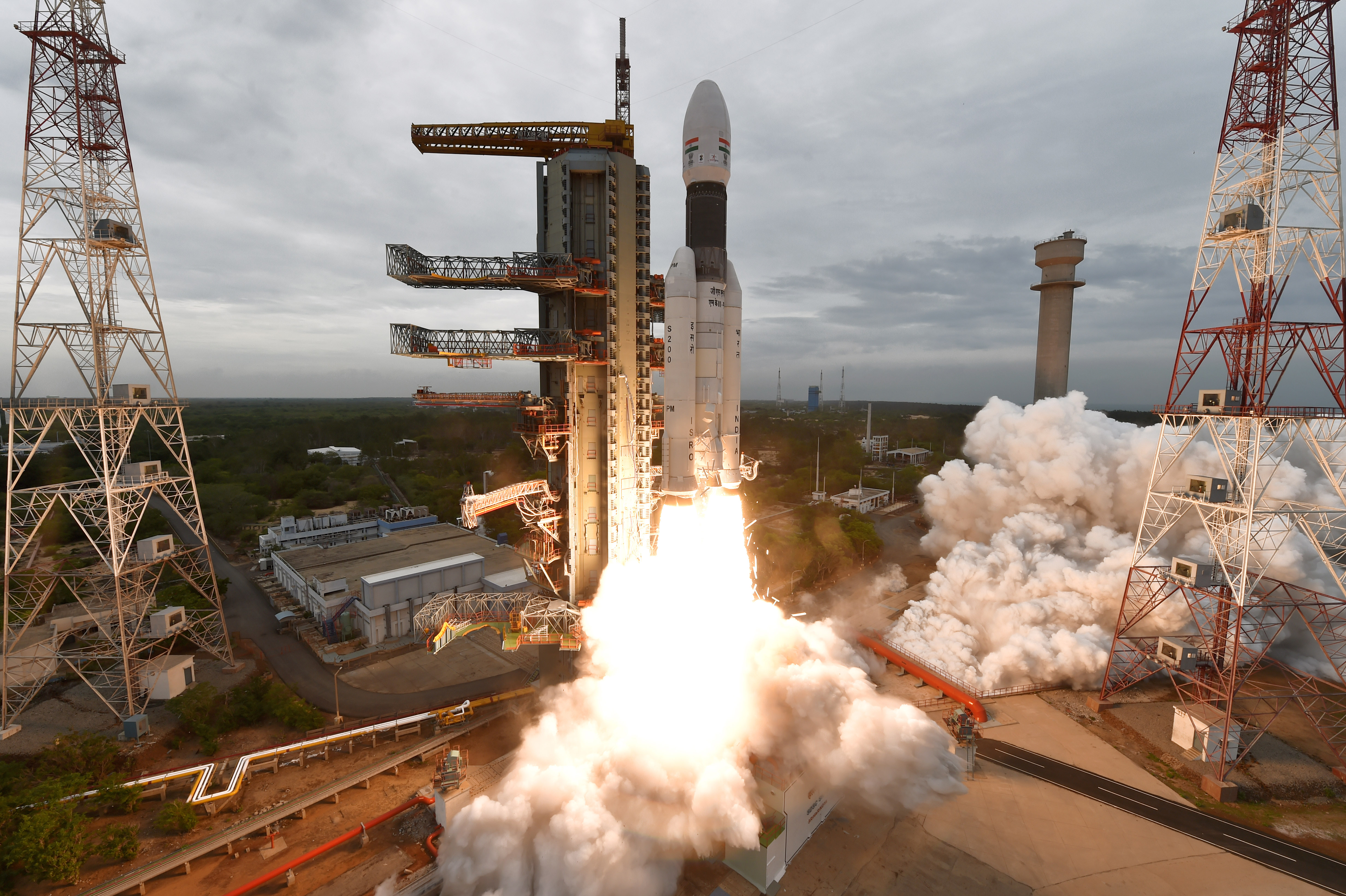
    Chandrayaan 2, India’s second mission to the Moon lifted off from Sriharikota on July 22, 2019. The spacecraft was launched on board India’s GSLV Mk-3 rocket on it’s maiden non-development flight.

    Photograph of the launch of the GSLV Mk-3 with the Chandrayaan 2 spacecraft by ISRO.
    GSLV Mk 3 lifts-off with Chandrayaan 2. Image Courtesy: ISRO

    It came after a launch scrub surrounding which there was lack of information and a lot of speculation. I watched the launch with my grandmother in Mumbai.

    Since the launch, the spacecraft which currently has an orbiter and lander attached to each other performed 5 orbit raising manoeuvres on the way to the Moon.

    India adopted this gradual orbit raising manoeuvre in order to balance the limitation of the spacecraft and the launch vehicle. A lower mass of the spacecraft would enable the launch vehicle to place the spacecraft into lunar orbiter but it would then not be able to carry any meaningful payload. The launch vehicle had only enough power to place Chandrayaan 2 in a geosynchronous transfer orbit.

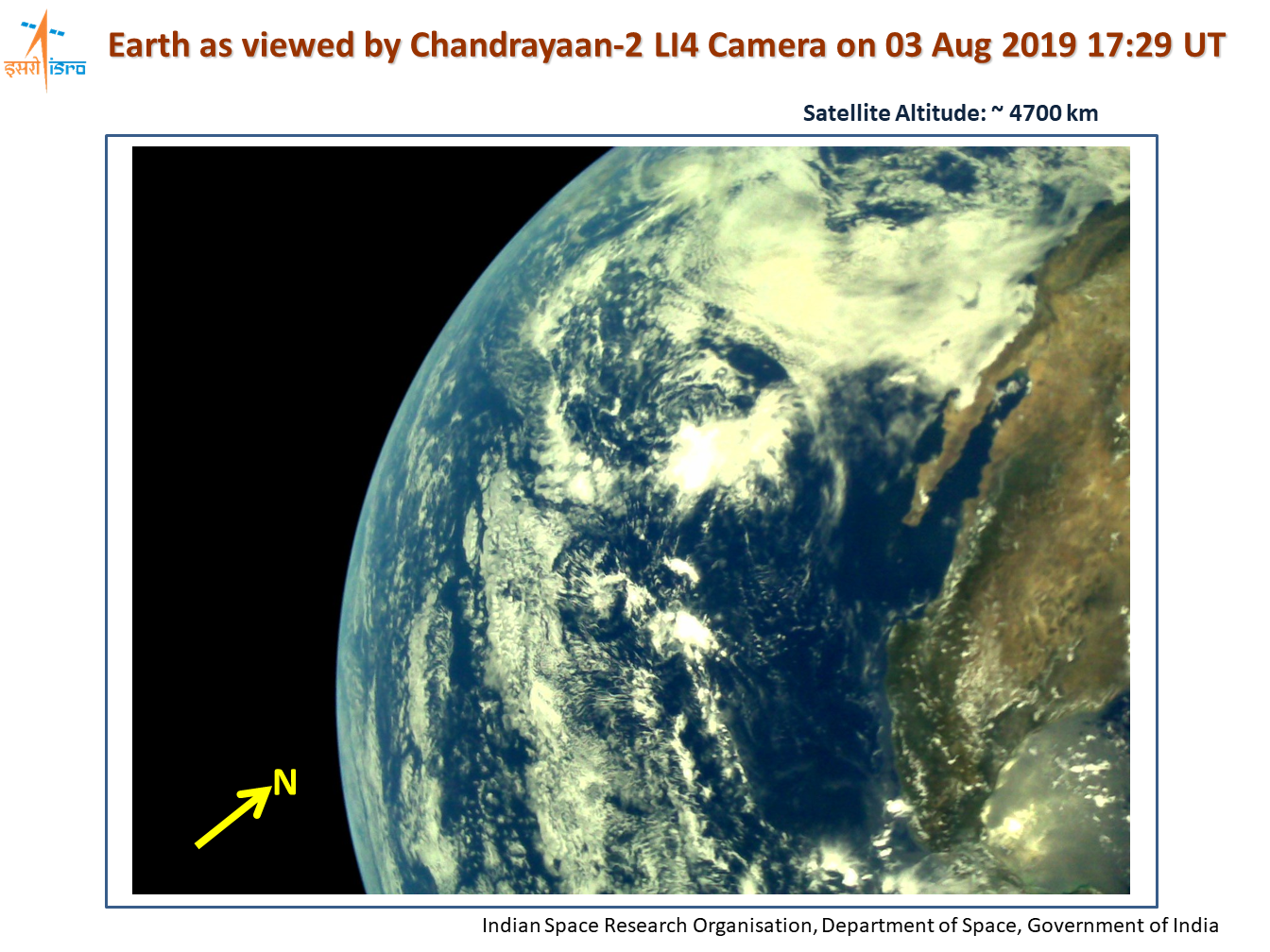
    Image of the Earth taken by LI4 camera on board the lander on Chandrayaan 2.
    Image of Earth taken by the LI 4 camera on board Chandrayaan 2. Image Courtesy: ISRO

    After the 5th orbit raising manoeuvre, the spacecraft will push off towards the Moon called Trans Lunar Insertion on August 14. Afterwards, the spacecraft will perform one more burn called the Lunar Orbit Insertion on August 20 that will let the spacecraft be captured by Moon’s gravity.

  • The First Flight of the GSLV Mk-III

    As I write this, the GSLV Mk-III would have commenced its 25.5 hour countdown to launch at 1728 hrs (IST) on June 5, 2017. The 3-stage GSLV Mk-III will carry the 3136 kg GSAT-19 to a geostationary orbit. The satellite carries transponders for communication, a scientific instrument to study the nature of charged particles and effect of space radiation on satellites and among various other technologies an indigenously built Lithium ion battery. This will be the launch vehicle’s debut flight and hence called D1.

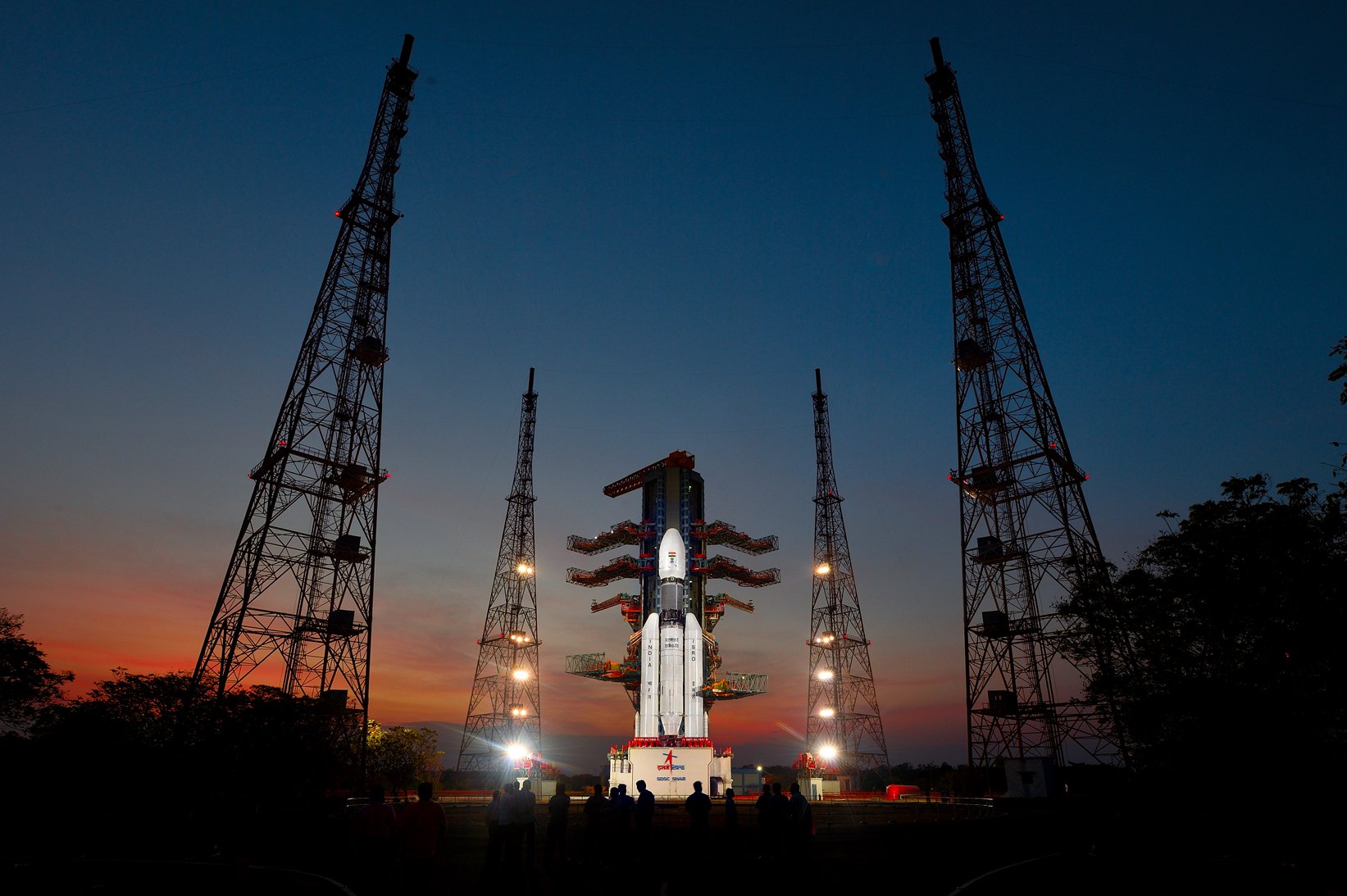
    GSLV Mk-III at the Second Launch Pad
    I love the dawn/dusk time view of the launch vehicle. Image Credit: ISRO

    The GSLV Mk-III flew last as GSLV Mk-III-X, an experimental flight where it flew with a passive third stage and the CARE payload. The sub-orbital flight was intended to study the launch vehicle configuration and went off successfully. It allowed ISRO to study how the launch vehicle performed in flight. The crew vehicle CARE splashed down in the Bay of Bengal near Andaman and Nicobar islands and was recovered by the Coast Guard.

    The GSLV Mk-III is India’s medium lift launch vehicle capable of flying 4 tonnes to Geosynchronous Transfer Orbit and 8 tonnes to Low Earth Orbit. It is intended to place India’s heavier communication satellites in orbit. It has two S200 solid fuel boosters attached to a core stage. The core stage has two clustered L110 Vikas Engines. The third stage Cryogenic Upper Stage C25 is powered by the indigenously developed CE-20 engine. The payload fairing also has a “slanted strap-on nose cone for aerodynamic robustness” added to it after the X flight.

    Notice the change in language. It is no longer called as first, second, third and fourth stages as in PSLV and the GSLV. The stages are called as booster, core and upper stage.

    This will also be the time when the CE-20 will actually fire and take a payload to orbit. It is different from the cryogenic engine on the GSLV which is called CE-7.5. The GSLV Mk-III-X carried the CE-20 but it did not fire.

    I had written about the commercial aspects of the GSLV launches in the Wire in 2015 and think that the same holds for the GSLV Mk-III as well. India has already begun developing satellites which require a launch capability more than that provided by the Mk III. An example is the soon to be launched GSAT-11. GSAT-11 weighs 5725 kg and is going to be launched on board the Ariane-5 in 2017-18 and uses the newly developed I-6K bus. This requires development of heavy lift (launch capability to GTO of more than 10 tonnes) launch vehicles. This development would be pursuant to lessons learnt in the development of the GSLV and the Mk-III.

    GSAT-19 is largely a communication satellite. It holds improvements in satellite components such as heat pipe, gyros, accelerometers and an indigenous Lithium ion battery. There is very little information that I could find on GRASP (Geostationary Radiation Spectrometer) besides what it says about studying charged particles and impact of space radiation on satellites.

    With so much to write about, I was not happy with the initial reportage in the Indian press looking at India’s human spaceflight program (example). I wish they would ask ISRO to share more information on the payload (the science payload as well improvement in space craft instrumentation) and the improvements in the launch vehicle that the GSLV Mk-III X flight enabled.

    I wish ISRO and the GSLV Mk-III team all the best and Godspeed!

  • Review: ISRO Annual Report 2013-14

    I saw the link to the 2013-14 Annual Report on the ISRO website thanks to the blinking “NEW” sign next to it. Usually, ISRO reports go over the top with missions that they tend to be working on and hoping to cover more ground than they realistically could. It usually had timelines that no one knew how they’d meet.

    The 2013-14 Annual Report is different. It states the basic facts under each section and dwells very slightly on the future course of the missions under development. I am not really sure how I feel with this change especially since they did the unthinkable in putting together and launching the Mars Orbiter Mission in record time.

    I have had things weighing on my mind this whole year. This meant that I have not been that on top of space developments as I have been in the past. The Report, put together as a sort of summary of what happened in the 2013-14 period that it covers, hence make lovely reading for me but really bland reading for people already in the loop. The Report is a long series of things which just goes like, “This happened, this happened, this happened, and you know what, this happened too!”

    Without further ado, let’s go through this report now, shall we?

    I like to begin with the Space Transportation Systems section and begin with the GSLV Mk-III project. This three stage vehicle is now prepping for a passive cryogenic stage flight carrying the Human Spaceflight Crew Module on top to test the design of the whole stack. ISRO has never done this before – flown a mission without a payload – since each launch cost so much. However, the string of failures that the GSLV Mk-I and Mk-II saw has slowed the approach they’re taking with the Mk-III or LVM3 as they refer to it internally and presentations they make. The passive cryogenic stage means that the cryogenic stage does not actually fire whilst the giant twin S-200 and the liquid L-110s will fire and take the vehicle up to a certain height and the engineers will get valuable data that can be used to improve the design and fix flaws in the aerodynamics. I really loved this picture of the CE-20 cryogenic engine that is at the heart of the third stage of the LVM3 in the Report undergoing a hot test.

    CE-20-Thrust-Chamber-new

    Image: The CE-20 cryogenic engine undergoing a hot test. Image Credit: ISRO. Image Source

    Next, again in the Space Transportation Systems section is an eerie sounding title called “Pre-project Activities of the Human Spaceflight Programme”. The ISRO asked the Government for some money to put together the systems that would enable a human spaceflight programme. This section basically details on what happened under that head. The most interesting aspect for me in this are the Crew Module Atmospheric Re-entry Experiment (CARE) and information related to tests for the Crew Escape Systems. CARE is expected to be on top of the LVM3 experimental flight I talked about above. This is an important test because it gives us crucial indications as to what the Crew Module can handle during an atmospheric re-entry or to put it bluntly, if humans inside it can survive an atmospheric re-entry. I am not really in favour of mingling this along with LVM3-X and think ISRO is trying to do too many things at once.

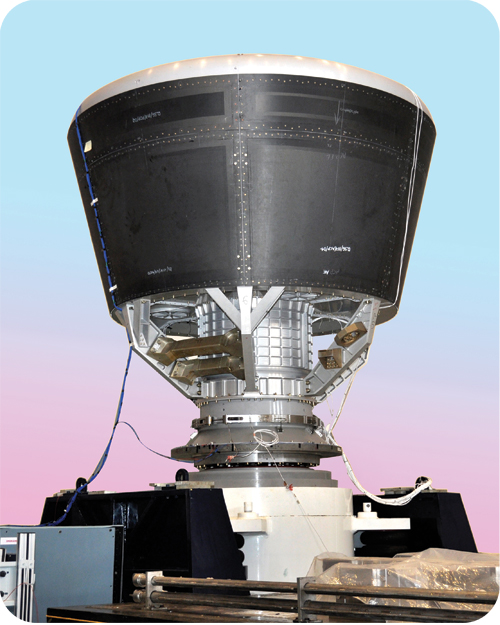
    5HSP-CMImage: The Crew Module undergoing a test. Image Credit: ISRO. Image Source

    ISRO loves indecipherable précis. Pray, expand on this? “Functioning of newly developed Head-end Mounted Safe Arm (HMSA) for solid motors in Crew Escape System was successfully demonstrated.” The work with parachutes with tests conducted in Chandigarh and Agra is interesting and I wish ISRO shares more of these on its Facebook and Twitter sites. With pictures, please!

    I really need to read up on this LVM3-X flight. I think I’ve not really understood it well. Under the GSLV Mk-III section, it does not make mention of the Crew Module flight during the LVM3-X flight whereas the section above does. Hmm!

    If you wander to the Space Sciences and Planetary Research section, the section on the Mars Orbiter Mission piqued my interest but ended in disappointment. The section is a nice synopsis of what’s happened so far. No looking at the future. No mention of a future/planned Mars mission. The mission does deserve kudos for its achievement thus far and I think the section does not do it any justice. The section on Chandrayaan-II is more interesting. This is the section in which the marked toning down of ISRO’s Reports becomes most glaringly visible. Earlier reports were talking of Chandrayaan III or even IV by 2015. This Report only marks the parting of ways with Roscosmos and the tough job of developing a lunar lander that lies ahead of ISRO. It does not even offer a guess at the possible launch time-frame, though news reports have been pushing it further and further into the future. Pendulum swings! They’ve now got their launch vehicle – the GSLV Mk-II. They’re working on the orbiter and rover since they were working with Russia. The parting of ways on the project means that they had to rework the project with an Indian lander.

    Chandrayaan 2 rover mobility test
    Image: Chandrayaan-II Rover undergoing mobility test under reduced gravity conditions. Image Credit: ISRO. Image Source

    The Audit Observation section also has an important paragraph on Edusat, India’s effort at tele-education. Whilst ISRO has been at pains to make this into a success, the CAG seems to report that the planning was bad and basically all the ground infrastructural network did not come up as expected. As the network developed, the satellite idled with no useful function. By the time the network on ground developed, the satellite seems to have given up waiting. I also think that similar criticism can be levelled at ISRO for its planetary projects to Mars and the Moon. Chandrayaan-II seems to be coming almost a decade after it’s predecessor launched and there is no mention of the next Mars mission at all.

    Annual Reports usually make drab reading except for people who follow intently. Earlier, ISRO has gone overboard with planning and now seems to be extra shy thanks to all that it wasn’t able to achieve as promised. I think the Report needs to strike a healthy balance of information on the projects undertaken in the year and a glance at what’s coming in the future, especially if it is exciting.