I was wondering during lunch about how I can improve my note making workflow. This thought arose because I have also been thinking about improving my task capturing workflow at work.
I was introduced to the difference between note taking and note making in a post by Anne-Laure Le Cunff. Note taking is about integrating the knowledge in your matrix and hopefully improving your life.
I have focussed on note taking so far because I had a hard time getting that under control. My approach changed when I read Cal Newport’s Slow Productivity. The first principle in Slow Productivity is Do Fewer Things. Accordingly, I reduced the amount of content that I read.
I wrote here earlier about how I wanted to reduce this consumption by considering how I consume social media posts. I wrote here about how I reduced that even further to the blogs that I read. I wanted to slowly repair my damaged attention span that allowed me to take a lot of notes but not make many notes.
Late last year, I purchased the same pocket notebook that Hiran suggests in how he uses a bullet journal and using his idea of numbering the bullet instead of the pages and using an index. I was able to take more notes in the pocket notebook.
But, I also like keeping the A5 sized Bullet Journal since I like to write a lot by hand. I started spending more time copying things over from the pocket notebook to the Bullet Journal.
I did this because my 7 y.o. daughter would raid my empty notebook stack to repurpose it for her own use. The casualty rate of the empty notebooks was quite high.
At the other end my 2 y.o would pick up the pocket notebook I would be using and treat it as he liked. He would tear it, rip it apart, or colour in it, depending on his mood.
I found myself repeating the same things when I looked at my notes. I seem to be going through the same stuff or reading authors who seem to be saying the same thing.
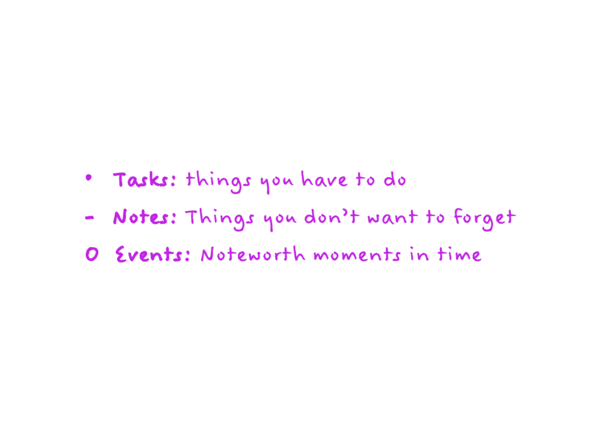
This the process I am now considering as a result of asking the question (refer to the sketchnote at the bottom right for the question), How can I improve workflows for capturing? [An earlier version of this read as, “This is the process I am now considering:”, updated 27 March 2025, 2308 hrs]
- Write down the note in the physical A5 Bullet Journal or Pocket Notebook.
- This includes some highlights from books, blog posts, or articles that I read on Readwise’s Reader.
- This includes some screenshots or notes I take on Google Keep. This is usually when I listen to videos, podcasts or audiobooks.
- I am thinking of writing these notes at a certain frequency to Roam Research. The highlights from Readwise’s Reader sync with Roam Research.
- I am thinking of then exporting these notes to my laptop where I am considering the option between Emacs or Obsidian.
- Since these are text notes, mostly, I hope to back them up to offline storage.
This is not the end of the story. It has already been 3 months. So, the idea behind this post is to help you catch up with what’s happened so far.
The next part will drop when I finish thinking and implement the system outlined here.
Update 1: 31 Mar 2025
Saurabh hopped on a call with me. He suggested using the Eisenhower matrix to determine importance of the notes and then blocking out time on the calendar to grapple with the note.
 Parallel Spirals
.jpg)