I heard of Shwetabh Gangwar on the day my credit got added to my Audible account as a suggested book for me. Reading about him, found out that he was a professional problem solver on Instagram using the handle @mensutra. He also has his own YouTube channel where he has been more active lately.
His book, The Rudest Book Ever (Amazon Affiliate Link) is built around three ideas –
People are weird
Rejections are common
We are not special
He then builds these three ideas up throughout the book applying it for fields like relationships, career advise, use of social media etc. Personally, I really loved the Chapter on how to think.
To me, with my limited experience came across as someone who apes the style of GaryVee and applies principles that I have heard on some Osho talks but falls vaguely in between. An interesting book to browse through especially if you have the airs about you being someone special and who are not used to accepting rejections easily.
I’ve subscribed to Ryan Holiday’s daily email newsletter, Daily Dad since I heard about it on his podcast with Peter Attia. Before this, I had struggled with answering questions related to bringing kids into such a violent world and the curbs on our freedom that they impose. In his newsletter edition on March 13, titled The Trade off is worth it (you can listen to the edition as a podcast) answered this question for me.
This is the last paragraph in the newsletter:
“Most of the freedom I had before kids,” Paul Graham wrote, “I never used. I paid for it in loneliness, but I never used it.” It’s true for you too. It’s true for all of us. We’ve paid a high price for these kids, but we have gotten—we will keep getting—so much.
The quote above is from Paul Graham’s essay on Having Kids, which is also a great read. That is a longer answer to Holiday’s concise one.
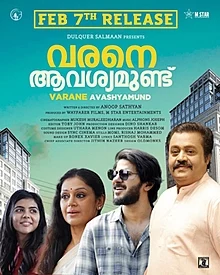
When AK released in theaters, our daughter and financial priorities meant that we decided to wait for the movie to release on an OTT platform. AK came out on Amazon Prime this Friday (March 13, 2020). We decided to watch the movie at home. We streamed it on our television set using Chromecast.
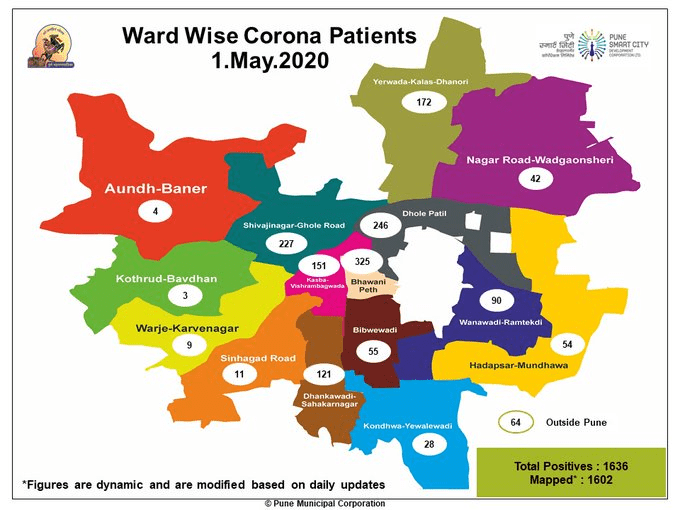
The COVID-19 virus had hit Pune with 9 positive cases. People were being wary of visiting malls and theaters. So, we decided not to catch any of the new movies in the theater over the weekend.
I had watched YouTube interviews (one and two) of the cast which included Biju Menon and Prithviraj before watching the movie.
Ayyappan Nair is a Sub-Inspector in a tribal area of Attappadi in Palakkad. Koshy is a retired havildar with an ego of having served in the Indian Army. The Police and Customs joint team arrest Koshy with liquor in a no-liquor zone. Upon arrest, Koshy makes his contacts known and the police are worried about the influence. Ayyappan Nair comforts Koshy with tactful words and seeks to appraise Koshy about the seriousness of his offence. Koshy now sobered by the realisation that he might have to spend time in jail, appeals to Ayyappan Nair’s humanity and the fact that he has a bedridden mother and two children at home, near Christmas time. Ayyappan Nair says he cannot help in the situation since it is a joint operation. Koshy acts as if he won’t be able to control himself if he can’t have a glass of alcohol. Ayyappan Nair commits a faux pas with encouragement from his superior of offering a glass of alcohol to Koshy who captures this on video in his phone.
This is the premise from which the whole movie starts. What follows are complications because of Koshy’s ego and Ayyappan Nair’s sense of justice that a person with influence can get away with so much in our society while the poor who have little or no-influence are made to suffer. Nair and his subordinate are suspended despite 27 years of unblemished Police service. Ayyappan Nair’s dismissal from police service returns him to his old ways – his wild animal self unleashed by knowledge of what a person with influence is able to accomplish. His wife is branded a Maoist and sought to be arrested. Ayyappan Nair’s good faith and trust built in his community, knowledge of the law and some good snooping skills are probably what saves him.
I find it hard to believe that Ayyappan Nair lets his guard down as Koshy films him at the beginning of the movie. He mistakes it for the fact that Koshy is looking for a contact on his phone. There wouldn’t be a movie if this didn’t happen.
As Koshy’s character develops, that his actions are not only ego-driven but are also a reflection of his relationship with his father. He seeks to gain his father’s approval which seems to drive his machismo. He soon learns of this, reprimands his wife for not having acted earlier despite living in fear and decides to teach his father a lesson.
Koshy also tries to teach Ayyappan Nair a lesson but interference by his father complicates a simple issue that the two men could deal with. Koshy admits defeat and claims that Police uniform is the only thing that would tame Ayyappan Nair’s wild animal reaction.
Ayyapan Nair’s tribal wife is one of those confident female characters who shatters Koshy’s machismo. It probably begins Koshy’s journey of self-realization and moderation. Ayyappan Nair’s journey back to moderation begins at the end of the movie.
The best way to end this review is to quote from another review:
This is a movie of two men and their egos. If you need an adrenaline rush and enjoy larger than life images venting out animalistic urges, go for this. It is a good watch for this day and age.
I began reading Natasha Badhwar’s column for The Mint Lounge every Saturday before my marriage. Since, I began, I have got married and have become a father. The best way to write this review is perhaps to quote her to explain her writing. I don’t think I can do any justice writing it myself.
As usual, I am getting the reading all wrong. I am reading her last book first. Immortals for a Moment (Amazon Affiliate Link) is her second book after My Daughter’s Mum (Amazon Affiliate Link). It took me about two months to read the book starting on January 3 and ending on March 4. Some of the chapters are overwhelming and the depth of the matter leaves you thinking for quite a few days after you reading. Her writing made me observe my wife and my relationship with our daughter.
Let’s start with the title of the book. This quote comes towards the end, in between the last and the penultimate chapters –
Snatching the eternal out of the desperately fleeting is the great magic trick of human existence.
Tennessee Williams
Most of Badhwar’s writing is routine, day to day happenings. But, as they progress, they somehow catch a glimpse of the eternal laws. She writes somewhere:
Stories trick us. A story that starts off looking like it’s my story turns out later to be everyone else’s story.
Natasha Badhwar
She talks about how writing helped her create a record of happenings that let her look back at her life and spot trends that she would have missed otherwise in her conversation with Amit Varma. In the book, she writes:
Writing connects the stories. The writing brain is usually not the social self. It is slower and smarter. Writing forces me to understand and unravel, rather than judge.
Writing makes us read better. I scour words by others, looking for sentences that say what I have also felt. I look for worlds that are more honest than the one I am stuck in. I am forced to become honest to deserve entry into a better world.
Writing can be a pious activity, like a prayer after a bath. It has to be done with a clean and honest intent. Its purpose is to focus our own mind so we can draw on our abilities.
Natasha Badhwar
Reading the book during a particularly troubled times in the backdrop of the CAA-NRC protests, I found some of her writing reflective. Especially since some of the arguments are with people we love.
I have given up on arguments without bothering to engage. But I am holding on to the belief that people are more than what they say they believe. It’s a waste of time to take them personally.
Natasha Badhwar
One of her observation made me learn about something I experienced in my past life as a bank clerk. Each document with a different spelling of the same name. But, only in the documents of the poor. It seemed that so many updates to the names that I made makes sense in light of this sentence:
‘We are poor,’ she said. People get offended if we have good names.
Natasha Badhwar
I’ve never felt particularly attached to any home that I have lived in so far. However, this definition of a home that she provides, makes me reconsider my own definition of home:
Home is a place you create inside yourself, we discover. It is a landing ground whenever we need to touch base with our own selves. The further we travel to immerse ourselves in an unfamiliar world, the closer we get to ourselves.
Natasha Badhwar
Her insights into parenting alone will require reading the book and her pieces in Mint Lounge. But, this is the crux, according to me, or my interpretation of her work:
One of the biggest lies of parenting is that the parents are always right. The second lie is that it is the children’s responsibility to make their parents happy when they grow up.
Natasha Badhwar
A passage of the book that I stayed with for a really long time was this:
Perhaps the greatest delusion of my life has been the belief that the world in which I was a child may have been the dark ages, but the world in which I have grown up to be an adult has to be far more enlightened and equitable than before. Social norms and attitudes that perpetuate injustice have remained tenacious. The news remains the same. Questions that had remained unanswered when I was a child still demand answers. If I do not want my daughters to internalise that violence is the inevitable fate of women in our society, I have to find a new language to speak to them. ‘Caring for myself is not self-indulgence, it is self-preservation, and that is an act of political warfare,’ Audre Lorde wrote in her book of essays, A Burst Of Light. The first time I had read this sentence, it cut through my cultural conditioning like a sheath of light. It demolished the notion that putting everyone else’s needs before one’s own is a virtue to be extolled.
Natasha Badhwar
Listening to people like Naval Ravikant speak, it seems to me that each generation is improving. This is the sense I’ve had. I do not reach a similar conclusion as she reaches reading the words of Audre Lorde. But, having a daughter and thinking from the point of view of my wife, I can see the pulls of social norms and attitudes affecting their thinking. It left me with the question of this difference in the way of looking at the world between men and women.
I’d just like to end to let you think through this thought near the beginning of her book:
In the beginning, we love like our life depends on it. Then we learn to live, because our love depends on it.
Natasha Badhwar
Her writing is simple, her observations are mind blowing and I think reading her work, whether in Mint Lounge or this book is worth your time. These are themes that we don’t think about in the course of our day.
[It took me well over a week to write this all down. The best way to digest this information is to consume it in podcast form and read the transcript for clarity. I thought the podcast was so information-packed that it took me 19 revisions and 2785 words to put this all down. I started with in-depth exploration in the beginning but took to compressing ideas into paragraphs later. There’s still a lot that I don’t understand about the subject. Writing this also kept me away from writing any other post in the meanwhile. My thanks to Mat Kaplan for this wonderful interview. – Pradeep]
Paul Davies is the Regents’ Professor of Physics and Director of the Beyond Center for Fundamental Concepts in Science at Arizona State University. He is a physicist, cosmologist, astrobiologist and author who has written thirty books.
The following is my podcast notes of the interview that Mat Kaplan did with Paul Davies for Planetary Radio [+transcript]. They are talking at University of California San Diego’s Arthur C Clarke Center for Human Imagination studio. This is a huge podcast episode at almost an hour and ten minutes. The podcast discusses his latest book, The Demon in the Machine: How hidden webs of information are solving the mystery of life (Amazon Affiliate Link).
Kaplan first tries to understand the context in which this book is written. There is a fundamental difference that we see in Living Matter and Non-living Matter. Davies suggests that this fundamental difference is information. He gives us an equation to understand this:
Life = Matter + Information
Paul Davies
Davies suggests that the present Physics cannot provide a solution for helping us understand this issue. We need or need to discover a new Physics to understand the problem. We need to dive back into some history for this context.
History of Context
The hero of this story is Erwin Schrodinger (famous more for his thought experiment with a cat). Schrodinger is an Austrian who succeeds Max Planck in 1927 in Berlin. In 1933, he leaves Germany and moves to England. He is invited to Ireland to establish Institute for Advanced Studies in Dublin by the then Prime Minister of Ireland, Éamon de Valera. He moved to Clontarf, Dublin as Director of the School for Theoretical Physics in 1940. He stays here for another 17 years. Ireland is neutral during World War II. He gives what are a string of lectures about life (in the biological sense). Davies calls Biology the next frontier of Physics.
Schrodinger is the architect of Quantum Mechanics. His theory works really well for non-living matter. It explains almost everything from atoms to stars. Where it does not explain things is when it comes to living matter. In 1944, these are compiled into a book called What is Life? This book has an immense influence on the field of molecular biology.
In 1944, he wrote What Is Life?, which contains a discussion of negentropy and the concept of a complex molecule with the genetic code for living organisms. According to James D. Watson’s memoir, DNA, the Secret of Life, Schrödinger’s book gave Watson the inspiration to research the gene, which led to the discovery of the DNA double helix structure in 1953. Similarly, Francis Crick, in his autobiographical book What Mad Pursuit, described how he was influenced by Schrödinger’s speculations about how genetic information might be stored in molecules.
Davies says that biologists however got distracted and involved in the field of molecular biology and lost track of the bigger picture. In the past two decades, the focus has gone back to the bigger picture.
Information is the secret sauce…
What differentiates non-living matter and living matter is the information. Davies says that the use of the word information here differs significantly from the way we talk about information in our daily life. He says that when defined in Physics, information becomes a part of the laws of physics much like energy does. Information enters Physics through the Laws of Thermodynamics.
Here, we go further into the past. We go to the mid-nineteenth century. James Clerk Maxwell who was working on concept of heat at King’s College in London. In a letter he sent to a friend, he asked that his friend consider a diminutive being that could see and follow molecules. The being could then use a shutter mechanism to sort fast and slow moving molecules. Slow and fast moving molecules determine temperature. So, by sorting the molecules, the being has created a difference in temperature. An engineer could, in principle create an engine that could do work. This being that Maxwell discusses is called Maxwell’s Demon. It is this demon that the title of Davies book references in the title of his book.
Maxwell’s suggestion created a perpetual motion machine, in effect and went against the First Law of Thermodynamics. In the podcast, Davies says it goes against the Second Law but then describes it as, “We can’t get something for nothing”. I think he’s going after the First Law. Maxwell’s thought stood as a thorny issue in Physics for a long time.
However, in the last two decades, scientists have been able to create these Maxwell demons at the nano level. However, they have not yet been able to scale it up. However, this introduces information into the realm of Physics.
Entropy
The Laws of Thermodynamics predicts that entropy (the level of chaos or disorder) in a system goes on increasing. However, information seems to reverse this trend in living systems. In the words of Schrodinger, “Order from order, evermore order.” This, is used as an example of a miracle.
However, Davies suggests that order in living systems is paid for by disorder in the environment. And so, overall, things are balanced. He says living beings are open systems. In Thermodynamics, that means a system that allows transfer of energy and mass.
Davies then jumps to the life at molecular level where Davies says that Maxwell demons are working to get the most thermodynamic efficiency in living systems. He now gives examples of this nearly 100% efficient Maxwell demons enabling replication of the DNA. The most exciting example that Davies cites for this efficiency is the human brain. A megawatt capability supercomputer is operating at such efficiency that it works at the energy level of a dim light bulb.
Original World Wide Web
In Biology, Davies says, information also plays a managerial or supervisory role. Information flow scales up from signalling (chemical, mechanical and electric) mechanisms between cells, to decision making among insects, to co-ordination between birds in a flock all the way up to the planetary scale. Another key Davies line spoken here is,
And I like to say that the biosphere is the original worldwide web.
Paul Davies
A New Physics
Davies says that the information flow in biological systems is more than just simple information flows. He says that information is encrypted and has to be decrypted for use by cells. Information has to be read and expressed in a certain way and biological systems express this. Physicists have not found a way to incorporate this into Biology and hence, this is where Davies think the New Physics that he thinks is required will come from. Information makes a difference to the way that an organism behaves. Davies thinks this has a physical effect.
Complexity
Davies now arrives at the topic of complexity of biological beings. Kaplan discusses his high school biology experience of the complexity involved in a single cell. Davies responds by saying that scientists don’t have a way to measure the complexity at say the level of the biosphere or even the organism. He says we don’t yet know if the complexity increased with time or is there a fundamental law that defines the growth of complexity and other problems related to Complexity. However, he says at the root of it all are atoms, whose Physics we know well.
[To me personally, there seems to be a relationship between Complexity and Entropy.]
Davies says however that talking about things at the molecular level and then seeking to get answer about complexity has a parallel in the world of computer science. A scientist trying to explain complexity in terms of molecules would be like a software engineer trying to explain his code at the level of electrons flowing through computer hardware. Davies says that there are people like Paul Nurse who are seeking to explain Complexity in a language and precise terms of code that software engineer uses.
Epigenetics
Kaplan asks about the change in our understanding genes express themselves as the understanding of DNA not as a ROM but as a read/write memory. Davies says that there has been a change in Biology in the last 30 years. He says that people have moved away from the assumption that genetics alone explains life. Expression of the genes also plays an important role. This is explored in the field of Epigenetics.
Things like an external physical force, physical environment, growth of cell in space, etc. seem to affect how the genes express themselves and this has an impact on how cell structure or the organism grows and develops. So, genes are somehow expressing themselves differently based on the information about their surroundings.
Davies cites the work of Cheryl Nickerson at Arizona State University in the impact of gut bacteria in astronauts. He says that the bacteria that are passive on Earth’s surface somehow get active in the environment of weightlessness and makes an astronaut throw up.
Davies also cites the work of Mike Levin at Tufts University who works with planaria worms. He says that planaria worms are cut at different parts of the body and they grow back up in the correct way. He says that using electrical patterning, they are able to grow worms with two heads, two tails etc. He says this proves that something more than just genes has a role to play in the way genes express themselves.
Information Flows
Davies says that Physics inherently has a bottom up structure of explaining things. Biology, on the other hand, explains things both ways, in terms of bottoms up and from the up down to the bottom. He says that Physics needs a way to do this. Davies says that thinking of information flows may be the simplest way of doing this. A cell gets information about its environment from the organism and changes the way it expresses itself. Things like electronics and gravity seem to affect the expression of the genes of a cell.
As an example, Davies says that in eukaryotic cells, the genes are in the chromosomes. There is complex structure and mechanism within the chromosomes that switches on and off the genes that get expressed depending on the environment.
Darwinism 2.0
Darwin suggested that the mutation in the organisms that evolved was random. Davies suggests it is not. He says that at the cellular level, that the way cells edit their genes have been shown to be statistically non-random. He says that Epigenitics explains the new biology much better than Darwin’s theory. He says Epigenetics is to Darwin’s theory what Einstein’s Physics is to Newton’s Physics. He says that Science replaces with even more approximate views of the World.
Cancer
Davies has a special interest in our ways of curing cancer. He says that in the beginning about 2 billion years ago, only single cell organisms existed. Their only job was to replecate endlessly. At some point in time, multi-cellular organisms came into existence. There is a contract of sorts between the cell and the organism. Cells perform specialised functions and in exchange the organism exists. He says Cancer is a return to single cellular nature of the cell, a breaking of the contract in multi-cellular organisms.
He says current treatment of Cancer targets the uncontrolled replicability of the cells. However, cells have learnt over 2 billion years how to overcome obstacles placed in the replicability of the cells. They learn to overcome radiation and there could possibly be chemotherapy resistance.
Davies suggests the ideal way to think of treatment of cancer is to “reason” with the cell. The cell does not realise that its replication while good for the cell, is bad for the host and could eventually lead to it getting killed. Davies suggests that one has to download a patch or reboot the system in order to manage the Cancer, in a way similar to Diabetes. In the end, its a way of making the cells behave better. This hasn’t been done in practice. It’s still all theory.
Quantum Biology
Quantum Biology is a field that has come into existence in the last 10-20 years. Life exploits quantum mechanics for little quirks. Davies sits on the fence about whether there is space for quantum biology. They’re currently at a place where they could be at the tip of the iceberg or it could be just small quirks of living beings.
The issue with quantum biology is the lack of ease of doing experiments. Davies says that there is a lot of thermodynamic noise in systems at room temperature. He says that’s the reason why quantum mechanics experiment happen at very low temperature. Here the effects are clearly visible. Not so much at room temperature. Also quantum mechanics involves simple systems but life is a very complex system.
Photosynthesis as an example of Quantum Biology
Photosynthesis is the process by which plant uses sunlight to break water molecules to create energy for the plant. However, what has been noticed is that there is some molecular distance between the place where solar energy is captured and where the break of the water molecule happens. Energy to break the molecule has to be transported with minimum loss of energy. It has been found that this transmission takes place using a principle called quantum coherence. Study in this field was begun and is ongoing under Graham Fleming at UC Berkley.
Consciousness and Quantum Mechanics
It is thought that Quantum Mechanics will either explain consciousness or it will not. Thinking currently is that at the quantum level, atoms live in a universe of multiple possibilities and parallel universes. However, when one brings in the act of observation, these multiple possibilities are brought into one defined reality by consciousness. There is also another school of thought that is looking at things from outside in and asking the question whether quantum effects exist in the brain. People like Roger Penrose at Oxford University and Stuart Hameroff at the University of Arizona are working to figure out whether there are quantum goings-on in cells and more importantly in the human brain that explains consciousness. Davies says that personally he is skeptical but open-minded about the possibilities.
Davies suggests that a quantum pathway could be a possibility for explaining the link between non-living molecules to living molecules.
Extremophiles
It is believed that one of the possible origins of life on Earth is in the depths of the ocean. It is kilometers below the surface of the ocean where perhaps even sunlight would not reach it. Davies suggests that life discovered the use of quantum coherence discussed above in these depths and improved and perfected it when it reached the surface. Other possibilities include origin of life outside Earth with comets and meteorites seeding the planet.
Phylostratigraphy
Phylostratigraphy is a new field of study where it is believed that genes can be dated. There are ancient genes and some recently evolved genes. It sheds light on how life evolved on the planet.
Miller Urey experiments
Chemists have been trying to cook up life in laboratories by mixing various organic chemicals but without any luck. Stanley Miller tried to experiment using simple organisms from chemical substances. Davies thinks this is a stretch and the wrong way to do things.
How does life code?
Davies says that the real question is how does life code. Going back to the computer analogy, he thinks that life is the software which codes. It’s the way which life processes information. He believes that this is the boundary between non-life and life. But there is no answer as to how these cells learn how to code. Cells store information, process information and encodes this information and passes it on.
New ways of thinking
Davies suggests that life is so complex that we need new ways of thinking about life to break this code. His way of thinking is to think about parallels with the world of computers.
His craziest paper has been a submission to a journal Nature on the quantum origin of life. He suggests that the original code existed on an interstellar dust of grain existing at 3 degrees above absolute zero, the temperature that existed in the cosmic microwave background. He suggests that life code existed here and coded in q-bits. It made copies that got stored in organic molecules that seeded Earth and is possibly seeding other planets as we speak.
Davies suggests that such crazy ideas are necessary as we think about that jump from non-life molecules to living organisms.
Joaquin Phoenix won the Oscar 2020 for the Actor in the Leading Role for his performance as Arthur Fleck in the Hollywood movie, JOKER! But, what I liked was this insight into the current world scenario:
I think at times we feel, or were made to feel, that we champion different causes, but for me, I see commonality. I think, whether we’re talking about gender inequality or racism or queer rights or indigenous rights or animal rights, we’re talking about the fight against injustice. We’re talking about the fight against the belief that one nation, one people, one race, one gender or one species has the right to dominate, control and use and exploit another with impunity.
But human beings, at our best, are so inventive and creative and ingenious, and I think that when we use love and compassion as our guiding principles, we can create, develop and implement systems of change that are beneficial to all sentient beings and to the environment.
Fogg proposes the Tiny Habits method of behavior change. He talks of habits not in terms of breaking them but in terms of untangling them. Think of behavior change the way you would untangle the mess of wires to straighten out your headphones. Changing habits is a process where you move from the easiest to the most difficult.
Fogg suggests that long lasting behavior change happens by changing really small habits as part of a routine. Imagine you want to make a tiny change. Fogg suggests identifying a routine attached to the change that you require. Inserting the habit as part of the routine and then slowly increasing the number of repetitions.
As an example, if you want to inculcate the habit of flossing your teeth, he suggests flossing just one tooth after brushing your teeth (routine). He suggests that we stay with one tooth as long as we want. He also gives us the freedom to do more when we want to. The number can go up. You can floss three teeth or just one. The over-achievement on the day you flossed three teeth acts as motivation for you to do just a little more. This turns this into a behavior change of flossing the teeth after you brush it.
The Three Elements – Motivation, Ability and Prompt
Behavior change here involves three elements – motivation, ability and prompt. Fogg defines motivation as the driving force which energizes you to certain behavior. He suggests that there is a compensatory relationship between motivation and ability. Ability here stands for you knowing how to do a certain task. He says that when it is harder to do something, the motivation needed is more. When it is easier to do something, you don’t need too much motivation. He recognized this compensatory relationship over an eight year period of study! He warns us that we over-estimate our future motivation to do certain things. Hence he warns us from depending on motivation as a way to change habits.
He also warns us from thinking of our aims in abstract terms. Losing weight, reducing stress etc are outcomes. He suggests that tweaking systems and processes will lead to these desired outputs. He believes that the habits should involve less time, less effort and little cost to implement to be successful.
Here, he brings the concept of prompts. He thinks that there are three types of prompts – personal prompt, context prompt and action prompt. He says that personal prompt involves you or someone else reminding you that you need to do a habit. Context prompt is a notification that alerts you to do a habit. An action prompt involves using a routine as a prompt. In our example above, brushing your teeth is a prompt for flossing them. He says personal and context prompts are not effective. He thinks that action prompts are the most effective way to initiate long lasting habit change.
In My Opinion…
Listening to this podcast, this seemed like a more scientific version of Leo Babauta’s Zen Habits. It also seemed similar to James Clear’s Atomic Habits but with different terminology. Saurabh also spoke in his blog about changing habits for the new year and hence I thought this might be worth sharing. I would personally, rather follow James Clear method.
I loved what he says about celebration, though. This is his value addition to the habit change journey, in my opinion. He suggests that celebrating these small habit changes with a celebration make you feel successful. He says that these emotions get attached to the habits and re-wires your brain that converts these habits into part of your life. He suggests teaching children to celebrate after their every small habit change.
My wife has accused me of being addicted to the mobile phone. She, therefore, ensures that our daughter watches YouTube videos via Chromecast on the television. She is determined to make sure she doesn’t get hooked to mobile phones early on in life. It’s inevitable I say, but she’s fighting to keep this menace away from her daughter as long as she can.
My search to quit this addiction, online has led me to various resources. There was writing by Seth Godin, Cal Newport, Brett McKay and Ryan Holiday that contributed to ideas. There is also a r/nosurf sub-Reddit that addresses this issue.
I tried deleting the applications from my phone – Facebook, Instagram and Twitter. I didn’t stay off these for long, ending up installing them again almost instantaneously.
Before, I share my reading about this topic, let me share my current status. I have switched off all notifications except for phone and SMS. I have removed Facebook, LinkedIn and Instagram from my phone. I access them only on my laptop at home. I was able to hold this for about a week now.
I was listening to Peter Attia’s podcast, The Drive with Ryan Holiday today. Holiday, answering a question on how the connected life has affected our life, says that we reached a right about place in 2010 and then went overboard. He says that there was a time when we used social media just enough and then went over. Attia likens it to a tuning issue that went to the max setting after passing the optimum level. The max setting makes sense for some people but not for all the people in the world.
Further along the podcast, he talks about he keeps his smart phone in the other room and does not pick it up until almost after lunch. It makes for productive mornings and he lets people know that phone, SMS and email are the best way to reach him. Just earlier, he has read a comprehensive blog post about spending less time on the phone. Following one of the suggestions there, I am planning to move both of our smart phones out of our bedroom tonight.
Seth Godin also wrote a blog post today about that thing in your pocket that has an infinite options that are much better than what you’re doing right now. The idea is to prioritize what you have to do right now.
I have written earlier on the blog here about Cal Newport’s work on how social media has been designed to be addictive here. Brett McKay had called to build a Social Internet instead of being addicted to Social Media. Om Malik called for a decade of self-control. So, I’ve started on my own little journey. What about you?
Perhaps the greatest delusion of my life has been the belief that the world in which I was a child may have been the dark ages, but the world in which I have grown up to be an adult has to be far more enlightened and equitable than before.
Social norms and attitudes that perpetuate injustice have remained tenacious. The news remains the same. Questions that had remained unanswered when I was a child still demand answers. If I do not want my daughters to internalize that violence is the inevitable fate of women in our society, I have to find a new language to speak to them.
‘Caring for myself is not self-indulgence, it is self-preservation, and that is an act of political warfare,’ Audre Lorde wrote in her book of essays, A Burst Of Light. The first time I had read this sentence, it cut through my cultural conditioning like a sheath of light. It demolished the notion that putting everyone else’s needs before one’s own is a virtue to be extolled.
Natasha Badhwar, Children must triumph over their parents, Immortal for a Moment (2018,Amazon Affiliate Link)
I stayed in Lonar between July 2018 and June 2019. I was aware of the geological interest that the meteorite crater there held for the scientific community. I did not know what interest it held for the astrobiology community. I had the first opportunity to learn more when Jyotirvidya Parisanstha (JVP) hosted a lecture by Prof. Yogesh Shouche of the National Center for Cell Science. The lecture was about how Lonar Lake was a model for extraterrestrial life search! I kicked myself little for missing the lecture. Today’s podcast episode gave me a glimpse of what I probably missed.
Episode 16 of the NewSpace India podcast has Narayan Prasad (NP) in conversation with Siddharth Pandey, PhD. Siddharth heads the Center of Excellence in Astrobiology at Amity University, Mumbai. Below are the show notes from that episode.
Siddharth defines Astrobiology as the study of origin, evolution and distribution of life on Earth and the search for it elsewhere. He says Astrobiology formed the basis for some of the older space programs like NASA and Russia’s Roscosmos because it pertains to some of the fundamental questions that have been important to the human species like are we alone in the Universe and the search for life outside our planet. Siddharth wants to begin connecting to a network of people in India who are interested in Astrobiology. He returned to India after stints in America, Europe and Australia.
Siddharth says that astrobiology related experiments in India began in 2005 with teams led by Dr. Jayant Narlikar based out of IUCAA, Pune and TIFR, Hyderabad among others. This group believed in a theory called Panspermia – which says that life was bought to Earth by an asteroid impact at some point in the Earth’s history. This team conducted balloon experiments out of the field in Hyderabad that led to the discovery of bacteria living in extreme environments in the Earth’s atmosphere.
Siddharth says that the Methane search instrument (Methane Sensor for Mars – MSM) on board the Mars Orbiter Mission is an astrobiology experiment. He says ISRO had developed an astrobiology experiment knowingly or unknowingly. Methane is considered one of the bio-signatures that indicates the existence of life. Hence, existence of Methane corresponds to existence of life. He hopes we have more experiments flying to search for life in clouds of Venus and the surface of Mars. He hopes that the chance to carry micro-gravity experiments on board the 4th stage of the PSLV, SSLV and the upcoming human spaceflight mission, Gaganyaan increases the number of astrobiology experiment that can be designed and carried on these missions.
NP asks Siddharth if the lack of a Space Science roadmap is worrying. Siddharth says that he finds the fact that we have no clear Space Science roadmap concerning especially given ISRO’s plans for missions to Mars and Venus in the near future. He says that several meetings on these experiments have been held but the outcomes of these experiments need to be more widely shared. He hopes that in the future, scientists are involved right mission planning and architecture stage of the mission itself to design better payloads.
Siddharth says that there is a need for a National Committee for Astrobiology that brings together various Government departments like DST, DBT etc to develop a roadmap for Astrobiology and to co-ordinate an astrobiology program. He says that ISRO has been good at developing platforms for astrobiology experiments in space.
He then talks about analog environments that are present in India. He speaks about Ladakh, Kutch, Lonar in Maharashtra and Antarctica. He says that the low atmospheric pressure, low oxygen, high ultraviolet ray exposed environment which are well preserved for centuries in Ladakh provides conditions that are analogous to an early Mars.
He says that hypersaline bacteria and jarosite minerals found in Kutch have been studied by PRL, Ahmedabad and papers have been published in scientific journals. He says that being one of the largest continuous salt expanses make it an interesting field of study for it’s similarities to early Mars.
He says that the impact of a meteorite in basaltic rock, a form of rock formed by melting of volcanic rocks means that it takes longer to weather compared to meteorite impact on other types of rocks.. The site at Lonar, Mahrashtra is one that is most accessible among two other similar sites in the world. He says that Lonar also has a lake formed by a drain of a spring that drains into the crater. This is similar to the landing site for the Mars 2020 which may be going into a dried site where a lake such as the one in Lonar probably existed at some point in Mars’ history. Lonar offers similar basin and depositing mechanisms which scientists can compare and study from.
Siddharth says India has two sites in Antarctica – Maitri and Bharati. Of these, Bharti station is located on Larsemann Hills. The hill is of interest because it is ice-free. This is because geothermal heat prevents ice formation. This means scientists have access to rocks and access to study bacteria living in rocks which survive in dry and cold regions of Earth. It also has a permafrost where the ice has not melted as it is under the soil. Here the ice is preserved for centuries and hence of interest to scientists.
NP then asked about how a person interested in astrobiology can pursue it as a career option. Siddharth says that they are in the process of putting together a website with freely available reading material. Siddharth suggests that interested students can pursue Astrobiology at the post-graduate level after pursuing an under-graduate program in Biology, Physics, Chemistry, Engineering etc.
NP then asks Siddharth about possible citizen science efforts that can be undertaken in astrobiology. Siddharth talks about the development of a Space Citizen Network where citizens can get connected to research groups working in the field. He also suggests that citizens could connect with these groups when they go on field trips. There are plans for a field trip to Kutch in October 2020 and to Lonar in November 2020.
There are also plans for projects that can be undertaken at home. One of the plans is to distribute marbles and citizens can report back after studying microbial colonies that grow under the marble. Scientists are interested in understanding how microbial colonies grow and attach themselves to rocks. They also want to learn what environments support growth of these microbial colonies. This can be in addition to similar amateur astronomy projects like identifying asteroids etc.
NP then asks whether there are plans for an independent road-map for Astrobiology of Government efforts for the same. Siddharth says that plans are afoot to formalize a Society of AstroBiology Education and Research (SABER) that could be registered in Maharashtra. He says that the group had already met twice – once in Lucknow and once in Pune. They hope to develop a roadmap for the future growth of the astrobiology community. They might also consider contributing to mission objectives on future missions to Mars and Venus.
NP asks about raising funding for astrobiology experiments. Siddharth says that there is no single source for funding for astrobiology. Mostly, scientists raise funds from different departments and societies based on either where they are coming from or from organizations that are involved in their area of interest.
ISRO provides funding through its RESPOND and SNAP. He says that they have previously raised funding from companies like Tata Motors and National Geographic Traveller magazine. He is currently also thinking of reaching out to philanthropy houses in Mumbai to access funding for the future projects that they are thinking of undertaking.
Siddharth says that Amity is planning to put together a weekend program called Space for Everyone which would generate awareness about space. At the end the people who complete the program can join the Space Citizen Network. He says that astrobiology popularization has been hurt as there is a lack of credible speakers. He hopes that efforts above address these issues. Amity has also launched India’s plant growth space flight experiment called the Amity Space Biology Experiment -1 (ASBE-1).
On the role of the Media, he says that media should do more than simply cover events. They must provide a forum to discuss, analyze and critique events. He says that it must enable two way discussion between the scientist and the citizens. He says that India must look at reasons for which it is pursuing a scientific program.
NP says India has a strong Biotechnology and Pharmacy industry. He asks Siddharth about what is the scope for Indian biotech and pharmaceutical companies in participating in Astrobiology. Siddharth responds that astrobiology experiments would give these companies an opportunity to research how the human body behaves in microgravity and experiment with chemicals and drugs. He says that while there are applications in fundamental research, it would largely serve marketing purposes currently. Companies could showcase how their products are used in space programs and how their designs can be used in extreme conditions such as in space.
NP then asked where Siddharth sees the future of astrobiology in India. Siddharth replies that he hopes that ISRO works on larger support and infrastructural missions with private sector works on supporting low earth commercial missions. For astrobiology in India, he hopes that there is an active scientific society, meeting often to exchange knowledge and builds cross-domain and inter-disciplinary expertise that is needed. He also hopes India undertakes future missions to the moons of Jupiter and Saturn – Europa and Enceladus, that are considered some of the other sites in our solar system which could support life.
End of show notes.
This podcast also gave me a stream of ideas. We could Astrobiology Cafes to discuss recent developments in the field. As missions progress in this direction, I also think there will be discussions surrounding ethics and safety that arise. I do not see how these are tackled by the astrobiology community. This conversation excited me a lot, opened my eyes to what astrobiology really is about and agree with NP’s comment in the end that it was a dense knowledge transfer rich episode of the podcast. This reminded me so much of my days from 2009 when I developed a Lunar Analog Research Station.