Author: Pradeep

  • Tiny Habits

    Brett McKay talks to Dr B J Fogg for Episode 581 of the Art of Manliness podcast. Below are my show notes for the episode. The episode discusses Tiny Habits (Amazon Affiliates link), a book that Fogg has written.

    Tiny Habits

    Fogg proposes the Tiny Habits method of behavior change. He talks of habits not in terms of breaking them but in terms of untangling them. Think of behavior change the way you would untangle the mess of wires to straighten out your headphones. Changing habits is a process where you move from the easiest to the most difficult.

    Fogg suggests that long lasting behavior change happens by changing really small habits as part of a routine. Imagine you want to make a tiny change. Fogg suggests identifying a routine attached to the change that you require. Inserting the habit as part of the routine and then slowly increasing the number of repetitions.

    As an example, if you want to inculcate the habit of flossing your teeth, he suggests flossing just one tooth after brushing your teeth (routine). He suggests that we stay with one tooth as long as we want. He also gives us the freedom to do more when we want to. The number can go up. You can floss three teeth or just one. The over-achievement on the day you flossed three teeth acts as motivation for you to do just a little more. This turns this into a behavior change of flossing the teeth after you brush it.

    The Three Elements – Motivation, Ability and Prompt

    Behavior change here involves three elements – motivation, ability and prompt. Fogg defines motivation as the driving force which energizes you to certain behavior. He suggests that there is a compensatory relationship between motivation and ability. Ability here stands for you knowing how to do a certain task. He says that when it is harder to do something, the motivation needed is more. When it is easier to do something, you don’t need too much motivation. He recognized this compensatory relationship over an eight year period of study! He warns us that we over-estimate our future motivation to do certain things. Hence he warns us from depending on motivation as a way to change habits.

    He also warns us from thinking of our aims in abstract terms. Losing weight, reducing stress etc are outcomes. He suggests that tweaking systems and processes will lead to these desired outputs. He believes that the habits should involve less time, less effort and little cost to implement to be successful.

    Here, he brings the concept of prompts. He thinks that there are three types of prompts – personal prompt, context prompt and action prompt. He says that personal prompt involves you or someone else reminding you that you need to do a habit. Context prompt is a notification that alerts you to do a habit. An action prompt involves using a routine as a prompt. In our example above, brushing your teeth is a prompt for flossing them. He says personal and context prompts are not effective. He thinks that action prompts are the most effective way to initiate long lasting habit change.

    In My Opinion…

    Listening to this podcast, this seemed like a more scientific version of Leo Babauta’s Zen Habits. It also seemed similar to James Clear’s Atomic Habits but with different terminology. Saurabh also spoke in his blog about changing habits for the new year and hence I thought this might be worth sharing. I would personally, rather follow James Clear method.

    I loved what he says about celebration, though. This is his value addition to the habit change journey, in my opinion. He suggests that celebrating these small habit changes with a celebration make you feel successful. He says that these emotions get attached to the habits and re-wires your brain that converts these habits into part of your life. He suggests teaching children to celebrate after their every small habit change.

  • The Phone in our Pockets

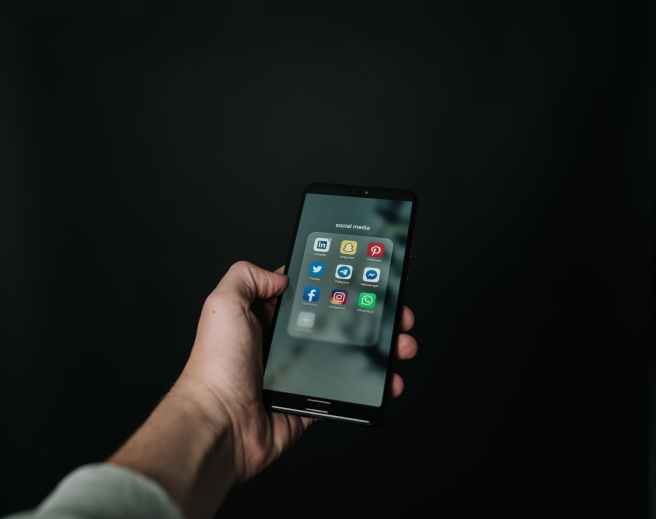
    My wife has accused me of being addicted to the mobile phone. She, therefore, ensures that our daughter watches YouTube videos via Chromecast on the television. She is determined to make sure she doesn’t get hooked to mobile phones early on in life. It’s inevitable I say, but she’s fighting to keep this menace away from her daughter as long as she can.

    Photo by Magnus Mueller on Pexels.com

    My search to quit this addiction, online has led me to various resources. There was writing by Seth Godin, Cal Newport, Brett McKay and Ryan Holiday that contributed to ideas. There is also a r/nosurf sub-Reddit that addresses this issue.

    I tried deleting the applications from my phone – Facebook, Instagram and Twitter. I didn’t stay off these for long, ending up installing them again almost instantaneously.

    Before, I share my reading about this topic, let me share my current status. I have switched off all notifications except for phone and SMS. I have removed Facebook, LinkedIn and Instagram from my phone. I access them only on my laptop at home. I was able to hold this for about a week now.

    I was listening to Peter Attia’s podcast, The Drive with Ryan Holiday today. Holiday, answering a question on how the connected life has affected our life, says that we reached a right about place in 2010 and then went overboard. He says that there was a time when we used social media just enough and then went over. Attia likens it to a tuning issue that went to the max setting after passing the optimum level. The max setting makes sense for some people but not for all the people in the world.

    Further along the podcast, he talks about he keeps his smart phone in the other room and does not pick it up until almost after lunch. It makes for productive mornings and he lets people know that phone, SMS and email are the best way to reach him. Just earlier, he has read a comprehensive blog post about spending less time on the phone. Following one of the suggestions there, I am planning to move both of our smart phones out of our bedroom tonight.

    Seth Godin also wrote a blog post today about that thing in your pocket that has an infinite options that are much better than what you’re doing right now. The idea is to prioritize what you have to do right now.

    I have written earlier on the blog here about Cal Newport’s work on how social media has been designed to be addictive here. Brett McKay had called to build a Social Internet instead of being addicted to Social Media. Om Malik called for a decade of self-control. So, I’ve started on my own little journey. What about you?

  • Caring for Yourselves

    Perhaps the greatest delusion of my life has been the belief that the world in which I was a child may have been the dark ages, but the world in which I have grown up to be an adult has to be far more enlightened and equitable than before.

    Social norms and attitudes that perpetuate injustice have remained tenacious. The news remains the same. Questions that had remained unanswered when I was a child still demand answers. If I do not want my daughters to internalize that violence is the inevitable fate of women in our society, I have to find a new language to speak to them.

    ‘Caring for myself is not self-indulgence, it is self-preservation, and that is an act of political warfare,’ Audre Lorde wrote in her book of essays, A Burst Of Light. The first time I had read this sentence, it cut through my cultural conditioning like a sheath of light. It demolished the notion that putting everyone else’s needs before one’s own is a virtue to be extolled.

    Natasha Badhwar, Children must triumph over their parents, Immortal for a Moment (2018,Amazon Affiliate Link)
  • Astrobiology in India

    I stayed in Lonar between July 2018 and June 2019. I was aware of the geological interest that the meteorite crater there held for the scientific community. I did not know what interest it held for the astrobiology community. I had the first opportunity to learn more when Jyotirvidya Parisanstha (JVP) hosted a lecture by Prof. Yogesh Shouche of the National Center for Cell Science. The lecture was about how Lonar Lake was a model for extraterrestrial life search! I kicked myself little for missing the lecture. Today’s podcast episode gave me a glimpse of what I probably missed.

    Episode 16 of the NewSpace India podcast has Narayan Prasad (NP) in conversation with Siddharth Pandey, PhD. Siddharth heads the Center of Excellence in Astrobiology at Amity University, Mumbai. Below are the show notes from that episode.

    Siddharth defines Astrobiology as the study of origin, evolution and distribution of life on Earth and the search for it elsewhere. He says Astrobiology formed the basis for some of the older space programs like NASA and Russia’s Roscosmos because it pertains to some of the fundamental questions that have been important to the human species like are we alone in the Universe and the search for life outside our planet. Siddharth wants to begin connecting to a network of people in India who are interested in Astrobiology. He returned to India after stints in America, Europe and Australia.

    Siddharth says that astrobiology related experiments in India began in 2005 with teams led by Dr. Jayant Narlikar based out of IUCAA, Pune and TIFR, Hyderabad among others. This group believed in a theory called Panspermia – which says that life was bought to Earth by an asteroid impact at some point in the Earth’s history. This team conducted balloon experiments out of the field in Hyderabad that led to the discovery of bacteria living in extreme environments in the Earth’s atmosphere.

    Siddharth says that the Methane search instrument (Methane Sensor for Mars – MSM) on board the Mars Orbiter Mission is an astrobiology experiment. He says ISRO had developed an astrobiology experiment knowingly or unknowingly. Methane is considered one of the bio-signatures that indicates the existence of life. Hence, existence of Methane corresponds to existence of life. He hopes we have more experiments flying to search for life in clouds of Venus and the surface of Mars. He hopes that the chance to carry micro-gravity experiments on board the 4th stage of the PSLV, SSLV and the upcoming human spaceflight mission, Gaganyaan increases the number of astrobiology experiment that can be designed and carried on these missions.

    NP asks Siddharth if the lack of a Space Science roadmap is worrying. Siddharth says that he finds the fact that we have no clear Space Science roadmap concerning especially given ISRO’s plans for missions to Mars and Venus in the near future. He says that several meetings on these experiments have been held but the outcomes of these experiments need to be more widely shared. He hopes that in the future, scientists are involved right mission planning and architecture stage of the mission itself to design better payloads.

    Siddharth says that there is a need for a National Committee for Astrobiology that brings together various Government departments like DST, DBT etc to develop a roadmap for Astrobiology and to co-ordinate an astrobiology program. He says that ISRO has been good at developing platforms for astrobiology experiments in space.

    He then talks about analog environments that are present in India. He speaks about Ladakh, Kutch, Lonar in Maharashtra and Antarctica. He says that the low atmospheric pressure, low oxygen, high ultraviolet ray exposed environment which are well preserved for centuries in Ladakh provides conditions that are analogous to an early Mars.

    He says that hypersaline bacteria and jarosite minerals found in Kutch have been studied by PRL, Ahmedabad and papers have been published in scientific journals. He says that being one of the largest continuous salt expanses make it an interesting field of study for it’s similarities to early Mars.

    He says that the impact of a meteorite in basaltic rock, a form of rock formed by melting of volcanic rocks means that it takes longer to weather compared to meteorite impact on other types of rocks.. The site at Lonar, Mahrashtra is one that is most accessible among two other similar sites in the world. He says that Lonar also has a lake formed by a drain of a spring that drains into the crater. This is similar to the landing site for the Mars 2020 which may be going into a dried site where a lake such as the one in Lonar probably existed at some point in Mars’ history. Lonar offers similar basin and depositing mechanisms which scientists can compare and study from.

    Siddharth says India has two sites in Antarctica – Maitri and Bharati. Of these, Bharti station is located on Larsemann Hills. The hill is of interest because it is ice-free. This is because geothermal heat prevents ice formation. This means scientists have access to rocks and access to study bacteria living in rocks which survive in dry and cold regions of Earth. It also has a permafrost where the ice has not melted as it is under the soil. Here the ice is preserved for centuries and hence of interest to scientists.

    NP then asked about how a person interested in astrobiology can pursue it as a career option. Siddharth says that they are in the process of putting together a website with freely available reading material. Siddharth suggests that interested students can pursue Astrobiology at the post-graduate level after pursuing an under-graduate program in Biology, Physics, Chemistry, Engineering etc.

    NP then asks Siddharth about possible citizen science efforts that can be undertaken in astrobiology. Siddharth talks about the development of a Space Citizen Network where citizens can get connected to research groups working in the field. He also suggests that citizens could connect with these groups when they go on field trips. There are plans for a field trip to Kutch in October 2020 and to Lonar in November 2020.

    There are also plans for projects that can be undertaken at home. One of the plans is to distribute marbles and citizens can report back after studying microbial colonies that grow under the marble. Scientists are interested in understanding how microbial colonies grow and attach themselves to rocks. They also want to learn what environments support growth of these microbial colonies. This can be in addition to similar amateur astronomy projects like identifying asteroids etc.

    NP then asks whether there are plans for an independent road-map for Astrobiology of Government efforts for the same. Siddharth says that plans are afoot to formalize a Society of AstroBiology Education and Research (SABER) that could be registered in Maharashtra. He says that the group had already met twice – once in Lucknow and once in Pune. They hope to develop a roadmap for the future growth of the astrobiology community. They might also consider contributing to mission objectives on future missions to Mars and Venus.

    NP asks about raising funding for astrobiology experiments. Siddharth says that there is no single source for funding for astrobiology. Mostly, scientists raise funds from different departments and societies based on either where they are coming from or from organizations that are involved in their area of interest.

    ISRO provides funding through its RESPOND and SNAP. He says that they have previously raised funding from companies like Tata Motors and National Geographic Traveller magazine. He is currently also thinking of reaching out to philanthropy houses in Mumbai to access funding for the future projects that they are thinking of undertaking.

    Siddharth says that Amity is planning to put together a weekend program called Space for Everyone which would generate awareness about space. At the end the people who complete the program can join the Space Citizen Network. He says that astrobiology popularization has been hurt as there is a lack of credible speakers. He hopes that efforts above address these issues. Amity has also launched India’s plant growth space flight experiment called the Amity Space Biology Experiment -1 (ASBE-1).

    On the role of the Media, he says that media should do more than simply cover events. They must provide a forum to discuss, analyze and critique events. He says that it must enable two way discussion between the scientist and the citizens. He says that India must look at reasons for which it is pursuing a scientific program.

    NP says India has a strong Biotechnology and Pharmacy industry. He asks Siddharth about what is the scope for Indian biotech and pharmaceutical companies in participating in Astrobiology. Siddharth responds that astrobiology experiments would give these companies an opportunity to research how the human body behaves in microgravity and experiment with chemicals and drugs. He says that while there are applications in fundamental research, it would largely serve marketing purposes currently. Companies could showcase how their products are used in space programs and how their designs can be used in extreme conditions such as in space.

    NP then asked where Siddharth sees the future of astrobiology in India. Siddharth replies that he hopes that ISRO works on larger support and infrastructural missions with private sector works on supporting low earth commercial missions. For astrobiology in India, he hopes that there is an active scientific society, meeting often to exchange knowledge and builds cross-domain and inter-disciplinary expertise that is needed. He also hopes India undertakes future missions to the moons of Jupiter and Saturn – Europa and Enceladus, that are considered some of the other sites in our solar system which could support life.

    End of show notes.

    This podcast also gave me a stream of ideas. We could Astrobiology Cafes to discuss recent developments in the field. As missions progress in this direction, I also think there will be discussions surrounding ethics and safety that arise. I do not see how these are tackled by the astrobiology community. This conversation excited me a lot, opened my eyes to what astrobiology really is about and agree with NP’s comment in the end that it was a dense knowledge transfer rich episode of the podcast. This reminded me so much of my days from 2009 when I developed a Lunar Analog Research Station.
  • Citizen

    Sometimes we call citizens heroes, which is a shame, because their actions should be commonplace, not rare. The myth of success based on short-term self-interest has been disproven again and again. It seems obvious that leaving things better than you found them is a powerful step forward, because you’ll probably be back this way again one day soon.

    Seth Godin, Chosing to be a Citizen

  • Malayalam Rap, Protest Songs and Nucleya

    I started writing this blog post as a review for the Malayalam podcast Kaecawdo’s 7th episode. That got delayed as I had to travel to Mehkar this Tuesday to attend to some work. But, the delay led to listening to a series of podcasts that when I look back seemed to be linked together. And led me to re-write the whole blog post.

    I was searching for a Malayalam podcast to listen to. I found Kaecawdo (listen you!) during my search. The Season 3 Episode 7 was on Malayalam Rap. Earlier episodes had him speaking about cars, genetic editing done in China etc. In short, the podcast does not cover a single topic. For a change, he did a focused episode of 60 minutes on Malayalam rap, unlike his usual episodes which last 20-25 minutes.

    He speaks about Malayalam rap, the groups, the popularity it is gaining similar to other musical efforts like Agam, Thaikkadum Bridge etc. He spoke about the role of television earlier in surfacing these artists and their later success playing on YouTube. He picks and speaks about 3 rappers – AbuX, ThirumaLi and FeJo and plays some of their tracks on the episode. I shared the episode with friends and relatives asking them to play and listen to the songs that were played in the episode.

    I, personally, have not heard Malayalam rap before and my exposure to rap in other languages has been quite limited. However, I still enjoyed the Malayalam word-play and music of the suggested artists. I found ThirumaLi on Amazon Music and listened to that for a bit. My favorite from the list was Malayali Da.

    The protest songs which have accompanied the CAA/NRC/NPR protests made me want to understand where they came from. The Ganatantra Podcast had covered how the University had become a political space with Jean Thomas Martelli. It covered the coming together of the philosophies and pamphleteering but did not go all the way upto protest songs.

    The Wire has an interview/story with Arivu who rapped Sendai Saivom in Tamil in protest against the CAA/NRC/NPR. I heard of the song when Srini raised a banner in the Mumbai Marathon with lyrics of the song at the finish line of the Full Marathon also in protest. I think that reading about the singer adds a layer of understanding and context to that song.

    While I have appreciated Wire’s science coverage, this was only the second culture story I read from them. The other one was on the Women in Tamil Mahabharatas. I hope they also do more culture stories on The Wire.

    Following Arivu’s interview, I wanted to learn more about the protest songs. Supriya Nair and Deepanjana Pal also explored some of the protest songs on their new podcast, The Lit Pickers. After listening to the podcast, if you want notes, lyrics, videos, discussed on the episode these are at Deepanjana’s blog post.

    Laxmi Krishnan on her LitNama podcast speaks to Rahul Sinha, who manages artistes for a living. He talks about managing artistes as a career option, how he got into the profession, what he learnt from interacting with fans, some of the experiences of managing the artistes he does among other things. I think the episode to me told about how indie artists are surfaced to the public and the struggle to go mainstream. I think this is a struggle shared by the protest poets and singers.

    One of the artists Rahul Sinha manages is Nucleya. When I read his Wikipedia page, I found that I had heard his song before when he was part of the Bandish Projekt. I re-listened the Bandish Projekt song, Bhor. Also, ended up watching a 28 minute documentary on Nucleya.

    I loved how insanely looped and interconnected the things I read and listened to have been over the past week or so. I am also happy that I waited this long before I post this blog post so that I could stitch them all together.

  • Planetary Radio on Asteroid Bennu descent

    Asteroid Bennu is slated for a close encounter with Earth in 2175. It is expected to be the asteroid that has the most chance for a possible Earth impact over the next 200 years. Hence, it was selected for NASA’s OSIRIS-REx mission.

    Mat Kaplan at Planetary Radio sat down to discuss the mission with it’s Principal Investigator, Dante Lauretta. The mission is of interest because it will descent on Bennu’s surface in August 2020, collect a sample and return it to Earth in 2023. These are my podcast notes from that episode.

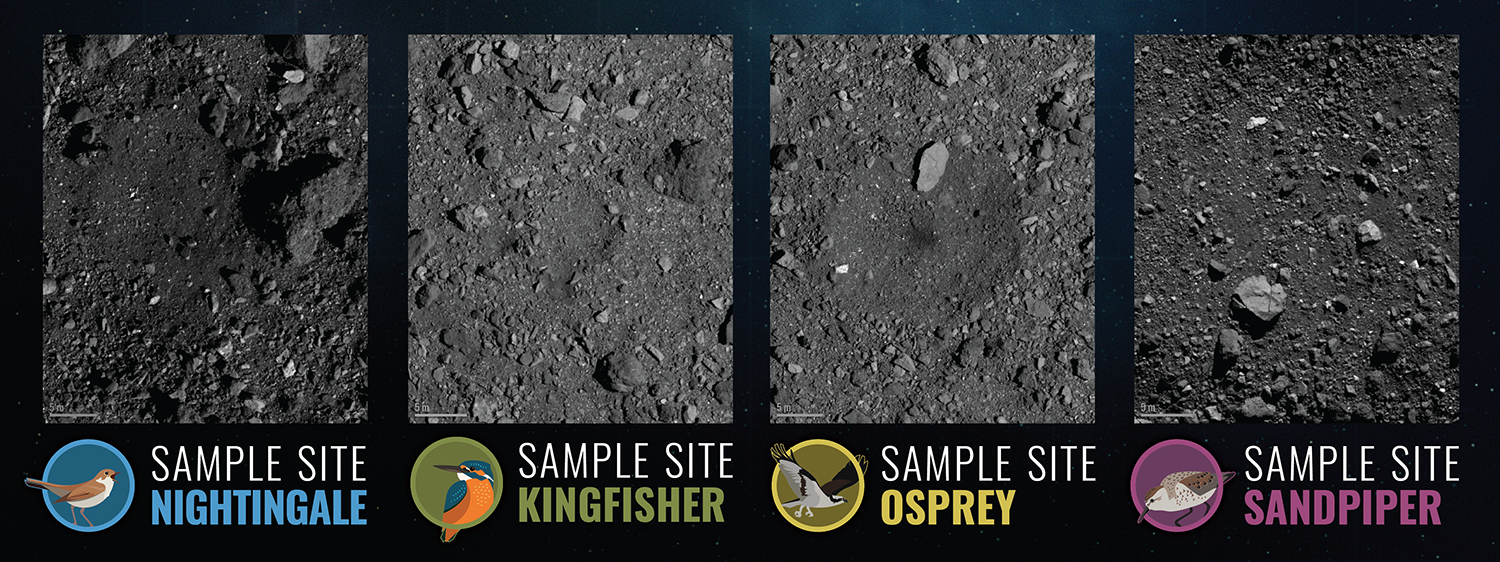
    Lauretta talks about the mission updates till now. The spacecraft reached the asteroid and has been doing a series of mapping the surface of the asteroid. In December 2019, they selected the landing site, code-named Nightingale. All surface features on Bennu named so far are named after Egyptian birds. Bennu itself is named after an Egyptian mythological bird, that probably inspired the Greek bird, the phoenix.

    The final four candidate OSIRIS-REx sample sites. Image Credit: Wikipedia

    He then talked about the surprise of finding the surface of the asteroid so rocky. Apparently, radio and infrared studies of the asteroid’s surface had predicted the surface to be smooth. They had designed the instruments using the experience gained on the Hayabusa spacecraft which had a 25-meters radius for operations. They had given themselves a 50-meters radius for operations. But, the current landing site gives them just 5-meters. This means that they had to drop the LIDAR based landing navigation system and use a more optical based hazard avoidance system to land on the surface.

    He then talked about cross-pollination between the Hayabusa and the OSIRIS mission with people working in each other’s projects. This is part of the on-going collaboration between NASA and JAXA.

    They then spoke about some of the public outreach efforts of the mission. This is usually an integral part of all NASA missions. However, OSIRIS’ education and public outreach budget was cut in 2018. Lauretta then took it upon himself to continue the work. He designed board games and also supports Target Asteroids!, a program that takes help from amateur astronomers to observe certain asteroids. The board games include X-tronaut and Constellations.

    Unrelated, but the episode ends with a session of Space Poetry.

  • Peak Planet podcast

    Peak Planet podcast hosted by Karthik Ganesan. Image: IVM Podcasts

    I listened to the Filter Koffee Podcast episode with Karthik Ganesan on my morning commute to work. I found the Peak Planet podcast on the IVM podcast network as a result. Contrary to Karthik Nagarajan’s usual episode, this felt all over the place. Rich in data but played out in starts and stops.

    The notes here are from the Episode 2 of the Peak Planet podcast on data and a few notes from Episode 3. I binge-listened to all the episodes of the podcast after listening to the morning episode on The Filter Koffee Podcast. The podcast seems to have hit pause after 4 episodes that were out in November, 2019.

    The first episode of the podcast introduced me to the Hinjewadi IT Park Residents Welfare Association (HIRWA). I loved their Twitter handle – HIRWA Hinjewadi. HIRWA in Marathi is Green and is usually associated with pollution-free advertisements along the lines of “Clean Mumbai, Green Mumbai” etc. So, this reads as “Green Hinjewadi” if you partly translate it.

    The second episode is about data. Karthik G quotes Michael Bloomberg in the beginning, “In God we trust, everyone else please bring data.” The global standard in Air Quality Index measurements is to have 1 AQI reference monitor for every 1 million people. India has 1 per 7 million. And, most of these are concentrated in Delhi.

    It is believed that air pollution is an urban phenomenon and this is not true. Sagnik Dey working out of IIT-Delhi says that we have no data on the background pollution level in India. Background pollution level is the pollution that exists because of natural causes like dust, etc. India makes up for some of the lack of ground-level pollution monitoring by watching things from space. Satellite based data monitoring has been around for the past twenty years. Dey believes that this data must be used to deploy ground-based costlier reference monitor stations across India.

    They further talk to Rohit Bansal of Purelogic Labs. They have a website called AQI.in which tries to provide low cost sensors. Sensors have become really good and really cheap in the last three years. So much so, that their quality is slowly moving towards the levels of reference monitors. Where, reference monitors cost in the range of $15,000-$20,000, low cost sensors are available for $20-$40 range. There are efforts to make these sensors as good as the reference monitors. Bansal says that the quality of reference monitors also needs improvement.

    The third episode is about governance. They talk about the umbrella Environmental Protection Act, 1986. These provide standards, emission standards and working of the Pollution Control Boards. They talk about India moving from BS IV directly to BS VI, about how PCBs can issue notices but can’t collect the charges levied on them. I didn’t grok this episode because it slipped on the side of law and governance.

  • Cixin Liu’s The Three-Body Problem

    Gautam Bhatia had this book in his list of books in 2016. That is how I first heard of the existence of Chinese sci-fi. This article on Bookriot reminded me of it and made me pick up the book for listening on Audible. I haven’t taken a science fiction book for a really long time.

    It’s such a different version of science fiction to what I read of Asimov. It seems that things have changed so much.

    The narrative goes back and forth in time and space. I loved the difference in the China-centric narrative. This is so difficult to do from an Indian perspective. It sounds so doable from the Chinese perspective.

  • Reporting ISRO

    The 15th episode of NewSpace India podcast came out this Friday (January 17). It had Narayan Prasad in conversation with Vasudevan Mukunth. VM is the Science Editor for The Wire. If you do follow their Science stories, it is in quite a league of it’s own (better than most Indian coverage and almost at international standards). He also blogs extensively at Root Privileges and tweets at @1amnerd. Full disclosure that he has been my editor of the two pieces that I have contributed to The Wire.

    Here are my notes from listening to the podcast episode for my own future reference:

    The coverage of ISRO as a journalist depends on the quality of information and access to sources available to a journalist. It requires more information made available in the public domain and access to sources who can explain the information to a journalist. There is no clear demarcation on when the information is publicly available. In many cases, ISRO uses policy to clamp up when asked tough questions.

    NP suggests this might be a top level policy level decision. VM suggests that the policy is that scientists are allowed to speak to journalists as long as their comments are not adversarial. Scientists often err on the side of caution and hence do not speak at all. There is no clear information policy. This ambiguity in information policy means that when a failure occurs, information flow just dries up.

    NP describes The Wire’s science journalism with respect to ISRO as being that of piecing together information, for placing things in context and critiquing various aspects of the space program. He suggests that the lack of information has forced The Wire to take to this form of “citizen journalism”. VM replies saying that ISRO clamps up information and they seem to fail to acknowledge other sources of information for the stories. As an example, they fail to acknowledge that NASA could find the Vikram lander and put this news out. Similarly, international experts challenged the DRDO claim of the impact of the ASAT test. ISRO scientist don’t put out such news because they don’t know whether they can say it. Information comes out in the form of tweets, in form of access to ISRO Chairman’s office, some of the press notes or updates on the ISRO website etc.

    NP then asked VM to share the toolkit that he uses to cover ISRO given this lack of information. VM replies that he uses Google, CelesTrak (where he’s playing with orbital visualisations), he uses crawlers that frequently crawl on the ISRO website where information is put out but not easily available/visible like PDFs etc, Twitter, WhatsApp and the ISRO sub-reddit. VM shares The Wire story that he did on the ISRO sub-redditors and other sources of ISRO news.

    VM and NP think that clamping up when failure strikes is a cultural issue that ISRO needs to tackle. VM sympathises with ISRO with regards to the loss of signal issue during the Vikram landing as they may not be comfortable doing this. He feels that they would have done much better to keep quiet rather than to make absurd claims like 95% mission success etc. This is because of the lack of training of journalists they would report anything that ISRO says without questioning.

    At another earlier point in the conversation, VM and NP had discussed that lack of good questions came from lack of well-trained journalists who follow space. VM had then argued that there was no point having good journalists when there was not enough people to answer said good questions. Existing journalists have also been made to bureaucratic hoops to cover ISRO events.

    ISRO has also lost many opportunities for public science participation. Finding Vikram and Moon Impact Probe were good use cases. Images could easily have been released of the landing site and help taken from the public to find the lander. Also, NP points out that ISRO had a lot of support from the public in many fora, despite a failure and this makes ISRO statements like the 95% success rate unnecessary.

    NP then asks on the possibility of using tools like the RTI. VM says RTI provisions are getting diluted and it is getting more difficult to get information through RTI in other areas. However, an RTI request could easily be blocked citing National Security reasons. So, VM wonders if it is worth the investment of time to apply a RTI query. He also says that information regarding a program under taken by ISRO should be put out voluntarily. VM says that commercial use of ISRO images and spacecrafts like the PSLV launch of Mars Orbiter Mission for the movie, Mangalyaan should have been made available easily for commercial use.

    NP suggests that given ISRO’s lack of response, one of the ways in which good questions can be put to ISRO may be through the Parliamentary Standing Committee. He suggests it as one of the ways for getting information from ISRO. VM reiterates his stand that information should be forthcoming voluntarily from ISRO.

    They both agree that the issue with answering questioning and putting out information is a cultural issue with ISRO.

    NP then asks if there must be independent thinking and tracking of the space program, similar to efforts of T S Kelso and Jonathan McDowell. VM thinks that the lack of information availability makes this sort of analysis difficult in the Indian context.

    NP then asks VM about what we can look forward to in the future from The Wire Science. VM says they are looking to add more videos and educational material. He believes that having a more informed audience improves the type of journalism that they can do.

    They discuss how more senior and retired ISRO journalists could contribute more in the education and discourse if they wrote after their times at ISRO. VM thinks this is also not part of their culture. The books coming out currently are anecdotal or technical. U R Rao’s book is quoted as an exemption and an example to follow. ISRO scientists like Tapan Misra take to Facebook to write about current events at ISRO.

    VM ends by saying that he is happy that more diverse newsrooms are now covering space. He gives Firspost as an example for this, whereas earlier the Hindu science pages was the go-to for this sort of information.

    VM has posted an addendum to this conversation on his blog and Ohsin also shares his feedback on the ISRO sub-reddit along with his lament about how ISRO image policy leads to loss of images used for coverage of ISRO on Wikipedia. The about community for ISRO’s sub-reddit page perhaps encapsulates the whole episode: For anything related to Indian Space Agency we love but hardly know.