Author: Pradeep

  • Mars Society India participates in Mars analogous experiments for their rover

    The Indian chapter of the Mars Society was rolled out in January 2012. They are an independent organisation though affiliated to the Mars Society in the United States. For the past few days, they have been posting pictures from Australia where they have been involved at a very nascent analogous experiment with a Mars rover they developed.

    The Mars rover prototype developed by the Mars Society India being tested at the Mars analogous terrain in Arrkaroola in Australia. Image Credit: Mars Society, India. Original Image: here
    The Mars rover prototype developed by the Mars Society India being tested at the Mars analogous terrain in Arrkaroola in Australia. Image Credit: Mars Society, India. Original Image: here

    Analogous experiments are very important in the space development cycle. It is a way of testing hardware here on Earth on a terrain similar to one your hardware may encounter on another planet. Engineers go hunting for such analogous terrains and then bring the hardware in for testing. Once at such a site, they get a chance to test most of the things they want to.

    Mars Society, India, as I understand it has been developing this rover since the inception of the Indian chapter and has put the rover through lab tests in IIT-Bombay. This forms the next step in their development cycle. Working with Mars Society Australia, they picked the site at Arkaroola, Australia for their analogous testing.

    Srinivas Laxman wrote a piece in the Times of India about their experiments in Arakroola whereas their Facebook page has been updated with pictures almost on a daily basis since they were there. My hope is that once they return, they put together a public talk and exhibition of photos and the rover, giving the public in Mumbai a chance to interact and understand about what goes into and behind an effort to develop and launch rovers to Mars.

  • Engagement

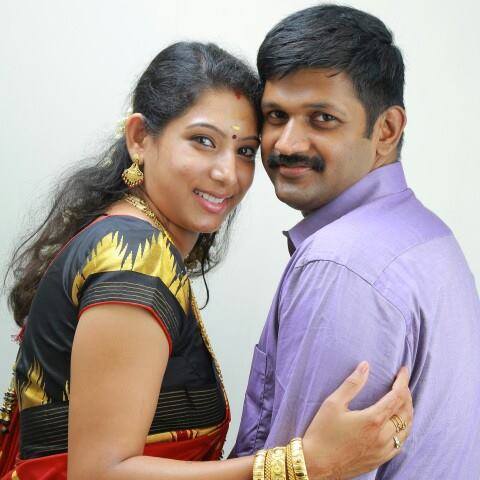
    We got engaged in the morning of July 5, 2014 at 10:55 AM.

    We had a fun time together with me unable to understand the instruction in Malayalam completely. I waited for someone to translate it for me. Dhanya was the one who did that. I felt awkward touching her during the photoshoot. I’ve never been the subject of so much attention. But, that was to be only the beginning.

  • Book Review: Governance and the Sclerosis That has set in

    I haven’t read non-fiction as a genre for quite some time. Picking up Sidin Vadukut’s book recently re-ignited my interest in the genre. I have also been working up an interest in learning about recent Indian history. Books about this era starting from post-liberalization have now been emerging for quite some time now.

    Arun Shourie is one of the authors who has written about India’s post-liberalization era. He was also a cabinet minister in the Vajpayee government. He covers three broad areas in this book – bureaucracy, environment and immigration. He shows through examples how the thinking within the government is not directed at solving the issue at hand but in ensuring that one is not held responsible for any errors in the resolution of such issues.

    To be sure, some of these issues are complex. He also faces the same difficulty that his predecessors had in resolving the issues at hand. He tends to defend the delay caused during his own regime in the various Ministries whilst not really defending the actions taken by his predecessors in the same Ministries.

    The book, otherwise, is a wonderful collection of reflection and insight into the working and the thinking inside the Government towards the end of the twentieth century and that in transition from the license raj to liberalisation. It is also a pretty breezy read despite being a book that cites a lot of correspondence and timelines to back up his assertions and observations, which are few, short and sometimes satirical to drive the point through.

    Strangely, there were a lot of Arun Shourie interviews that got aired around the time I was reading this book. Again getting access to the government will hopefully push him to write more books that will help Indian citizens understand the issues with more clarity and depth.

  • Book Review: Dance Dance Dance by Haruki Murakami

    I just finished this book today morning. I just took a couple of hours to synthesize it all. Below is the review as I wrote on Goodreads.

    Dance Dance Dance (The Rat, #4)Dance Dance Dance by Haruki Murakami

    My rating: 4 of 5 stars

    I am forcing myself to write this. To wrap my head around what I read. This was the 10th book by Murakami that I am reading. He has an ordinariness in his writing that comes through even in his English translations. Mixed with some fantastical elements that I have witnessed in Kurt Vonnegut’s writings that I have read like Cat’s Cradle. His stories have for a fact that everyone is unique. That fact is then laced with emotions of loneliness and sometimes, helplessness.

    The Wikipedia page for Murakami tells me that this is one of his earlier work as a writer. To me, this book made more sense, perhaps because I read some of his later works. I don’t know. It also makes his some of his latest works like 1Q84 make more sense too. I am almost a fan now.

    View all my reviews

  • Book Review: The Sceptical Patriot by Sidin Vadukut

    (Posted here from Goodreads. Just in case. Although it seems more likely that the review will stay on Goodreads and vanish from here than vice versa. For posterity, perhaps. I also need to get much better at writing book reviews. I’m working on it!)

    The Sceptical Patriot: Exploring the Truths Behind the Zero and Other Indian GloriesThe Sceptical Patriot: Exploring the Truths Behind the Zero and Other Indian Glories by Sidin Vadukut

    My rating: 4 of 5 stars

    I’ve read Sidin Vadukut’s Dork books and his column in Mint, the newspaper. I don’t think he writes there and more or less jokes around. Those are fun to read. With The Sceptical Patriot, I think Sidin’s writing reaches the narrative style that shines through in some of his blog posts. The versatility of that narration has never ceased to amaze me.

    I think this book of myth busting comes around at the right time. After a decade where India was lauded for many things – its achievements, people are slowly sobering up to the fact that India is just another country with its share of issues and strengths. It is during the previous decade that people suddenly started sharing wild assertions of the greatness of India. Some true. Some false.

    Sidin does a good job of picking up a few of these assertions and applying rational thinking, researching on the Internet and reading from libraries (I love this!) and illustrating how one could apply the same technique to other facts that one reads everyday on Facebook and Whatsapp (notice how this is absent on Twitter?) if only one spent a little time. Skepticism is what India needs a little more of.

    I don’t think Sidin was trying to or reaches the superb awesomeness of Mythbusters or Phil Plait or even Bill Bryson. I hope he doesn’t. I wish he’d go off a bit and explore more genres and doesn’t stick to one. I like this wandering interest that he shows in his work.

    View all my reviews

    My favourite quote from the book?

    (It is truly remarkable how NASA has become the ‘India fact’certifying agency of choice.)

    This was said in reference to a 1985 paper written by a Rick Briggs who considered Sanskrit to be one of the few languages worth considering for use in computer programming. He was working with a company that worked as a contractor with NASA. This probably was the start of Indians looking at NASA for bolstering various ‘India facts’.

  • Hello World!

    We met for the first time at the traditional pennukannal ceremony on April 25, 2014. The ceremony offers the chance for the boy to see the girl and for the prospective couple to talk to each other to gauge their interests, likes and dislikes. Ours is an arranged marriage.

    That day evening, my family got a call from hers, giving their approval to go ahead with the proposal. We gave our consent as well. From there, it was a roller coaster ride. We are to be engaged on July 5, 2014 and get married on December 7, 2014.

    This is an online home of our journey that begins on this day.


  • My First Sidewalk Astronomy event

    I first read of sidewalk astronomy in 2007 when I read about the work done by John Dobson and the San Francisco Sidewalk Astronomers . I have been wanting to do it and the dream died a quiet death as I began working. Lucky for me that someone else had also been thinking of doing the same and set up a page on Facebook for the event which was to be held across Mumbai.

    Sidewalk Astronomy involves setting up a telescope on a sidewalk with the idea of showing the public the night sky through the telescope. Since these events happen in a city and we’re faced with bright city lights that drown out the fainter objects, this event seeks generally to look at brighter objects – usually the Moon, the planets and if one is lucky, a few bright stars.

    The first sidewalk astronomy event in Mumbai was to be held at various locations – Nariman Point, Worli Sea Face, Shivaji Park, Bandra and Thane. I went to the Shivaji Park event to volunteer.

    The event was slated to begin at 7 o’clock. At half past six, the venue was clouded out. I was joined here by Henna and Arpit Gada. Henna was organising the event across Mumbai and Thane. Phone calls at this point seemed to suggest that other venues too were clouded out. We took a round around Shivaji Park to look for a nice place to setup the telescope. We ended up selecting a spot opposite the Cafe Coffee Day at Shivaji Park.

    We got curious eyeballs as we began setting up the telescope at the spot. People walked upto us and asked if there was a special astronomical event that we were out to observe or if we were doing a specific research. An old couple had also come reading about the event published in Daily News & Analysis, the newspaper. Unfortunately, it was still clouded out.

    We had spotted the Moon a couple of times as we walked around Shivaji Park as it played hide and seek. We spotted glimpses of the Moon and began showing late evening walkers the Moon through a pair of binoculars. We had setup a telescope but it was too rickety to show anything through. We used three pairs of binoculars to show the Moon.

    As we began reaching out to people, asking passersby if they wanted to see the Moon, we were helped by a few people who had come to see and had seen the Moon. I was tasked with seeing to it that nobody robbed the binoculars and began counting the number of people who were watching. I lost track at a 110 where a huge crowd of people came in and there were small lines.

    That number may seem small but we were doing this between 8 o’clock and 9 o’clock at night as India was batting in the finals of the T20 World Cup that was going on. We’d also chosen a less crowded spot since this was everyone’s first experience.

    People who watched the Moon through the binoculars loved it and expressed interest in wanting to do it more regularly. We promised to come back in May if we could before the Monsoons. It was a wonderful experience for many. Struggling with the binoculars, their weight, then getting a grip and then learning to focus and then the wonderful sight of the Moon. Some even spotted Jupiter which was hanging around near the Moon this night and were curious to know what object that was. A few people enquired about getting binoculars and costs and where one could get them. Some were reliving their childhood experiences of going out with Khagol Mandal and similar amateur astronomy groups in and around Mumbai. A couple even went home and got their kids back to the spot to see through the binoculars. We got a few people who were quite afraid of even taking a peep through the binoculars and then wouldn’t leave it after they saw the Moon through the binoculars.

    This is the real joy of astronomy. Sharing a sight with people who miss this. I wish we had spots within the city that were as dark as villages so that people get a chance to see galaxies and planets that are now invisible. But, for now, people wanting these sights have to travel quite far to catch a glimpse of some of the wonders of our universe.

  • My Experiences at BlogCamp Mumbai

    While Mumbai has had a fairly good frequency of BarCamps in the recent past, BlogCamps have been few and far between. I don’t even remember how many blogcamps there have been so far. I was happy to hear the announcement for the BlogCamp at the BarCamp I attended the week before last.

    Getting to the BlogCamp was an interesting task in itself. I turned to Google Maps to suggest me a good way to get to the venue at Vidyalankar Institute of Technology in Wadala. The route that it suggested took me via a bus route that left me at a place called Shanti Nagar and had me traversing through the slums of Wadala and along the outer boundary of the Institute to reach the venue. Hmm.

    The crowd wasn’t as big as BarCamp but more importantly, it was an interesting crowd! We started the morning with a session by Rakesh Kumar on content strategies for your blog. He suggested that there were more ways to add content than just text – images, slides, video, visualisations etc. were now possible and made content more interesting and easy to comprehend for an attention deficit audience. He suggested ideas for having a time table for what to write about in the coming days. He suggested doing guest posts on other people’s blogs and also inviting guest bloggers on your blog to encourage a more diverse set of opinions on your blog. He suggested having a tone for your blog would be worth considering and building on.

    Rakesh really got the audience involved and the audience did have many questions. I think this set the stage for a very interactive BlogCamp, overall. I’ve hardly seen audiences involved in the talk as much as in this BlogCamp. Quite different.

    Ashutosh Bijoor was the second guy. He dazzled us with a beautiful set of pictures from forts and caves from near Mumbai. They travel to these places on their cycles beginning at Andheri or Thane. After breezing through Mumbai’s history and geography, Ashutosh told us a little about the group that he started. They call themselves the Mumbai Historical Sites Cycling Association (MuHiSiCA) and was started because the Archaeological Survey of India speaks only to organisations and not individuals. They research on places, cycle to forts and caves in and around Mumbai, clean them up, takes photos and then blog about it.

    We then had a talk on Video Blogging by Mihir Joshi. Mihir has a YouTube-based talk show called The M J Show where he talks to musicians and some Bollywood celebrities. He went to a digital content company called Ping Network to help produce the content for his shows. He suggests that companies exist that are looking for such content and are ready to provide help with production. He said that it was a route worth considering besides Doing It Yourself which always exists as an option if no one is willing to take you on.

    After a lunch consisting of Mountain Dew, rice, dal and potato curry, we went back in for a session on Indic blogging by Nikhilesh Ghushe.He started with getting the audience to get the Hindi equivalent word for words in English. Through the example, he sought to establish the nuances that one is able to achieve through the Indic languages. He said this provided the basis for some experiences and understanding that English gets rid of. He suggested that we miss a lot of this nuance even during consumption of English language news which does not understand nuance. He also says that not reading Hindi literature means we’re missing out on a large chunk of literature ourselves. Nikhilesh writes poetry on his blog and admits that Hindi is much better for poetry than prose. During a brief description of the history of Hindi literature, Nikhiles says that upto about the 1830s, Hindi did not have prose – only drama and poetry.

    The next session was by Alexander Gounder on SEO. In earlier BlogCamps, I have heard a hatred being expressed for people who do SEO for their blogs. Alex’s talk today seemed to suggest that the SEOers have adopted a more organic route on things now. The talk was way too technical for me for a nuanced reproduction here. I will link to any post that explains this better.

    The next session was by Mahafreed who did a session on Vine. Vine is a way to produce 6 second videos and upload them online. They’re like a Twitter for videos. Not interestingly, Twitter has acquired them. Placing a limitation on a technology helps bring out creativity and I think this is what makes Vine very interesting. We also co-developed the idea for a Vine.

    The last talk was by Anubha Bhat on why people should blog and on her own personal experiences of having kept a blog since about 2007.


  • On Solar System Studies and a look at Planetary Exploration

    I had leave on account of Mahashivratri today and also heard of a public lecture on “Solar System Studies and Planetary Exploration“. Being a holiday, I decided to go down all the way to Colaba for the evening. A hop on the local and a lovely bumpy ride on a rickety seat along the dockyard and through the military establishments of south Mumbai brought me to TIFR.

    The public lecture was organised by the TIFR Alumni Association (TAA). If you were an ex-student of TIFR and are interested in joining the TAA, do contact them since they are a new body and are still trying to track down alumni. The talk was organised on the occasion of National Science Day celebrated in India on February 28.

    https://www.flickr.com/photos/pradx/12818200845/player/ecf75e29a5
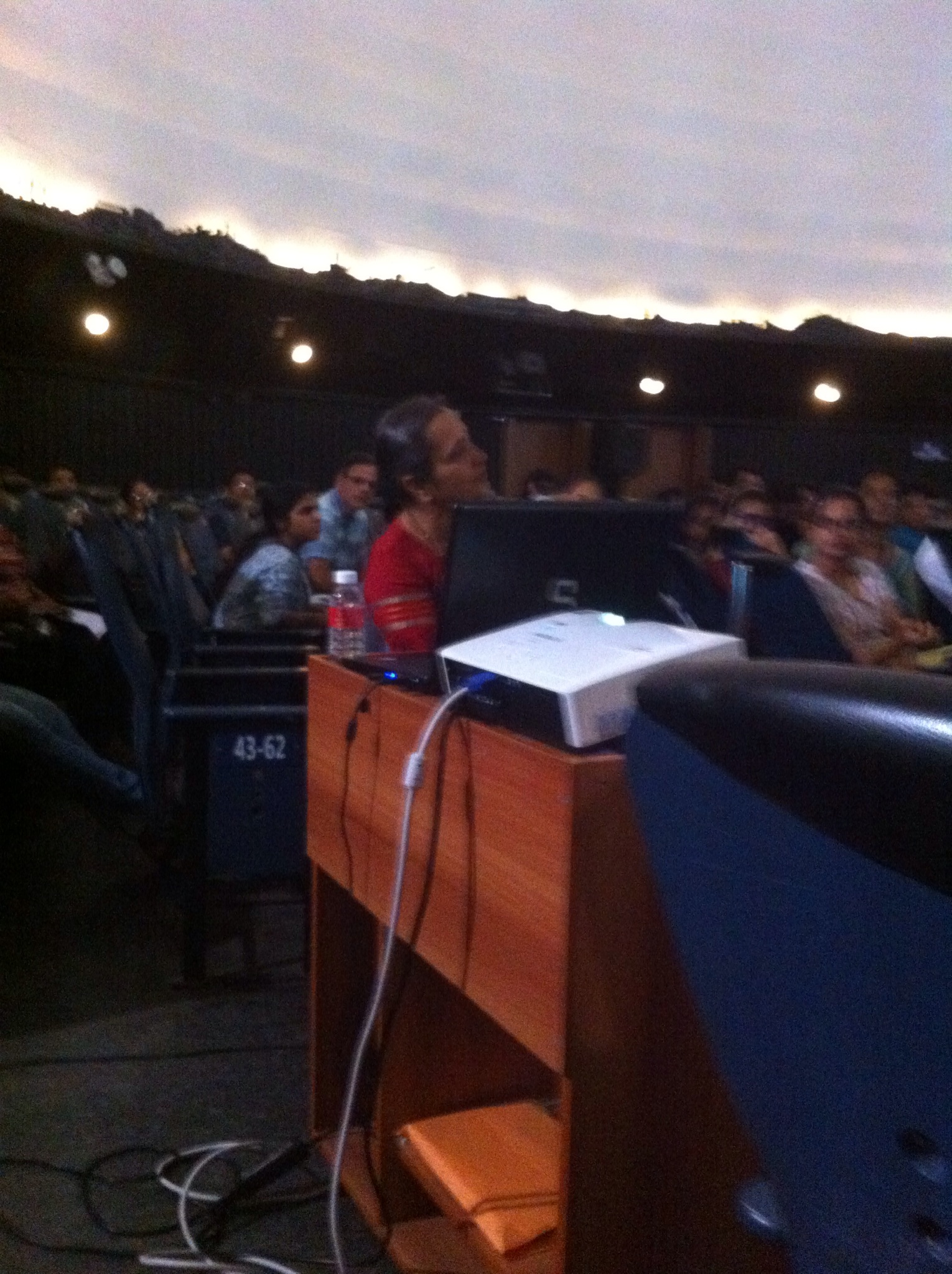
    Image: Presentation. Image Credit: Pradeep Mohandas

    Prof. J N Goswami is an alumni of TIFR and currently the Director of the Physical Research Lab , known as the cradle of space sciences in India. He was part of the Chandrayaan-I programme and is an advisor to the Mars Orbiter Mission and Chandrayaan-II.

    Prof. Goswami’s primary interest is in the area of solar system studies. His talk was mostly based on this topic. He just dwelled for a little bit on the Planetary Exploration aspects. I would have, personally, have been more interested in the reverse. His talk wasn’t all dry though and it did expose me to an aspect of space exploration that I have not been following attentively.

    Prof. Goswami began with a standard model of solar system formation. Referencing yesterday’s Kepler announcement he said that there was a need to have a standard model as against one just for our solar system. The model progresses from protostellar cloud to a fully formed solar system in about a few billion years. He said there were three forms of solar system studies – analytical, lab work and remote sensing. His talk considered lab work on meteorites. After explaining the geologies of the “pristine” and the “processed” meteorites he spoke of how studying the radioisotopic decomposition was used to determine a round figure for the time when the solar system was formed. He cited various studies and these seem to be continuing to the present date with increasing precision. A notable Indian contribution was a publication by Wadhwa M in Nature in 2010 that puts the age of the solar system at 4568.2 Ma. Prof. Goswami then went through various studies done at PRL and in labs in America and Europe to improve on this date by considering various radioisotopes.

    He said that PRL also was building nascent capability in looking for exosolar planets. He said that we needed crazy people to take risks for such projects. He said that PRL backed one such guy and they now have an exosolar planet search facility at Mt. Abu Observatory.

    Prof. Goswami is one of the few persons who worked with some of the Apollo moon samples which were sent to India. He says that a very influential person spoke to him for about 3 hours to get him to work on the Chandrayaan project. The person, whom Prof. Goswami admired and respected led him to abandon work on the solar system studies which he has now returned to at PRL to work on the Chandrayaan project.

    Prof. Goswami said Indian Planetary Exploration programme is limited by its launch vehicle capability. Currently, with the GSLV still proving itself, ISRO can only claim reach upto Mars and the Moon and passing asteroids.

    Prof. Goswami says that involving foreign partners in Chandrayaan was driven by the fact that India then faced economic sanctions that prevented the transfer of technology. ISRO hence invited foreign payloads on-board the project. On the discovery of water on the Moon, he says that it was always there and that we did not bother looking. Hence, when Moon Mineralogy Mapper found water in the 2.8 spectrum range, they asked for references from the Deep Impact and Cassini probes. These probes used the Moon as a way to calibrate their mass spectrometers. He said that they just did not look beyond the 2.6 spectrum range else these probes could have discovered the water as well. He stressed that the data had been in public domain for years but still no one looked! Having a re-look confirmed data from these probes as well as in the Apollo samples even ones which were in the possession of PRL. In the QnA a member of the audience asked about the Moon Impact Probe water discovery. Prof. Goswami said that the decision to not allow sufficient time for de-gassing the probe before it was sent in to impact the lunar surface would have raised doubts on the claim if they were made. He says the same instrument will be carried on the Chandrayaan-II for more studies.

    https://www.flickr.com/photos/pradx/12818206895/player/16578177e0
    Image: Chandrayaan’s achievements. Image Credit: Pradeep Mohandas

    He says Chandrayaan achieved a lot. The major discovery was the water and hydroxyl molecules attached to lunar surface material. Besides this the probe also studied and obtained new results related to reflected solar wind components, mini-magnetospheres, sub-surface ice layers below permanently shadowed craters, water molecule in the lunar atmosphere, new rock types, composition of lunar surface and confirmed the basic concept (global magma ocean) of lunar evolution. The probe also provided a 3D map of the lunar surface and radiation environment of lunar space.

    He said that the Mars Orbiter Mission was so well on course to Mars that it might not need a planned course correction. I couldn’t clarify if he was talking of the one in April or an interim course correction.

    https://www.flickr.com/photos/pradx/12818637184/player/092dcb2107
    Image: Prof. Goswami during the QnA session. Image Credit: Pradeep Mohandas

    The crowd there seemed to stick mainly to his studies of solar system formation, which was expected. He did not speak much about the planetary exploration project. He was much more fun in the QnA and was very good at analogies and I have to wonder why he spoke differently during his presentation and during his QnA.

  • My Experience at BarCamp Mumbai 13

    It’s been a long time since I enjoyed a barcamp so much and hence a write up. The event started at 9 AM and was located in Vile Parle. I’ve been to the same venue only once before and hence finding the location
    was a problem. A messup with a friend meant that I was left to fend for myself and depend on public transport. Sunday meant I did not want to depend on the train service because of a possible mega block anywhere along the line.

    I dropped in at 11 AM in the morning just in time for a talk by @anool on Maker’s Asylum. The talk was probably a good introduction to the arena of open hardware in Mumbai. People knew that there existed 3D printers and the concept but I think it was good that we saw some of the potential of what that could achieve. The guys there now have a small apartment in Bandra that offers some very basic tooling and are interested in growing a Maker community in Mumbai and growing their space. They are most likely to follow a subscription based model.

    From there I wandered around into a bitcoin storm that @oddtazz was brewing. I don’t know where he started but the people were interested more in how to get bitcoins and try to understand the concept. Perhaps a little bit of grounding in economics and a little more analogy would have helped the audience understand the talk but the questions showed the curiosity and fear that the Mumbai audience had for the topic of crypto-currencies.

    In all my previous barcamps, I have not had any luck with my lunches. I either binge and overeat or under-eat and get headaches. This barcamp was different. I had a sumptuous meal that satiated my hunger but didn’t make me groggy.

    After lunch, the first talk was by @henna_khan. It’s been good to finally get to meet her. I heard good things about the morning session and I could identify her instantly as she was busy explaining eclipses animatedly with someone when I walked in for @anool’s session in the morning. Her second talk for the day was on the question of whether aliens existed. Her talk went through the idea of how big our universe was, the basic requirements for life and then recent searches for life and why probably they haven’t detected alien life yet. The audience at the end of the talk voted that they did believe aliens existed.

    I spent the time after this talk meeting up with other barcampers I knew and met a few new ones. I discussed with @anool the possibility of doing cansats again. Launching is a challenge in India, since launching amateur rockets isn’t allowed in India. We’re left with satisfying ourselves with a balloon launch. The talks that I slipped through involved euthanasia, CPR and medical evidence’s role in sexual assault and rape. There were announcements for a Blogcamp on March 9, 2014 (I’m happy this has been re-started again) and WordCamp on the weekend of March 15-16. Both, that I am looking forward to.

    The other thing about this barcamp is because it re-ignited some old fires – being on the open-manufacturing list, being involved with SEDS and also contemporary situations like banking. It tingled many parts of my brain and I had good food to sustain me!