Category: Books

  • National Novel Writing Month 2025

    I have been unhappy with 2025 and want to make the most of the year. I’m planning to rewrite a novel I drafted last year for NaNoWriMo. I envision it as a solarpunk story. You can find the previous version of Chapter 1 here. I have changed the storyline based on feedback from last year.

    I will link to each chapter in this blog post.

    Chapter 1

    Chapter 2

    Chapter 3

    Chapter 4

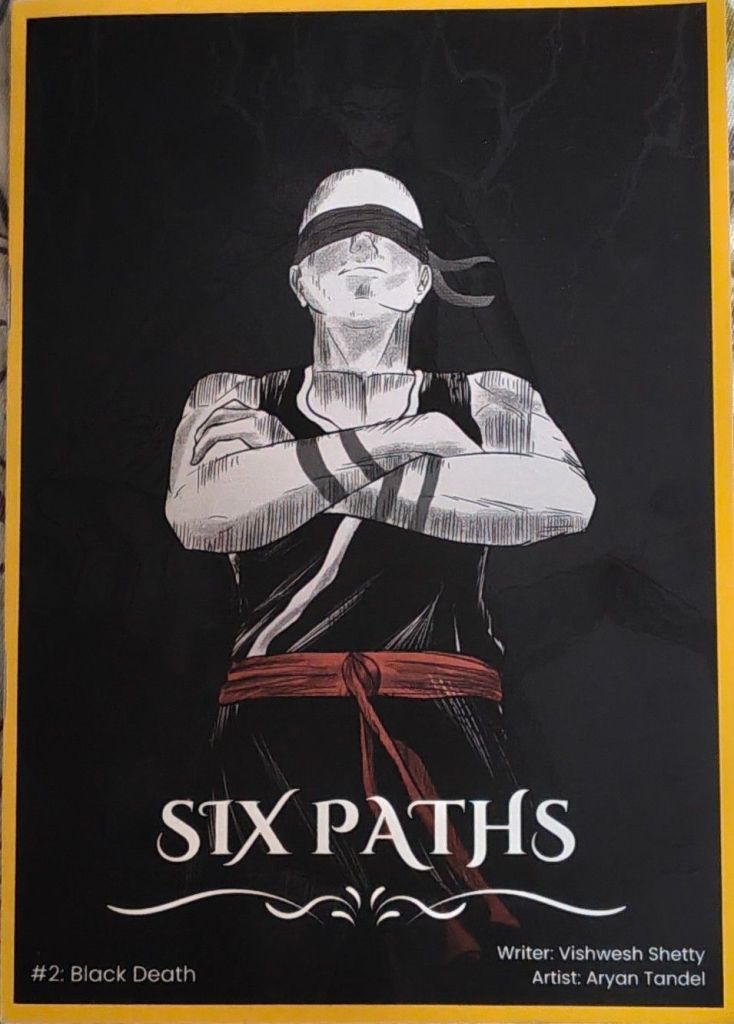
  • Black Death (Book 2 of Six Paths)

    I finished reading Book 2, Black Death of Six Paths. I am enjoying the storytelling and the good pace at which the story is progressing.

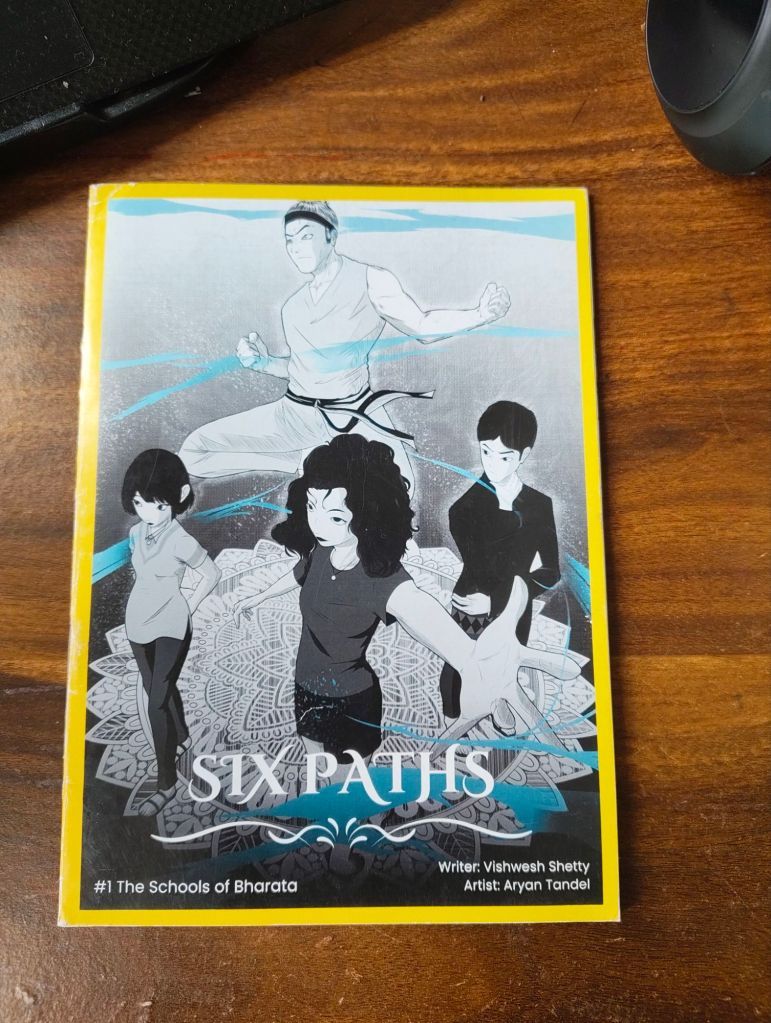
  • Six Paths (Book 1, The School of Bharata)

    Six Paths, Book 1 of The Schools of Bharata

    I finished book 1 of the Schools of Bharata series. I liked the storyline but don’t understand why the characters look the way they do. It isn’t written like a manga, although that seems to be the inspiration. But, this is a great effort for the first series.

    Cross-posted from Instagram.

  • The Notebook by Roland Allen

    The algorithm seems to have worked overtime to recommend this book to me again and again. This is a Eurocentric history of the notebook that sometimes seems to be endowed with powers like saving us from doomscrolling to helping get things done.

    I read about the book first on Julian Hess’ Substack called Noted. I then heard his interview on YouTube with Parker Settecase.

    The book showed how the notebook that started with helping many Italian city states keep accounts affected many areas of European life. It helped artists make drafts, it helped people write about important life events, it helped novels be copied into notebooks as commonplace quotes, and as a diary. I found more fun reading the last chapter on The Extended Mind, a paper written by Clark and Chalmers in 1998.

    I have not been very focussed with my note taking and note making so far. I intend to get serious now.

  • Moustache – S. Hareesh (translated Jayasree Kalathil)

    A Bookstagrammer accused me of reading Murakami and not S. Hareesh. I was indeed reading Haruki Murakami’s latest book, The City and its Uncertain Walls at the time and felt guilty.

    It took me a couple of replays to get the name right. A search revealed that S Hareesh was a Malayalam author. He had written Meesa in 2018. It seems to have been controversial at first but which then won much acclaim.

    The book was translated as Moustache into English by Jayasree Kalathil and the Audible version was available when I searched for it in January 2025. To be fair, I wanted to consume S Hareesh just the way I had consumed Murakami. I enjoyed the narration by Mary Joseph.

    The story, at its heart, is the story of one man who grows up in Kuttanad in Kerala. He grows a moustache to play a role in a drama staged there. His acting strikes fear in the hearts of the people who watch the play.

    The moustache then gets endowed with fantastical powers. People make sightings, associate the moustache with various mysterious events, and create a myth that grows through the story.

    Add the magical pre-electricity Kerala as a backdrop, you get a mixture of the magical and the fantastical. Add people’s ego, imagination, and fears, and I think you get a good idea of what Moustache would read like.

    Listening to this book made me realize that I had such an imagination when I was a child. I was mesmerized by the customs, temples, and traditions followed in Kerala that I witnessed on my summer vacation trips there.

    But, I too imagined magical and fantastical stories behind temple paintings and wooden carvings. That same imagination kept me company when I walked with my father and mother at night along the paddy fields which stopped the road from reaching my father’s ancestral home. The swinging arcs of the torchlight in my father’s hand was the only tenuous link to reality.

    Education seems to have filled me with rationality that made me lose touch with that wild imagination. Reading this book seems to have rekindled it.

  • The City and its Uncertain Walls by Haruki Murakami

    I mentioned in Weekly Notes 51/2024 that 2024 wasn’t a good year for reading. I found out in 2011 that reading Murakami helped me get back into the habit, and I often use it as a trick. I chose this book with that aim.

    This book is interesting because it is a new version of his first story, which was a novella (a long short story, as Murakami calls it).

    I listened to this book on Audible. The narrator’s voice was very calming for me.

    I loved the worlds Murakami creates in this book – a town surrounded by tall walls and a town surrounded by mountains. There are some music mentions, but not as many as in his other books. The worlds also felt like they were connected to each other.

    I didn’t enjoy the first part of the book because I was trying to figure out the metaphors, and my mind was full of questions. Once I stopped doing that, I enjoyed listening to the book. I made a few notes during that time that I should tear out and burn.

  • Psychology of Money (2020)

    I read Morgan Housel’s work on the Collaborative Fund blog. I discovered him through the Three Longs and Three Shorts newsletter from Marcellus Investment.

    I recently listened to a podcast episode of The Tim Ferriss Show with Morgan Housel. This made me read his book. Housel believes that personal finance is unique to each individual and that not everyone prioritizes maximizing investment returns. He prefers to have money in the bank and a house without a mortgage, even though these choices may not seem financially optimal. According to Housel, personal finance is more like psychology and history than precise engineering.

    I think this B C Marx video on YouTube does a much better job at summarizing the book than I can:

  • Indofuturism

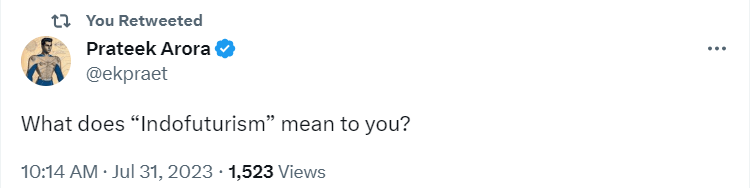
    Prateek Arora of BANG BANG MediaCorp, asked on X:

    Tweet from Prateek Arora: What does “Indofuturism” mean to you?

    I thought that since Indofuturism, seems inspired by Afrofuturism, I should look there for a definition. Wikipedia defines Afrofuturism as:

    Afrofuturism is a cultural aesthetic, philosophy of science, and history that explores the intersection of the African diaspora culture with science and technology. It addresses themes and concerns of the African diaspora through technoculture and speculative fiction, encompassing a range of media and artists with a shared interest in envisioning black futures that stem from Afro-diasporic experiences.

    Wikipedia article in Afrofuturism

    I would define Indofuturism by replacing Afro with Indo:

    Indofuturism is a cultural aesthetic, philosophy of science, and history that explores the intersection of the Indian diaspora culture with science and technology. It addresses themes and concerns of the Indian diaspora through technoculture and speculative fiction, encompassing a range of media and artists with a shared interest in envisioning black futures that stem from Indo-diasporic experiences.

    It seems to make sense to me as a first draft of a definition. I have not even touched what this means to me yet.

    In the meantime, you can follow some of the Indofuturism content that Prateek shares on Twitter, Reddit, and Instagram.

  • Cory Doctrow’s book on technology silos

    I’ve been looking at how walled off my content has been in the various silos of technology companies like Google, Amazon, etc. Lately, I’ve been feeling the same way about Automattic (the company which hosts this blog and Tumblr, a micro-blogging service that I use).

    I had shared a couple of videos about the IndieWeb in the fifteenth weekly notes in April 2023. This book seems to feed on this feeling of our content being locked in these silos.

    Derek Sivers also spoke about this (that he calls, technical independence) on episode 668 of The Tim Ferriss Show. He then fleshed it out in a blog post on his personal blog.

  • Four Thousand Weeks

    I picked up Four Thousand Weeks to listen to on Audible.

    I first heard of the book on Cal Newport’s appearance on the Tim Ferriss Show (Episode 568). Ferriss then posted a chapter of the book on his blog. From the introduction on the post it seemed like he was deeply affected by it. It did not affect me that deeply.

    I subscribed to his newsletter, The Imperfectionist and read a few of his blog posts. I found that I could not focus on what he was trying to say. Hence, I decided to pick his audiobook.

    His website gives a succinctly good summary of the book. What he adds in the book is evidence and anecdotes to back up the claim.

    The average human lifespan is absurdly, insultingly brief.

    If you live to be 80, you’ll have had about 4,000 weeks. But that’s no reason for despair.

    Confronting our radical finitude – and how little control we really have – is the key to a fulfilling and meaningfully productive life.

    If you need practical takeaways from the book, I’d suggest watching Nathan Lozeron’s summary of the book on his YouTube channel, Productivity Game which also has a nice 1-page PDF summary.

    On listening I found a lot of overlap with concepts from Cal Newport’s Slow Productivity, the Gita’s exhortation to follow process and not be swayed by outcomes, and Warren Buffet’s advice to his pilot.