
Jeff Bezos says –
via Vishal Khandelwal, SafalNiveshak.com
“I very frequently get the question: ‘What’s going to change in the next 10 years?’ And that is a very interesting question; it’s a very common one. I almost never get the question: ‘What’s not going to change in the next 10 years?’ And I submit to you that that second question is actually the more important of the two — because you can build a business strategy around the things that are stable in time. …[I]n our retail business, we know that customers want low prices, and I know that’s going to be true 10 years from now. They want fast delivery; they want vast selection. It’s impossible to imagine a future 10 years from now where a customer comes up and says, ‘Jeff I love Amazon; I just wish the prices were a little higher,’ [or] ‘I love Amazon; I just wish you’d deliver a little more slowly.’ Impossible. And so the effort we put into those things, spinning those things up, we know the energy we put into it today will still be paying off dividends for our customers 10 years from now. When you have something that you know is true, even over the long term, you can afford to put a lot of energy into it.”
Blog
-
What’s not going to change in the next ten years?
-
Samkhya
In 2010, I wrote a blog post called Going back to the temple. A recent reading of the ISKCON’s version of Bhagvad Gita As It Is, felt like a push towards a non-questioning worship of Lord Krishna and it’s interpretation of the Gita felt like an effort to turn people towards the ISKCON movement rather than to enlighten people about the Gita itself.
I have also been reading the Stoics lately. I have read about them in Tim Ferriss’ videos on YouTube, Ryan Holiday’s newsletter called the Daily Stoic, a book on the Stoic Philosophy – William Irvine’s book on Stoicism.
These made me wonder about Indian systems of philosophy. This led me to this wonderful Wikipedia page. This further led me to Samkhya. Many have called Samkhya the philosophical backing for Yoga.
Like most Indian philosophical schools, the original works are lost. These seem to have either been not taken forward as an oral tradition at some point. There is likely to have been misinterpretations as these have passed down centuries.
I was comparatively reading two translations of Samkhya Karika, which survived since there was a Chinese translation from the 6th century that survived. The two are –
- The Samkhya Karika by Ishwara Krishna – An Exposition of the Sytem of Kapila – John Davies [PDF link]
- Samkhya Karika – Brahmrishi Vishvatma Bawra
The second book led me to this website of Brahmrishi Vishvatma Bawra. The site does not appear to have been updated since 2015.
It led me to look for modern Samkhya teachers. This led to a book called Modern Samkhya by D E Osto
This is where I am at learning about a rationalist and atheistic school of Hindu thought. Since, today is Buddha Pournima, I thought linking to this blog post which compares the study of Buddhism and Samkhya might be a good addition. The parallels are striking.
As D E Osto writes on his website about the book:
The ancient philosophy of Sāṃkhya can be applied to modern life in a number of valuable ways. Rather than becoming overly concerned with the metaphysics of the system, Sāṃkhya can be seen as a psychological tool to overcome suffering. Through rigorous philosophical and psychological analysis, a person can learn to detach or disassociate from the psychophysical entity, and realize witness consciousness or what I refer to as the transcendental subject.
D E Osto, Modern SamkhyaThe parallels to Stoicism is striking to me.
-
George Saunders
The Brief and Frightening Reign of Phil by George Saunders is a book that cannot be categorized. It is a dystopian novella, a science fiction read, a satirical take on our times, the 21stcentury Animal Farm in a way, and perhaps more.
Written in 2006, almost fourteen years ago, this novella is still so frighteningly prescient. We are living it in a way, in almost every country. Most countries of the world today have their own Phil, and their reign isn’t brief.
Vivek Tejuja, in his review of The Brief and Frightening Reign of Phil -
Chamath Palihapitiya
I first heard of him on Tim Ferriss’ 5 Bullet Friday (dated April 17, 2020). This is the text that Tim adds:
Podcast episode I’m listening to —Billionaire Chamath Palihapitiya on How to Invest in This Crisis. This was sent to me by one of the better investors I know, someone who has been exceptionally successful in startups, public equities, and cryptocurrencies. Here is the description: “This is an episode of The Pomp Podcast with host Anthony Pompliano (@APompliano) and guest Chamath Palihapitiya (@chamath), the CEO of Social Capital, the Chairman of Virgin Galactic, and the owner of the Golden State Warriors. In this conversation, Chamath and Anthony discuss … where Chamath currently has capital invested, how he thinks we can solve the structural issues in health and economics, why being a patient investor will pay off, where he is looking for opportunity right now, what he thinks should happen with the NBA, and how the world is going to change after the pandemic is over.” Term that pops up in this episode: fiat currency. The term “fiat” derives from the Latin fiat (“let it be done”). For more on fiat currency as related to the US economy, I quite enjoyed Biography of the Dollar when I read it in 2009.
Tim Ferriss, 5 Bullet Friday, April 17, 2020While following YouTube’s suggestion, I also enjoyed listening to this interview with him for the View from the Top podcast. There is a nice summary of the episode on their website.
I gather that many of his appearances on television has been controversial but he has some interesting insights into the present scenario. He also has an annual letter to his investors where he shares his thesis of the present condition.
-
3 Things – Taking care of your mental health
I wrote in the last post that I handled the information overload I faced by whittling down the sources of information. 3 Things from Indian Express is one of the podcast that I kept. I listened to Episode 851 – Taking care of your mental health. There was a previous episode that also spoke of taking care of your mental health. Both episodes begin by expressing that during a crisis feeling anxious is normal.
These are my notes from the show. I suggest you listen to the show yourself as your takeaways may differ.
The episode features an interview with Aakriti Joanna of Kaha Mind, an online counselling service provider. Neha Mathews is the interviewer.
There are three areas they cover that was of interest to me – myself, relationships and work.
Self
Aakriti says that taking care of yourself first is the most important thing to do right now. We may be anxious about the future but there isn’t much we can do about it. The only thing we have control over is the present. For doing this, she first suggests maintaining healthy habits during the lockdown (waking up on time, exercising, staying hydrated etc.) that you may have had in the time before the lockdown. She suggests tracking where you are, having a basic to-do list and not comparing yourself with others.
There are several challenges on social media and advertisements to make yourself better on social media and other online channels. Aakriti says that we are just doing our best to survive this crisis and not participating in any of these online social media challenges does not make us any worse.
Relationships
Aakriti says that we are currently spending an inordinate amount of time with someone (spouse, relative or friends) whom we may or may not like. This is not something that we are used to. To survive this phase, Aakriti suggests that the only key is open respectful communication. She suggests being open about letting the other people know when you are not feeling well. In case of fights, she suggests that we focus on finding solutions rather than winning the argument.
In case friends are involved, Aakriti suggests checking in with them once in a while. She suggests we remain respectful about communication and don’t over do it.
Different people are coping with the situation in different ways.
Work
Neha shares an important message that is being shared on social media now-a-days among people who are working from home.. “You are not working from home. You are at home during a crisis trying your best to work.”
Aakriti adds that circumstances have changed a lot but expectations at work have not. People are trying to be as productive at work as they were when they travelled and went to a physical office. She suggests that our productivity during a crisis may suffer but the impact may change as per the nature of our work.
Coping Mechanisms
There are two sets of exercises that Aakriti suggests for creating an awareness of the present. She suggests that the present is the only thing we have control over. The exercises she suggests helps us come back to the present.
The first exercise is a practice called Grounding. Aakriti suggests we do this with a practice called boxed breathing. The exercise can be done any time we feel anxious but also good to practice it before we go to sleep or after we wake up. The exercise involves counting to 4 while we breathe in, hold the breath and breathe out.
The second exercise is the five senses exercise. She suggests a simplified form where we limit ourselves to observing using just one sense. For example, the smell of a scented candle or applying body lotion to sense how it feels on our skin. It could be anything related to sight, smell, taste, touch or hearing.
Another practice that Aakriti suggests is gratitude. By this, Aakriti says, she means being grateful for the little things. She suggests that we don’t force ourselves to be grateful but observe the little things that we could be grateful for. She says that this practice leads to a sense of feeling connected to others.
Counselling
Neha ends the show by suggesting that taking counselling or therapy has become easier now-a-days with online counselling becoming available. Many such online platforms also accept pay-as-you-can offerings if you are not able to afford it. Aakriti says therapy can help anyone who is not able to perform their daily functions properly.
-
Work from Home 2
It’s been more than a month since my last post about Working from Home. I thought this was a nice time to look back at how things went.
Information Overload
News about COVID-19 was everywhere. Television news, newspapers, podcast episodes, TikTok, Twitter, Facebook, WhatsApp group and email newsletters. It was information overload. Eventually, I limited the sources of information that I relied upon.
These are the resources that I turned to over the last one month while I tuned out all the rest to maintain my sanity.
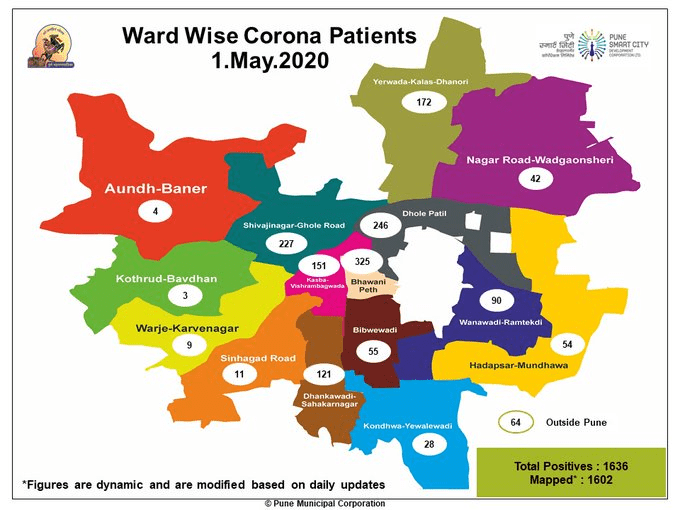
Ward-wise COVID-19 active case numbers shared by Smart Pune tweet, embedded below. Image Credit: Smart Pune. For local information related to Pune, I followed the Smart Pune Twitter handle. This provided ward-level data about the spread of the disease – number of positive cases and death – in my ward.
There were two podcasts that I followed for COVID-19. The 3 Things podcast from the Indian Express provided news stories from across the country. It covers only a single or 3 topics at the maximum. These deep dives gave enough back ground and insight about the news stories that I slowly ended consumption of other news sources which were covering very little other than COVID-19.
A data based podcast comes from a data journalist, Rukmini S called The Moving Curve (also available on Spotify now).
I also have access to some office-related resources which are not accessible publically.
Working from Home setup
Since the last update, I have become better at separating time between home and work. I tried to setup my working time according to better internet speeds. However, I found that this affected my output and left me feeling groggy most of the time.
As time passed, the internet and power supply stabilized. This allowed me to go back to my office timings for work. When I reset this, it improved my productivity at work and happiness at home.
But, perhaps, by the time people get used to working from home it may well be time to return back to a workplace. Personally, I would welcome it even if we maintain social distancing.
-
Earth Day Quote
Treat the Earth well. It was not given to you by your parents, it was loaned to you by your children.
Native American Proverb, A Seat at the Table: Huston Smith in Conversation with Native Americans on Religious Freedom,Hat-tip: James Clear
-
Devleena @ Numer8
Episode 22 of the NewSpace India podcast had Narayan Prasad (NP) talking to Devleena about her company, Numer8. Numer8 is a Mumbai-based data science company that uses data obtained from Earth observation satellites to solve problems like disaster management, coastal community monitoring, infrastructure monitoring, wildlife, and biodiversity protection.
The present episode of the podcast talked about fishing and how Numer8’s app Ofish helps in this regard. They provide a mobile application to the fisherman who use the app to determine places to fish and also see what price they can get from the market for their catch. The fishermen use the app using transponders that were fitted on the boats by the respective State governments. Some also rely on mobile networks. At the same time, Numer8 also provides a dashboard to port authorities to protect the coasts and prevent over-fishing.
The app supports Tamil, Sinhala, English, Marathi and Bengali languages currently. It protects data obtained from satellite by providing limited field of view of about 20 km, with no data provided for fishing beyond 20 nautical miles and also not sharing data to fishermen in other countries.
The geospatial data is primarily sourced through NASA and Europe’s Sentinel data. Devleena says that timely data from ISRO has been an issue but they hope to use data such as the Ocean Colour Monitor data from OceanSat.
There were also two other brief discussions that I found interesting and I note them here for my own reference.
The app is an example of a downstream application of geospatial data. This means data obtained from satellites is provided to a customer in an easy to use format. This has been difficult to do in the Indian situation with not many companies looking at these downstream applications. As much as we need private companies to build space hardware and software we also need companies that can use the products obtained from putting satellites in orbit. Numer8 is one example of such a company.
In the past, ISRO has sold its fishing data to the Fisheries Department and relies on the Fisheries Department to get the data to the fishermen, who are the end user. This ended up with fishermen having data that they did not understand and spending too much time at sea to obtain their catch. This was the transmission of data from Government agency to another Government Agency which relayed the data to a Customer (G > G > C). The presence of Numer8 inserts a private entity in this supply chain. So, the flow of data becomes (G > P > C). This led to improvement in way by which data was presented to the end user or customer and ensured that the data was used by the same. The Private company studied the end user, found out why existing products were not used and made sure that the data was usable.
The second point related to Numer8’s contribution to the UN’s Sustainable Development Goals (SDGs). Devleena said that theirs was the only startup that presented to the UN that the oceans could be as much a source of food as land. Numer8 suggested that better data could feed people while ensuring that ocean fish population was not over-fished.
-
Varane Avashyamundu (Malayalam, 2020)
I got my wife a Netflix subscription for a month and the first thing we got to seeing is the Malayalam movie, Varane Avashyamundu (transl. Groom wanted). We had missed watching this in the theatres in February. The story starring Shobhana, Suresh Gopi, Dulquer Salman and Kalyani Priyadarshan and marks the directorial debut of Sathyan Anthikad’s son, Anoop Sathyan.

The movie begins with a single mother – daughter duo looking for groom for the daughter and ends with the daughter selecting a groom for her single mother. But, intertwined in this simple narrative are various societal issues. These include broken marriages, single mothers, adoption, Army men who return from Service but unable to survive in Society and many more. These were issues that Sathyan Anthikad also covered in his movies in the 1980s and 1990s. That Anoop Sathyan covers some of the same issues in 2020 is quite telling.
Shobhana is a single mother who has escaped from a broken marriage. Lalu Alex plays a supportive brother who helps her escape and supports her as she is living life. Her daughter, learning from her mother’s experience thinks a love marriage is destined for failure and attempts to find a groom for herself. She uses matrimonial websites to find her match.
Suresh Gopi plays a troubled military officer who has done great things while in the Armed Forces but struggles to fit in into Society. He says he finds it easier to face the enemy than to tell a woman that he loves her. He undergoes psychological treatment from a Doctor as he tries to fit into Society.
Dulquer Salman is an orphan who has been “adopted” by a TV series star grandmother. He has his own love life collapse during the movie with his colleague who flies away to the US to pursue her career. He then finds love again, with Shobhana’s daughter.
I think the movie tries to throw light on several societal issues that no longer get too much coverage in Malayalam movies that once were it’s mainstay. I think some of the questions that the movie raises are still not fully answered in our Society today. I enjoyed the performances of all the main protagonists – Shobhana, Dulquer Salman, Kalyani Priyadarshan and Suresh Gopi.
-
Litanies of Dutch Battery (Malayalam, 2003)
ലന്തൻബത്തേരിയിലെ ലുത്തിനിയകൾ (2003, Litanies of Dutch Battery) is a Malayalam novel written by N S Madhavan (twitter: @NSMLive). N S Madhavan is a short story writer and a columnist. This is the first novel he wrote 33 years after he started writing. This is the first Malayalam novel that I listened to on the Storytel app.
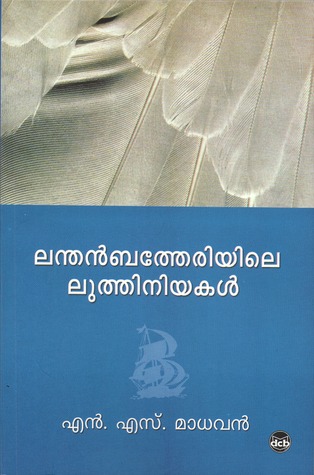
The novel traces the life of a little girl born and raised on an imaginary island off the coast of Kochi. The novel, has for its back drop the period between 1951 to 1967. It looks at the influences of the rise of Communism in Kerala and the Church in the locality through the eyes of the girl. It goes through various histories that affect the area and various oral stories that the people here spoke of and are perhaps now forgotten.
The narrator on the app is Edakochi Salim Kumar, who is a kadhaprasangam artist. It took me quite a while getting used to his pronunciation of Malayalam words. But, once I got the hang of it, it was a great listening experience.
I have mostly read English translations of Malayalam novels. This is perhaps the first time that I had the patience to sit down and listen through an entire novel in the original Malayalam.
I am not going to review the book since I don’t feel qualified to do it justice. There are two parts that I liked in the book and I am going to put them down here for future reference.
The year is 1957 and news arrives in India of the Soviet success in launching the Sputnik satellite. The Communist party cadre in Dutch Battery are celebrating the win over America. Kids make fun of the cadre saying they launched balloons into the sky and hence the Soviet achievement is no big deal. The cadre explains that balloons fall back to the ground after travelling some distance but the Soviets used a rocket that flies at a high speed to escape Earth’s gravity and put a satellite into orbit.
There are quite a few references to ship building around Kochi and also references to war stories including one about Pakistan bombing Kochi and how one bomb fell on a newly reclaimed part of Willingdon Island in Kochi. People claim to have experienced a lights out but no one ever saw the bomb being dropped nor explosions.
There is a nice interview with N S Madhavan where he talks about his novel and some of the historical references that make it into his novel.
 Parallel Spirals