The lower volume of work completed in Week 9 meant that more work-related writing got done than anything else. I did not write any blog posts. I did not publish the weekly space newsletter. I did not attend the RozWrite sessions.
I did not publish the weekly space newsletter. I did not attend the RozWrite sessions. The contribution to the work writing was lower as well because of power cuts and fever.
OTT
I continued watching OTT. I moved from watching Malayalam and to other languages:
The Law According to Lidia Poet (Italian, English voice over)
Triptych (Spanish, English voice over)
I especially liked the alternate rock intro music and music interlaced in a period drama in Lidia Poet.
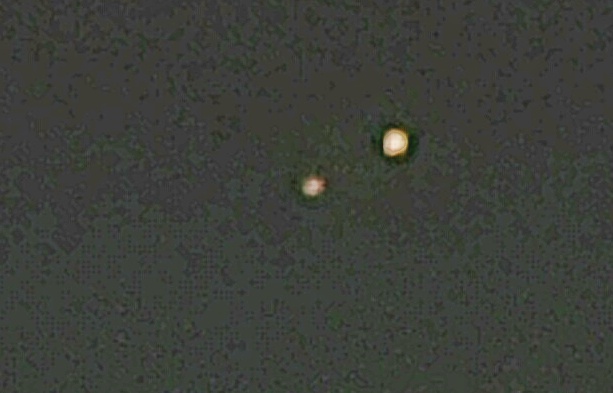
Zoomed in and edited using Snapseed. Image taken using Realme GT Master. Image Credit: Pradeep Mohandas
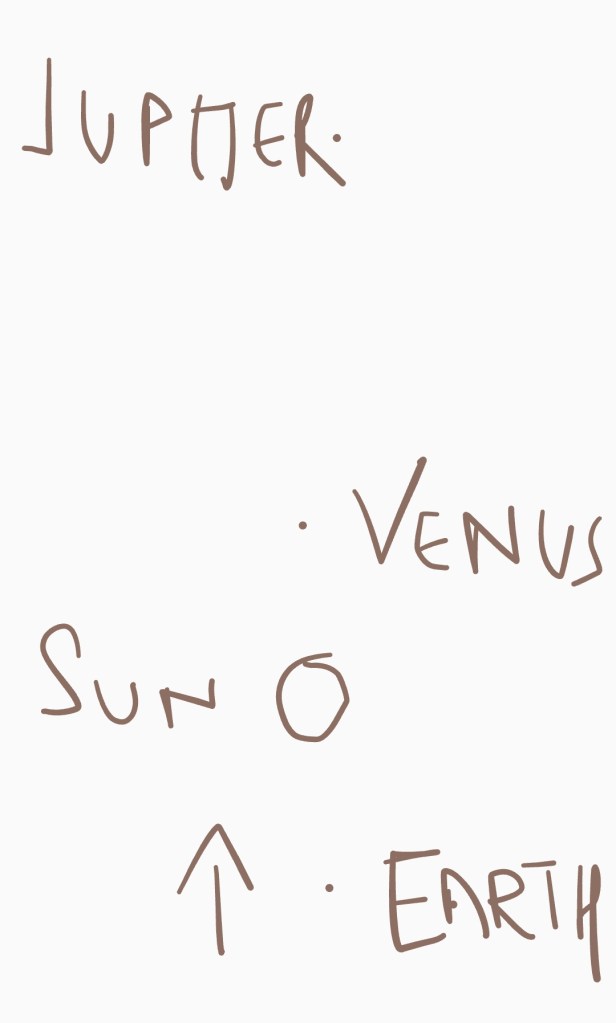
The question my wife had was how do the planets that are on either side of the Earth are seen together in the night sky.
A drawing to explain how Venus and Jupiter whose orbit is on either side of Earth can be seen together in the night sky. Drawing: Pradeep Mohandas
When we see from Earth, Jupiter must be on the other side of the Sun. Whereas, Venus could be between the Sun and Earth or between the Sun and Jupiter.
This is the first time that I tried to capture a celestial event with a mobile phone camera and edited it.
I subscribed to his newsletter, The Imperfectionist and read a few of his blog posts. I found that I could not focus on what he was trying to say. Hence, I decided to pick his audiobook.
His website gives a succinctly good summary of the book. What he adds in the book is evidence and anecdotes to back up the claim.
The average human lifespan is absurdly, insultingly brief.
If you live to be 80, you’ll have had about 4,000 weeks. But that’s no reason for despair.
Confronting our radical finitude – and how little control we really have – is the key to a fulfilling and meaningfully productive life.
If you need practical takeaways from the book, I’d suggest watching Nathan Lozeron’s summary of the book on his YouTube channel, Productivity Game which also has a nice 1-page PDF summary.
On listening I found a lot of overlap with concepts from Cal Newport’s Slow Productivity, the Gita’s exhortation to follow process and not be swayed by outcomes, and Warren Buffet’s advice to his pilot.
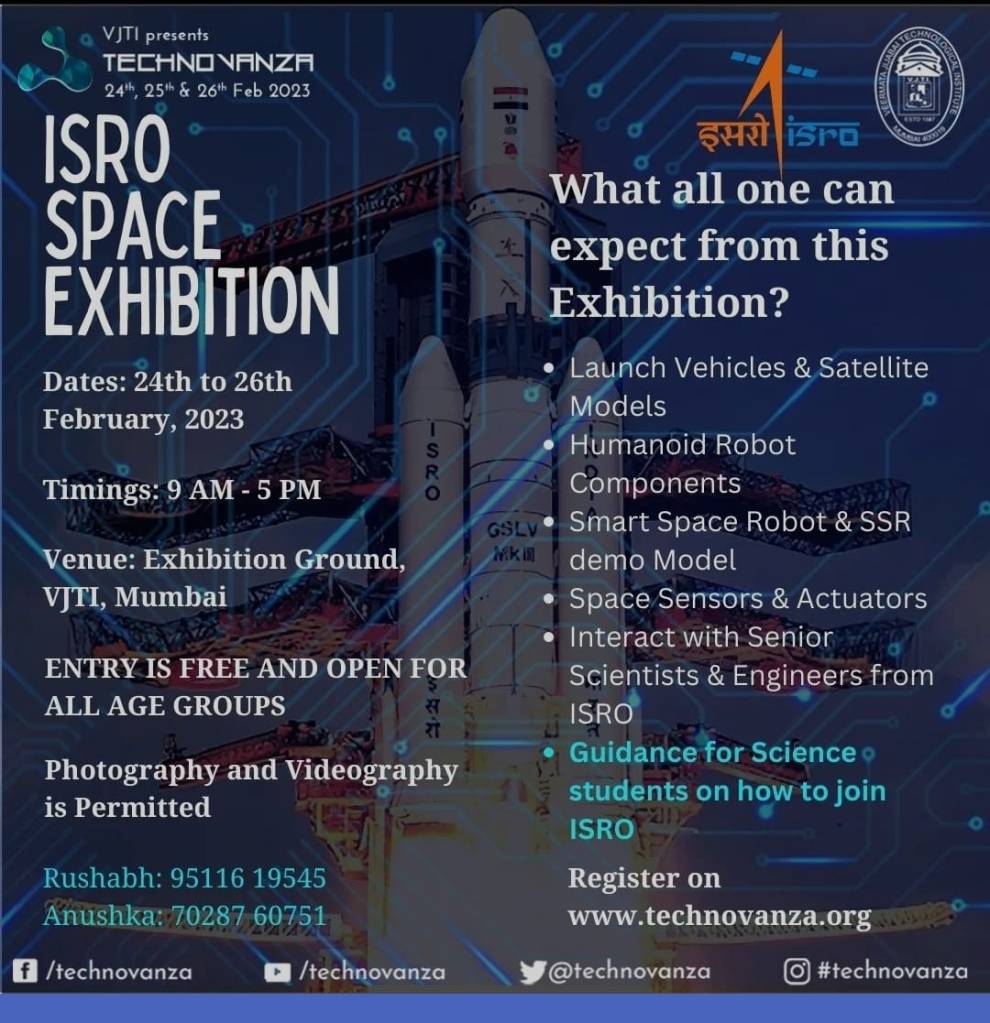
A couple of weeks ago, I got notified by Rakesh about an ISRO exhibition at VJTI in Mumbai. I got the same message forwarded from multiple sources other than Rakesh as well – in WhatsApp messages, Tweets, etc. The message seemed to have gone viral.
I decided to visit Mumbai for the same and take along my daughter by bus. Over the next week, this plan expanded to include my wife and our son. The mode of transport also changed to our car.
We underestimated the time it would take to prepare for the ride, the time to travel, and the time for all things in between. The decisions change so much with just a 2 month old kid who has to be carried. We reached late on Saturday and I saw messages from my group that it was better to avoid the ISRO exhibition than go there. Hence, skipped it.
It seemed to have been serious enough to make the news the next day.
We spent the Saturday and Sunday in Mumbai and returned to Pune by Sunday evening. Son was cranky a bit in the end stretch of the travel to Mumbai. Else he was good on the way from and to Mumbai. All in all, we enjoyed the weekend drive.
For ISRO, it shows the demand for exhibitions like these north of Bangalore/Bengaluru.
The writing done this week other than work was disappointing.
I only published one edition of my space newsletter. This, too, was simply a round-up of space news from India and did not feature a deep dive.
I wasn’t able to attend any session of RozWrites for the Long Form Writing Cohort 3 that I am a part of. This contributed to the lack of output this week.
I’m happy to share that I was able to start reading blog posts, fiction and non-fiction books again. I’m presently reading:
Listening on Audible: 4000 Weeks by Oliver Burkeman
Reading on Kindle: So Good They Can’t Ignore You by Cal Newport
In the blog post that I wrote in December 2022 called Note Taking 2023, in the section on Plain-Text productivity I had referred to Cal Newport having a system of using a workingmemory.txt file. I decided to read the blog post about it in detail and implement it at work. This led me to the book, So Good They Can’t Ignore You.
Cal Newport referenced Burkeman’s book during his appearance on the Tim Ferriss’ show. Ferriss then posted a snippet from the book on his blog. While Nathan Lozeron has a fantastic summary of the book on YouTube, I decided to pick the book to listen to it.
Cycling and Badminton
I did not get any cycling done this week. This was a major source of disappointment for me.
I started playing badminton and was able to play Monday thru Thursday.
I am playing again after a really long time and it feels really weird to play as an adult.
I am part of a Long-form Writing Cohort-3 (LfW-C3). We are a group of people interested and encouraging each other to write long form. The group organises something called RozWrite (daily writing) at 10 pm each night. We keep the video on and the audio on mute and write together.
I wrote about the Star Party that I attended with my daughter on Monday. I wrote about the cycle I bought on Tuesday. I wrote my newsletter on Wednesday and a little on Thursday outside of RozWrite hour. I missed attending the RozWrites on Thursday and Friday.
OTT
My wife and I got back to watching Malayalam films on OTT this week. We watched:
I drove two stretches of cycling on Sunday (when I purchased the bicycle) and then again on Wednesday. I drove 11.7 km on Sunday and 10.2 km on Wednesday. I only plan to drive Pachu two days a week to begin with.
YouTube
Re-discovered the song again on YouTube, especially the melody at the 2:44 min mark.
Raj Shamani has an interesting podcast with Sahil Bloom on how he got to meet Apple CEO Tim Cook and some very interesting relationship advice.
I enjoyed watching the trailer of the Malayalam movie, Romancham.
I’ve always wanted to have a bicycle of my own, as an adult. Bicyclists are some of the out-of-the-box and contrarian thinkers that I have met. Other people with a similar mindset are amateur astronomers and open source enthusiasts. There is no sensible reason to follow these hobbies in this age of instant gratification.
Since 2023 had begun I had already hung out with a few amateur astronomers and so I was thinking about which of the other two I wanted to do. I could not find any meeting of the Pune Linux Users Group (PLUG) to attend and hence decided that perhaps it was time to look at cyclists.
The minimum requirement before one meets cyclists is to have a bicycle of one’s own and if nothing else to at least be able to ride it for a few kilometers. It was at this time that I came across this blog post on choosing a bike in India by Priyanka.
After reading the blog post I went through the websites of the bicycles that I had used as a child – Hero and Hercules. I also went through the websites of Montra. It was while discussing the distance of some of these cycle shops in and around home with Rakesh that he told me about a bike store above the Maruti showroom at Viman Nagar.
I went there a day before with my scooter and told them frankly that it had been years since I pedaled and asked for their bicycle suggestions. I also told them I did not intend to spend a lot of money. They showed me a few Firefox and Ninety One bikes. They explained the different types of the bicycles to me and finally suggested a Ninety One Viper X-101.
I decided to get the bicycle the next day. They thought I was probably not coming back again and tried to get me to book the bicycle on the same day. I managed to escape from their clutches and headed home.
I went on the next day a little after 11 am. I paid for the cycle and the accessories and then got instructions on how to use the gear system on the cycle as well as a few pro-tips on cycle maintenance and checks to perform before taking it out for a ride. I got a pic clicked just like I would get when I might have bought a car.
I then drove the cycle for 11.7 km on the journey back home slowly in the mid-day heat. I was happy it was February and not May. The gear system made sure that I did not sweat the couple of up-hills on the way home. I reached home in time for lunch.
The cycle did not fit into the lift in our building on its stand. It had to be lifted on the back wheel to fit in the lift.
I decided to name her Pacha Pana (green palmyra palm) and to call her Pachu for short. Pachu from Pune.
It was the sight of the launch of the Hubble Space Telescope by the Space Shuttle Discovery on Discovery Channel that shifted my interest from archaeology to astronomy. After the lift-off the Discovery Channel proceeded to show some of the fascinating images that the Hubble captured. I was in awe.
This anecdote also holds the confusion I held for the longest time. I did not know if I wanted to do astronomy or build rockets that would launch people and telescopes into orbit. I am not sure if I still have an answer to this question. The move towards engineering was pragmatic and not based on interest.
After marriage, my wife was interested in the bright objects in the night sky and did not mind me watching rocket launches because Indian rocket launches were few and far between. They were not as frequent as the SpaceX launches of today of almost one a week.
When our daughter was born in 2017, I told my wife that I will introduce our daughter to the night sky but wouldn’t try to push my hobbies on her. Keeping my promise, I had only introduced my 5 year-old daughter to the Moon, Venus, Jupiter, Saturn and Mars. Of these, my daughter only has trouble distinguishing between Jupiter and Saturn when they are both present in the night sky.
When the astronomy club in Pune, Jyotirvidya Parisanstha (JVP) organized a star party for the public, I forgot this promise to my wife and registered both of us (our daughter and myself) for the same. My wife could not travel as she had just given birth to our son last December.
I decided against going by car as I was not familiar with the location. We decided to travel in the bus provided by JVP.
We landed up around 4 pm at Shalimar Furniture at Swar Gate in Pune. We arrived there travelling in an Uber. My daughter was already impatient with the slow progress of our journey to the location of the Star Party.
I had told my daughter that we were going for a star party. The only other party she had attended thus far were three to four hour long birthday parties of her friends who all stayed in our neighborhood, which she reached in 20 minutes at the most. She would spend time at the birthday party playing with her friends or having samosas and snacks. She was excited nonetheless.
This Star Party was not her kind of party.
We travelled in a Tata Motors bus to a village in the outskirts of Pune called Naigaon. This was on the Pune – Bangalore Highway a little beyond the gate of Khed Shivpur about an hour from Swar Gate. The Star Party was held at Manali Agro Farm.
First up, it lived up to it’s name. It was probably colder than it was in Manali. My daughter had to wear her thermals, t-shirt, sweater and a blanket before she could shiver and speak. I only had an athleisure t-shirt and a sweater protecting me. JVP had warned in their email invitation and the programme that it would be very cold. The name also should have given ample warning and we should have probably prepared with winter wear we might have carried had we travelled to Manali.
As the team at JVP was setting up their telescopes (2 Cassegarian, 2 Newtonians and a Dobsonian), we spotted a few fast moving satellites in their orbit. They were most likely Earth observation satellites taking pictures of Earth from their perch in space. I also spotted the planet Venus with my daughter.
Venus was the first planet that the telescopes pointed to as people formed lines in front of them. We missed seeing the planet through the telescope. As the planet set in the western sky, we had the opportunity to see Jupiter and three of its moons through the telescope. I was not sure my daughter would be able to see the moons through the telescope but was happy when she could spot them easily.
Sarang then showed the constellations in the night sky with a pointer. We saw the body of Pegasus the Winged Horse, Cetus the Sea Monster, and spoke to us about Raashis and Nakshatras. I had heard these terms and now knew their significance and meaning.
He later shared stories from Indian and Greek mythologies. He had immense energy that comes from knowledge and passion. He spoke endlessly through the evening and then later in the night. He flawlessly mixed sharing the science of the night sky, the art of storytelling, and a healthy skepticism.
My daughter and I were able to see the Moon through the telescope. She described it as seeming like cheese. I told her about craters without delving too much into its violent history. She saw both the Moon and Jupiter through one of the Cassegarins. The other Cassegarin of the pair was having a hard time tracking in the beginning though the volunteers were able to fix it later in the night.
She did not eat any food at night. I ate the delicious Marathi dinner at the farm. There were a few slides and swings in the park but they were too cold to even sit on. She was immensely disappointed and spent the rest of the night sleeping on my lap. I did not feel confident about laying the mat on the floor and letting her sleep there ergo many people did.
I missed seeing the Pleiades (Rohini) and the Orion nebula through the telescope they had set out at night.
We reached in time as one of the JVP team members talked about imaging the comet C/2022 E3 (ZTF) and how he stacked images one on top of the other and used software to get an image of the comet. The comet’s tail had grown faint in the image and it’s core also seemed to have broken. It was great to see a comet but were disappointed that we missed seeing it in all its glory.
A little past four in the morning, I wasn’t sure our cold protection systems could keep us protected from the cold any longer. So, I headed to the bus with a few of the other parents and caught up on some sleep. Although I was awake most of the night, I am not sure if I could stay awake most of the night.
Some of the other people missed Sarang’s story sessions and caught some well deserved sleep and spent the early morning watching the sky. We missed that part but I was happy that I could brush up on both my astronomy and mythological knowledge.
The star party was over at 7 in the morning and we headed back to Swar Gate around 7:30 am.
I travelled with three colleagues to Kakinada on a business trip. We went there on February 5 and returned on February 9.
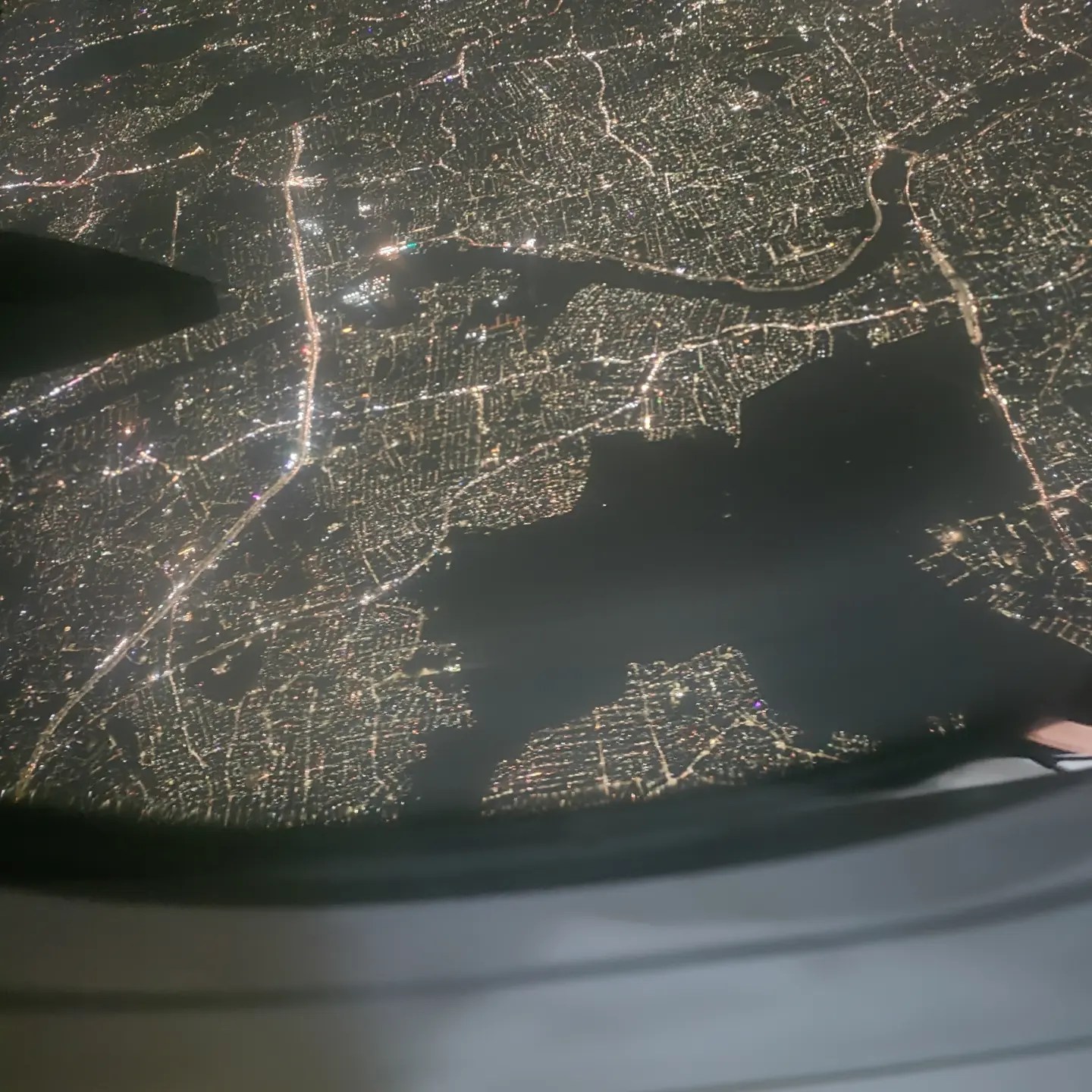
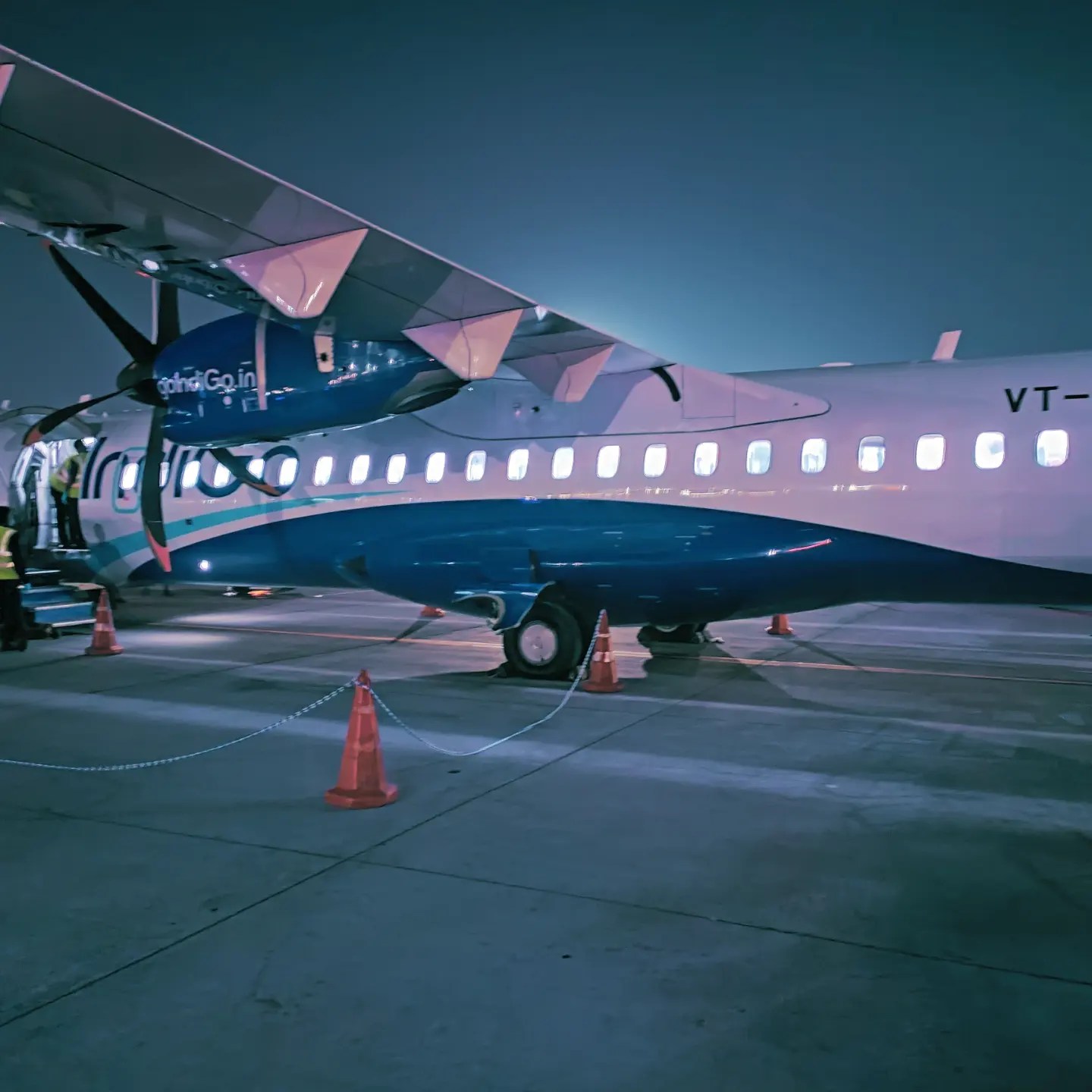
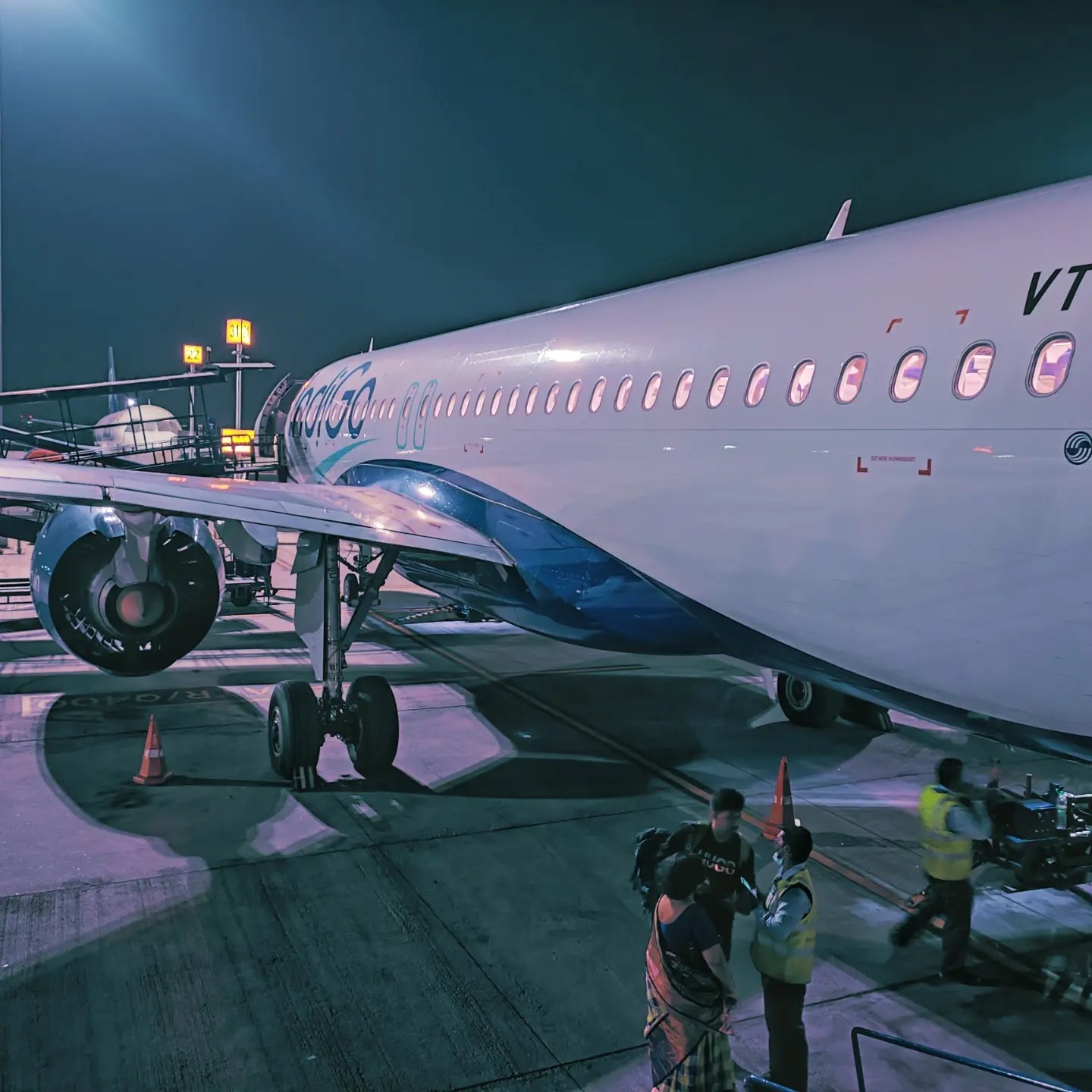
I clicked the above pics from my phone at Hyderabad. One is a picture of the city when we were flying from Hyderabad to Pune. The other two are the aircrafts that flew us from Rajahmundry to Hyderabad (ATR-72) and from Hyderabad to Pune (Airbus A320). Most of this week was spent at the base.
I missed writing the post for Week 5 of 2023 as I was finishing work in preparation for this trip.
Newsletter
Pradeep’s Space Newsletter has been on hiatus for a long time. It comes back online this week for the second edition. This time, I am working to add more context to the stories and will be more picky in the number of stories that I will cover. But, I need someplace to dump the rest of the stories that I follow to write the newsletter. That may probably land on this blog or it may go into Roam Research.
YouTube
I have reduced my consumption of Twitter, Instagram and Facebook. I hang around Mastodon much more but have not been posting there. But, it has increased my consumption of YouTube. After watching this video (covered in Weekly Notes 2), I had hoped to blog more here but it seems to be endless stretch of these Weekly Notes.
I’ve been doing a deep dive of the FreeFinCal’s YouTube channel. I had followed his blog way back in 2015 but stopped following him thinking him to be very conservative in his style of investing. He makes much more sense to me now. I got back to him after watching this interview on Labour Law Advisor’s YouTube channel.
I also enjoyed Ali Abdaal’s two Deep Dive interviews with Cal Newport and Ryder Caroll discussing Slow Productivity and the Bullet Journal Method respectively.
I enjoy listening to Saurabh Mukherjea talk. He has an interesting basis for his investment thesis that he outlines in this talk. He says that India is networking and linking up as the United States did and as it happened in the United States in the 1880-1930’s, so it will happen in India that as India networks, it would lead to creation of monopolies.
Draft Posts
There are two blog posts in my drafts column. One is on analog and digital note-taking. The other is on the Star Party that I went to on January 28. I have no idea when I will be able to publish them.


 Parallel Spirals