Author: Pradeep

  • Search for Vikram

    It has been about 5 days since my last post here. When we last left Vikram, we had left it incommunicado close to the surface of the Moon.

    Since then, there has been a lot of speculation with little or no information. There is no information from ISRO including what it seems to be doing now. Information is coming in at a tangent, from astronomers studying Doppler readings of the Lander and the Orbiter.

    ISRO’s last official update (at the time of writing) states that it had located the lander and that it was trying to establish communication with it. There was a lot of speculation initially about the status of the lander. Many foreign observers (like Jonathan McDowell, Cees Bassa, Chris B etc.)said that the lander had very little chance of survival knowing the speed at which it was travelling at the time ISRO received the last telemetry from the lander. ISRO released information to some sections of the media (PTI report ) that the lander was intact but toppled. This was not found as an update on the ISRO website.

    Science reporters then began to question ISRO’s claim that the mission was 90-95% success. Vasudevan Mukunth for The Wire considered the method by which they arrived at the success rate. Jacob Koshy writes in The Hindu with much more depth and history for the reasons why this quote now looks like a way to airbrush the failure. There has been no official response yet. S M Ahmed who had an instrument on board the Moon Impact Probe of Chandrayaan 1 discusses possibilities as to the fate of the lander on his blog.

    The lack of information now has people studying the few statements that ISRO has already made. A story in India Today seems to re-interpret ISRO’s message to say that they were in touch with Vikram till about 400 m above the surface of the Moon and not 2.1 km like many media reports have since claimed.

    Meanwhile, Ryan Watkins, a planetary scientist tweeted that NASA’s Lunar Reconnaissance Orbiter (LRO) will look for Vikram on September 17. LRO’s camera has a resolution of 0.5 m at an orbit of 100 km. It is believed that at this altitude, the images would not discern enough detail to let us know whether the lander is intact. There were reports that ISRO will lower the orbit of the Chandrayaan 2 orbiter to take a closer look. The orbiter has a camera with a better resolution than LRO. We got word from Edgar Kaiser, an amateur radio astronomer today that Chandrayaan 2 orbiter has now lowered its orbit above the South Pole.

    Chandrayaan 2 orbiter orbit change detected on Doppler. Image: Edgar Kaiser

    This seems contrary to rumours that K Sivan, ISRO Chairman has asked scientists to move on and focus on future missions. There were also some fairly stupid remarks from DRDO Chairman saying that PM Modi’s hug enabled ISRO to find Vikram.

    While I’ve mostly given up on chances of locating Vikram intact we can await efforts from Deep Space Network (DSN) to hail the lander in hopes that it will be able to contact it.

    Doppler seems to be bursting various balloons of hope that ISRO has created. It seems to be breaking news about the orbiter and lander. In space, you can’t lie. Covering up mistakes makes the situation much worse than needs to be.

  • Vikram Landing

    Vikram is what ISRO calls the landing module of the Chandrayaan 2 spacecraft. The last we checked in on Chandrayaan 2, we witnessed the separation of the two modules of Chandrayaan 2. The orbiter module was in the correct orbit at the time of the separation.

    Vikram then performed a couple of orbit lowering manoeuvre to reduce its orbit around 100 km by 30 km. As it approached the landing site, the spacecraft followed the desired trajectory through the rough braking phase where the speed of the vehicle was reduced drastically. All seemed to be going well up to this phase. The telemetry data sent back to ISRO Tracking Centre (ISTRAC) followed the mission plan.

    The spacecraft then seemed to be deviating a bit from its track but seemed to be making an effort to return to the original path. The animation on the screen showed the spacecraft toppling over. It seems that Vikram was trying to stay in the correct orientation. At this point, ISRO said that they lost communication with Vikram at about 2.1 km above the lunar surface.

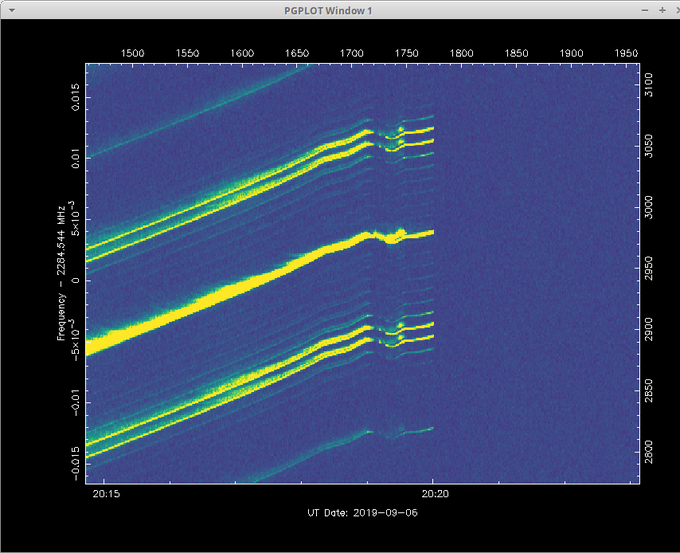
    Doppler data from Vikram. Image: Cees Bassa, Dwingeloo Radio Telescope, Tweet.

    We don’t have data as to what happened after this point. Doppler data received from Amsterdam’s Dwingeloo Radio Telescope was tweeted by Cees Bassa, an astronomer who was following Vikram at the telescope. This seems to show a “zoom” at the end which seemed to indicate a crash, according to him.

    https://platform.twitter.com/widgets.js

    ISRO’s own telemetry screen at the last available data point seems to indicate speeds which were considered too high for a proper landing to take place at the end. The above tweet is from Jason Davis of The Planetary Society who also has a good summary of events with some international context on their blog.

    I was initially unhappy that the Prime Minister Narendra Modi walked away from ISTRAC letting ISRO Chairman K Sivan do the announcement. But, today morning he came back and with data announced that communication was lost. The data is still being analysed.

    There are currently two orbiters in orbit around the Moon, Chandrayaan-2’s orbiter module and NASA’s Lunar Reconnaisance Orbiter. Each should be having an orbit around 2 hours and so might come over the landing site within this month and we should be able to have a look. This would give final confirmation on what happened early today morning.

  • Is Chandrayaan 2 landing on the Moon’s South Pole?

    No.

    Rachana, over on Twitter, asked why the CNN covered Chandrayaan 2’s Moon landing on September 7 as that of the second landing on the far side of the Moon rather than as the first polar landing by any country. Rachana is a space professional and her tweets earlier on space have been worth following. She has also written useful FAQs for students and young professionals interested in space science. At the end, I felt Rachana may have shared the tweet only with the intention of sharing the discussion on the Reddit post.

    Based on this tweet, I asked Ram Ramgopal of CNN the reason for this coverage. I immediately felt lazy for not following up the question myself before asking Ram and hence went looking on Wikipedia. I recognized the error and informed Ram apologising for the complaint. I still had a few queries regarding the lunar poles that @zingaroo kindly answered. Also, if you follow the link to her tweet it goes to Reddit where Ohsin also responds to the question. I learnt that we are landing neither on the Moon’s pole nor on its far side. I am saving as reference what I learnt here.

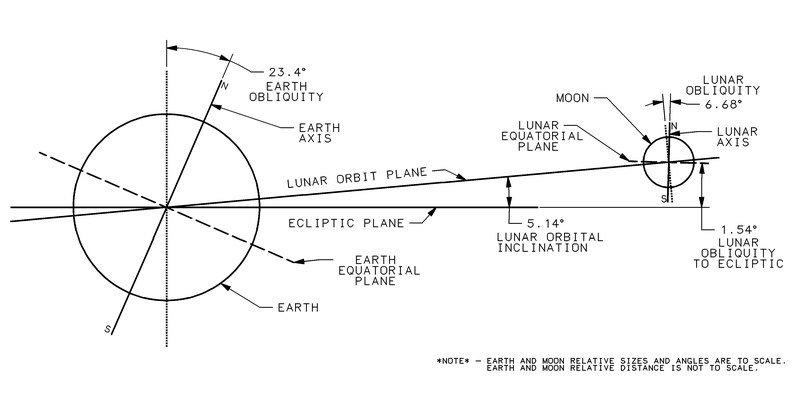
    The tilts of Earth and the Moon. Image: Peter Sobchak, Wikimedia Commons

    On Earth, the polar region is defined by Earth’s tilt at 23.4 degrees. Hence, areas above the latitudes of 66.6 degrees are considered the polar region. I mapped the same onto the Moon. Here, is where @zingaroo corrected me. Moon’s tilt is only 6.68 degrees. Hence, the Moon’s polar region is only that North or South of 83.32 degrees. The Chandrayaan landing site is well outside the Moon’s poles.

    As for the Moon’s far side, ISRO’s search for a landing site required the site to be on the near side of the Moon.

  • Bank Merger

    The Finance Minister, Nirmala Sitharaman has announced the merger of public sector undertaking (PSU) banks. This move will bring down the number of public sector banks from 27 in 2017 to 12 after merger.

    Six Mega PSU banks created as a result of the merger announced on August 31. Image: Bloomberg Quint

    As a former banker, I support this move. Existence of multiple public sector banks has been an enigma for me. These banks existed once as private sector banks. They competed then and played a role in the Indian economy. Their nationalisation in 1979 made them all public sector undertakings. Having banks in every nook and corner of the country was one of the reasons cited behind bank nationalisation. The idea was to make banking accessible to the poor and financial inclusion. As it was said then, to change from class banking to mass banking.

    However, this still does not seem to have been achieved. Payments bank have been started up to achieve the same goals. However, these end up serving the same urban populace as private banks in India where the money is. All this achieved was make competition in urban areas, where the money is, more stiff.

    Private banks and payment banks are able to provide better service and better loan recovery because of the targeted nature of their banking. They work in areas where they have competence and knowledge.

    Success in universal banking cannot be measured with the yardsticks used for class banking of the private banks. Universal banking is by its nature very intensive, involves high wastage and is highly inefficient.

    The merger of these public sector banks makes more staff available to them. These can be deployed in rural centres to meet the shortfall of staff branches face whilst in urban centres to meet the shortfall of loan processing and servicing staff.

    It would take at least a generation before enough private banks spring up to target various parts of universal banking. Some will still not be viable. As various government policies push towards formalising the economy, many of these private banks will merge to form larger banks.

    As for public sector banks, ultimately, I hope that there is only one public sector bank. Perhaps, two. State Bank of India will definitely be one of them. Union Bank has a nice ring to the name if there needs to be another bank which is a union of all other banks other than State Bank. Eventually, I hope everything is merged into the State Bank. In the meanwhile, processes need to be streamlined, documentation needs to be standardised and loans need to be recovered.

    Will there ever be a time when India will not have a need to have any public sector bank?

  • My friends in Lonar

    Pradeep ettan got promoted and transferred to SBI Lonar branch. Lonar is a place which is not accessible by rail. The roads were under repair. The nearest railway station is Jalna, two and a half hours away while the nearest airport is Aurangabad, which is three and a half hours away.

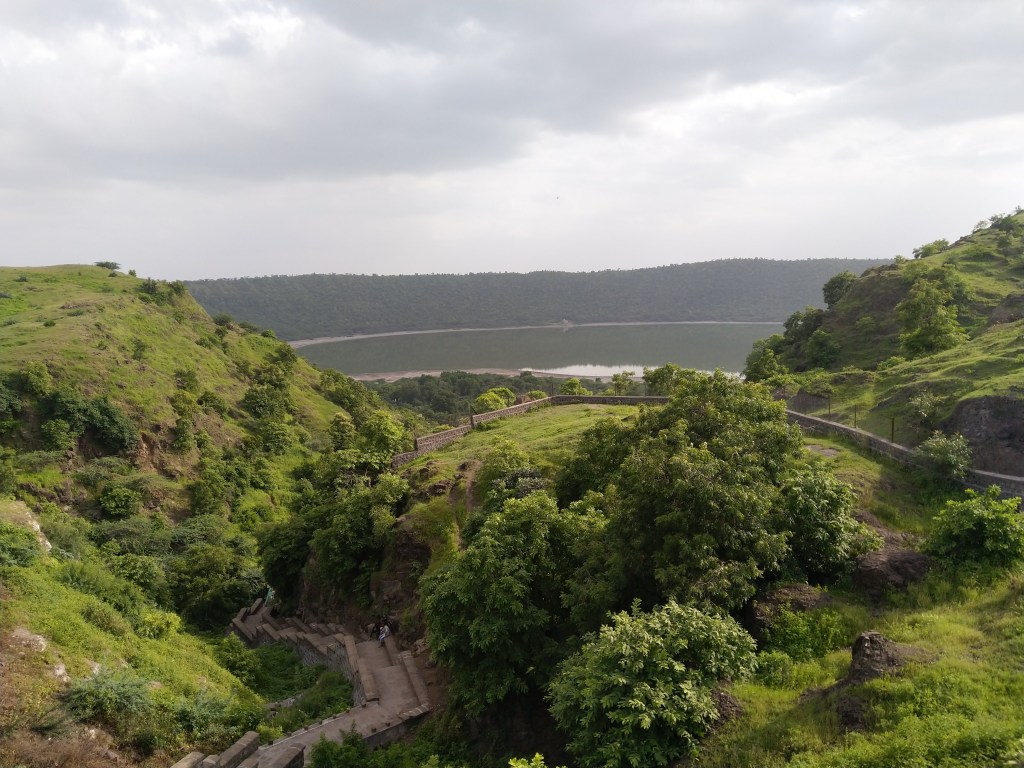
    Lonar is a rural area which has no facilities like hospital, school, college etc. Only two-three seasonal vegetables and fruits are available. Pradeep ettan was born and raised in Mumbai while I was born and raised in Alathur, Palakkad in Kerala. While, I am also from a rural area, it was difficult for me to stay in Lonar. When I saw Lonar I felt my home town, Alathur was a metropolitan city. The only thing to see in Lonar is the Lonar crater.

    Lonar Crater. Image: Dhanya Vallat

    The regional language is Marathi and I don’t speak Marathi.Hence, I was unable to communicate with people there. By God’s grace, I got a very good neighbour,  Nanda Sancheti .  She became my good friend. She is very down to earth, always smiling and ready to help people. She is the one who always had solutions to every problem. She worked as a teacher in their school called World School in Gaikhed and they run a jewelry shop.

    Selfie with Nanda. Image: Dhanya Vallat
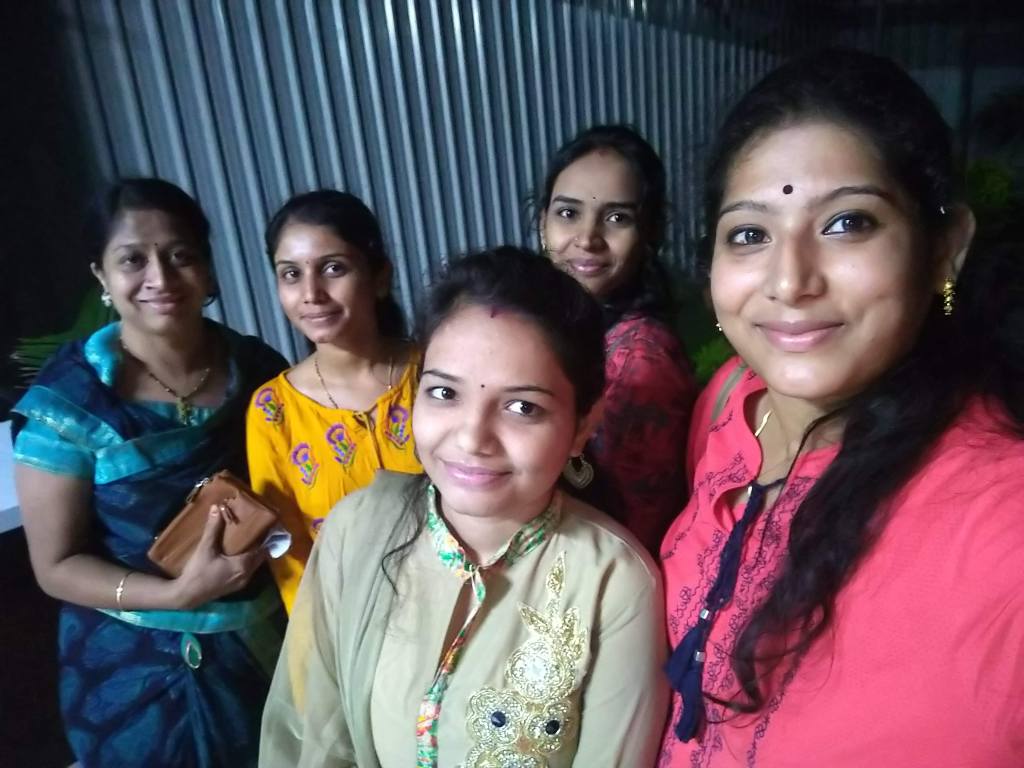
    Selfie with me and my friends. Image: Dhanya Vallat
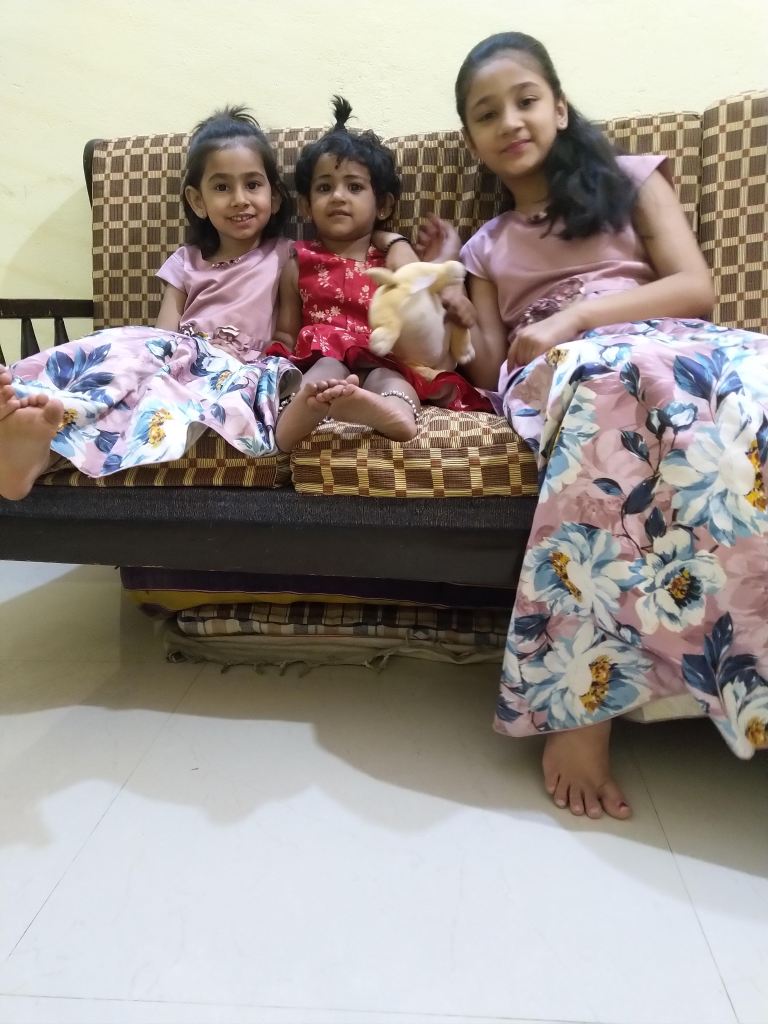
    Rithika with her friends Bhakti and Stuti. Image: Dhanya Vallat

    She is having 2 sweet and cute children Stuti and Bhakti. Bhakti is one year elder to   Rithika. They became friends and always wanted to spend time together. But when they meet, both have complaints (Maa Rithika ka ne woh kiya, Bhakti ne woh liya, etc.) about each other. My other friends in Lonar are Priyanka Madane, Priyanka Hinge, Sanvi Chetan Thakre and Shobha Pund. Because of them, our stay in Lonar became bearable.

  • Chandrayaan 2 Lander Module seperation

    I was away for a few days from the blog as my parents were visiting. I got news about the separation of the orbiter and lander module as I was having lunch today.

    Let’s backtrack a bit, to my last update on the mission. That update was provided when the spacecraft was placed in lunar orbit. At the time, the spacecraft was one integrated unit. It is made of two components – a lunar orbiter module and a lunar lander module.

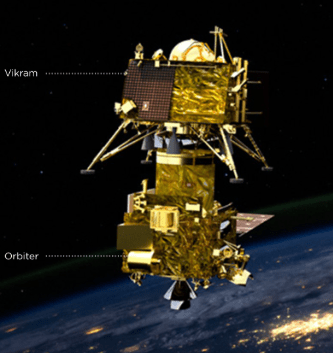
    Lander (Vikram) Module and Orbiter Module of Chandrayaan 2. Image: ISRO Launch Kit

    Once it reached lunar orbit, the spacecraft performed the opposite of what did in Earth orbit. In Earth orbit, it used to fire its engines at the point closest to Earth to increase its speed. Now, in lunar orbit, the spacecraft turns around and does the same to reduce its speed. As it does so, the orbit lowers and the spacecraft gets closer to orbit around the Moon.

    When we met the spacecraft last, it was in lunar orbit of 114 km x 18072 km. Since then, it did four engine firings on August 21, August 28, August 30 and September 1. Yesterday’s engine firing put the spacecraft in a 119 km x 127 km orbit around the Moon.

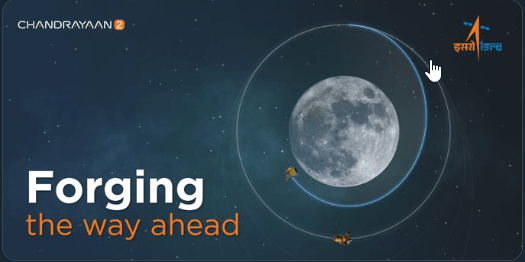
    ISRO’s tweet visualises the lander module going closer to the Moon while the orbiter module staying in lunar orbit. Image: ISRO Twitter

    Today, the lander module and the orbiter module separated. Currently, both are in the same orbit. While the orbiter will continue to be in its current orbit, the lander module will eventually achieve an orbit of 110 km x 36 km. The lander module will then perform a rocket powered descent to the surface of the Moon.

    You can follow the latest updates from the mission on the ISRO website. News coverage from The Wire, The Times of India (which has a 51 second video from Times Now which has animated the picture above), ThePrint (which also gives you an idea on what comes next).

  • Cricket from ESPNcricinfo

    I heard references to articles that Amit Varma writes for ESPNcricinfo on his podcast, The Seen and the Unseen. When I heard these many times, I got curious and went online to check out the website.

    The website has articles and live scores. Currently, the focus seems to the India West Indies test series and The Ashes. I read a few articles but didn’t understand much as I had stopped watching cricket since Ajay Jadeja quit following a match fixing scandal in the late 90s. I failed to find any article that was interesting for me.

    Screenshot of cricinfo in 1995.  Image:  By Desironya - Own work, CC BY-SA 4.0
    cricinfo in 1995. Image: By Desironya – Own work, CC BY-SA 4.0

    I read a Twitter thread yesterday by Siddhartha Vaidyanathan on Prof. Sankara Rao and how his interest for cricket and sharing scores by listening to cricket scores on BBC on his short wave radio inspired an online community and led to websites like cricinfo which was established in 1993.

    At the end of the thread, Siddhartha Vaidyanathan shared an interesting article written by him on the occassion of ESPNcricinfo’s 25th anniversary. This follows the role played by cricket enthusiasts in the US and Australia and the role they played on what enables you and me today to catch cricket scores online.

    Today, ESPNcricinfo powers the score updates one sees on Google. This is visible as notifications on our mobile phone. The website gives me a stand alone website that is part of the social internet which enables me to follow cricket again, if I want to.

  • Social Internet

    I had written earlier about wanting to move towards Social Internet on this blog earlier. The move feels more urgent as I changed careers and moved to a more creative career field.

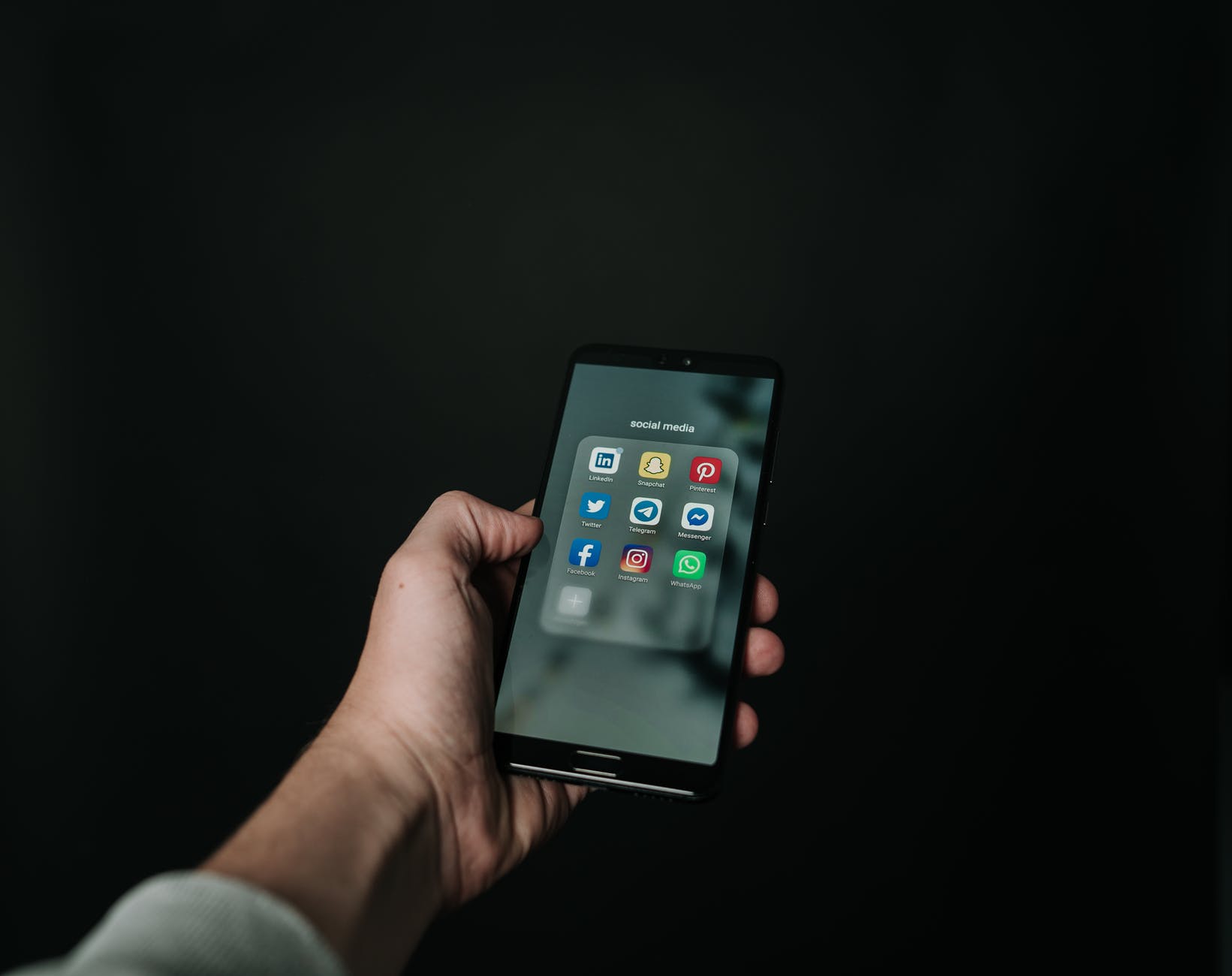
    A pciture of a phone with social media apps installed on it. Photo by Magnus Mueller on Pexels.com
    Photo by Magnus Mueller on Pexels.com

    When you’re on Twitter or similar social media websites, you are bombarded with information. This information, though, is about different topics. To process this information, the brain does something called “context switching”. Cal Newport, a computer science professor, working with Georgetown University has written extensively on his blog about the cost context switching has on our brain. In short, this affects our attention span. He suggests a mental declutter of thirty days in his new book, Digital Minimalism.

    Besides the cognitive costs, it also affects our world. It enriches a few corporations that gains by selling our data to advertisers. This leads us to “walled gardens” that affect our privacy. We do not have a clear picture about what data we give to corporations and how, in turn these corporations use our data.

    Some of my friends have also started moving from corporations on to blogs of their own. Their dusting off old blogs that they once maintained and renewing them. A recent one I read about is Karthik’s. I am trying to get other friends to start up their blogs as well. This is where you have control on your content and data.

    Tobi Lutke of Shopify is also working towards making shopping online social again. Recently, I was talking about a friend about cameras and that night I saw ads for cameras on Amazon. The Amazon app on your phone has permission to make calls. Is it listening to you as well? Shopify is now considering taking on Amazon. Tim Bradshaw has a nice article in Financial Times that describes the social shopping experience that Shopify seeks to build.

    I am not advocating quitting social media. I am only saying that you need to be aware of how you give data away to corporations who make money off it. At the very least, I hope there is a thriving Social Internet that thrives along with Social Media.

  • Rithika’s Vidyarambham

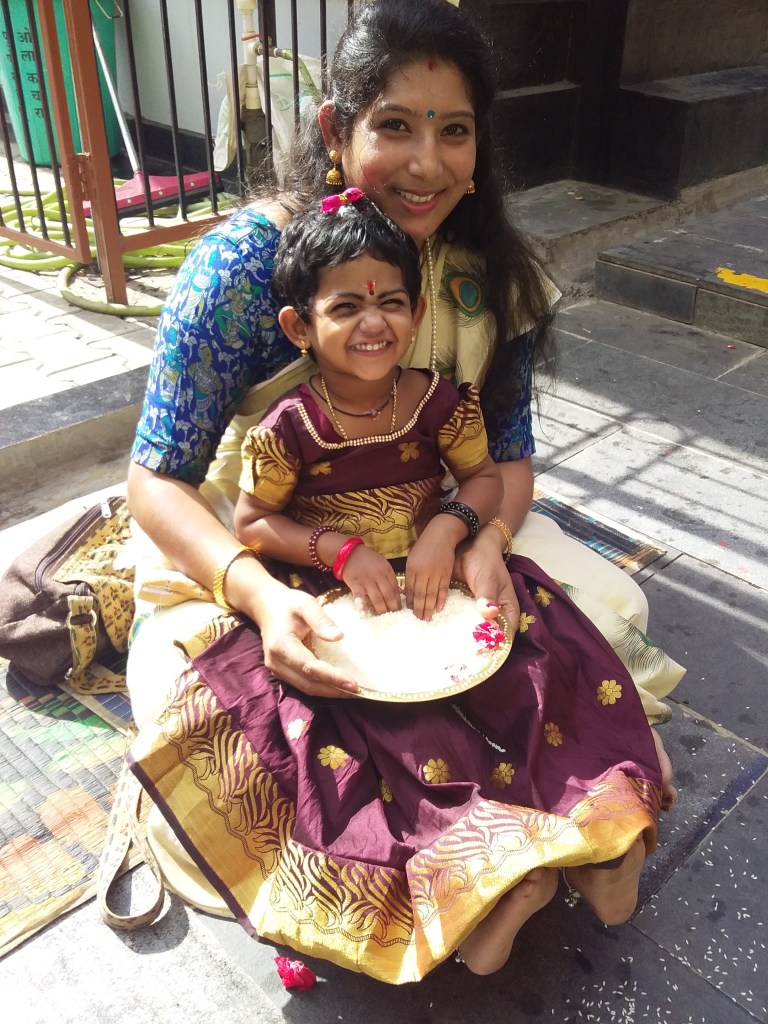
    Vidyarambham is celebrated at the end of Navratri on Vijayadashmi day. It is the auspicious ceremony to introduce kids to learn alphabets, music, dance, start a business, before going to school etc.

    The priest who conducts the vidyarambham writes, “Hari Sri Ganapataye Namah” on the child’s tongue with a golden ring. She is also made to write on rice.

    A picture of Rithika writing in rice during her Vidyarambham. Image Credit: Pradeep Mohandas
    Rithika writing in rice during her Vidyarambham. Image Credit: Pradeep Mohandas

    As we planned to send Rithika to school next month, we conducted her vidyarambham on August 25, 2019 at the Ayyappa Temple in Dhanori.

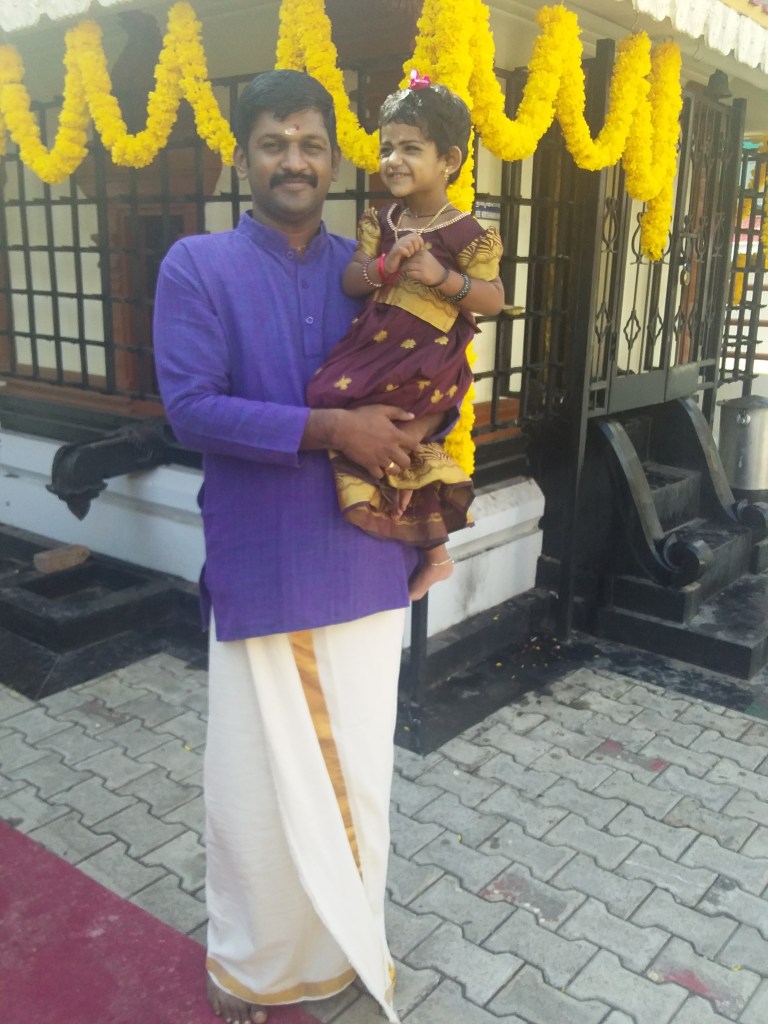
    Picture of Rithika with her father. Image Credit: Dhanya Vallat
    Rithika with her father. Image Credit: Dhanya Vallat

    Best wishes to Rithika as she begins her life long journey of learning from her father.

  • Shri Krishna Janmashtami

    Shri Krishna Jayanthi is celebrated as the day when Krishna was born. This falls on the day of Rohini Nakshatram in the month of Chingam, as per the Malayalam calendar. This fell on August 23, 2019.

    We celebrate this day by decorating the pooja room, undertake fasts, offer Prasad like Appam and Palpayasam , chant the Vishnu Sahasranamam and play devotional songs. Shri Krishna Jayanthi is also known as Ashtami-Rohini, Janmashtami or Gokulashtami.

    Photo of Our pooja place decorated for Shri Krishna Jayanthi. Photo Credit: Pradeep Mohandas
    Our pooja place decorated for Shri Krishna Jayanthi. Credit: Pradeep Mohandas

    It was a working day for Pradeep ettan. After he returned from office, we went together to visit the Ayyappan temple at Dhanori. The statue of Krishna was beautifully decorated with sandalwood.

    Photo of The Sanctum Sanctorum at the Ayyappa Temple, Dhanori, Pune. Photo Credit: Dhanya Vallat
    The Sanctum Sanctorum at the Ayyappa Temple, Dhanori, Pune. Credit: Dhanya Vallat
    Photo of the Sanctum Sanctorum of the ISKCON Temple, Camp, Pune. Photo Credit: Dhanya Vallat
    Sanctum Sanctorum of the ISKCON Temple, Camp, Pune. Credit: Dhanya Vallat

    From there we went to the ISKCON temple in Camp, Pune. The temple had created a carnival like atmosphere and depicted the life of Krishna in life size displays. The statue and sanctum sanctorum was beautifully decorated with colourful flowers.