When people used the word blog posts to refer to their Substack posts, I found it difficult to understand why. I thought of each post on Substack as an edition or as an issue. When people pushed back to ask me for the difference between a Substack post and a blog post, I felt that it was fundamentally wrong but could not articulate the reasons for the same. I was reading Venkatesh Rao’s blog, Ribbonfarm, where he has articulated the reasons much better than I have.
I don’t agree with all of his points but these are good points to begin thinking about this.
Blogs are ontic media; newsletters are epistemic media
Blogs encourage you to invent concepts and coin terms; newsletters encourage you to use existing concepts and terms to lay out persuasive arguments
Blogs are portals; newsletters are flags. Blogs encourage you to build seductive worlds to draw people into. Newsletters mark out territory in existing shared worlds.
Blogs encourage true essaysin the original sense of the term — explorations; newsletters encourage explainers, sermons, speeches
Blogs are promiscuously and publicly social; newsletters are clannish and tribal
Blogs are stocks; newsletters are flows
Blogs invite internal and external hyperlinking; newsletters fight both
Blogs are relational; newsletters are transactional
Ranveer Allahbadia did a recent interview with Acharya Prashant in Hindi, titled Forgotten Hinduism. Ranveer tries to talk to Acharya about hot takes and it takes time for him to reach the point about the question of whether the Hinduism we practice today Vedic?
Acharya Prashant says that the Hinduism we practise today is not Vedantic. He says that the Hinduism we practise today involves praying to Puranic Gods following Tantric rituals and methods.
He defines the periods from an average of 2000 B.C.E. He refers to the period from second to eight century CE is the Puranic period.
He says that we no longer pray to Vedic gods (like Indra, Varun etc.). He claims that worship in the Vedic era was mostly the worship of the natural phenomena. He claim that Vedic worship did not have the concept of idol worship and does not involve temple worship.
He suggests that Vedic practice begins with reading a few suggested Upanishads and books by the Adi Shankara.
Atma-bodha by Adi Shankara
Tatva-bodha by Adi Shankara
Niralamba Upanishad
Sarvasara Upanishad
Ishavasya/Isha Upanishad
Kena Upanishad
Katha Upanishad
Ashtavakra Upanishad
After the initial reading on Indian philosophy, this is what I plan to start reading this year. I may not read it all in two months like the Acharya suggests, but I will read through these after I begin with the Mandukya Upanishad.
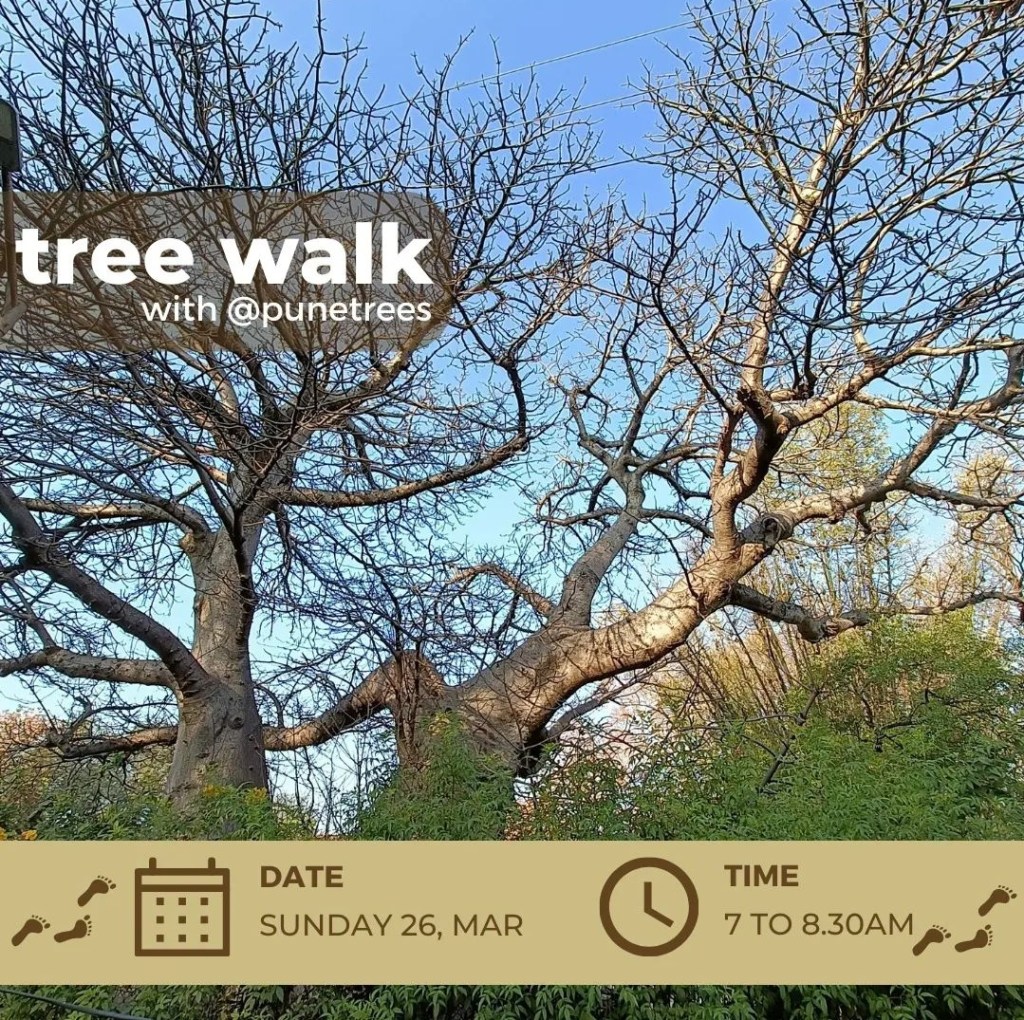
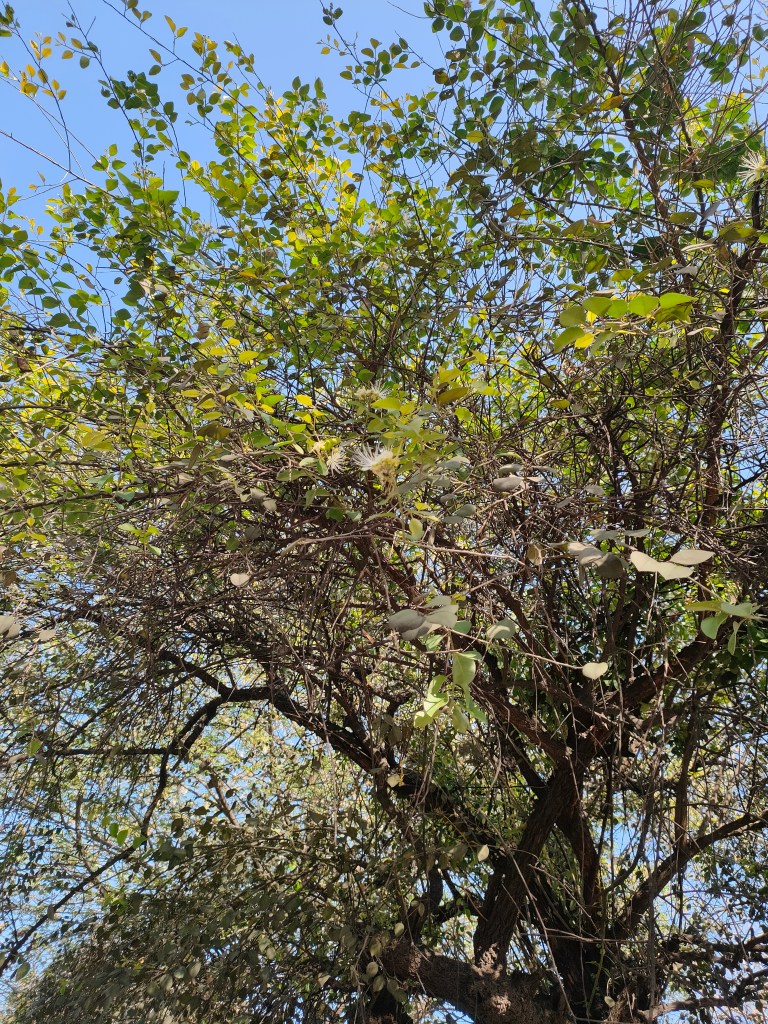
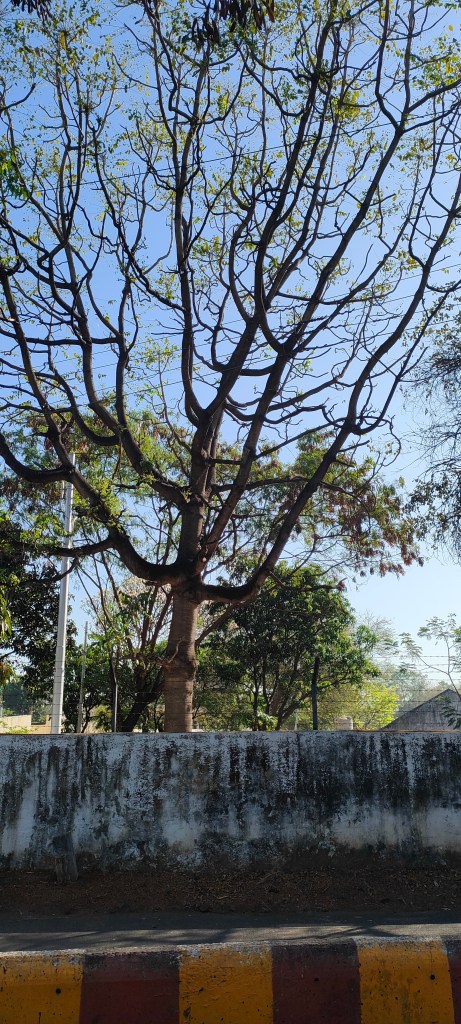
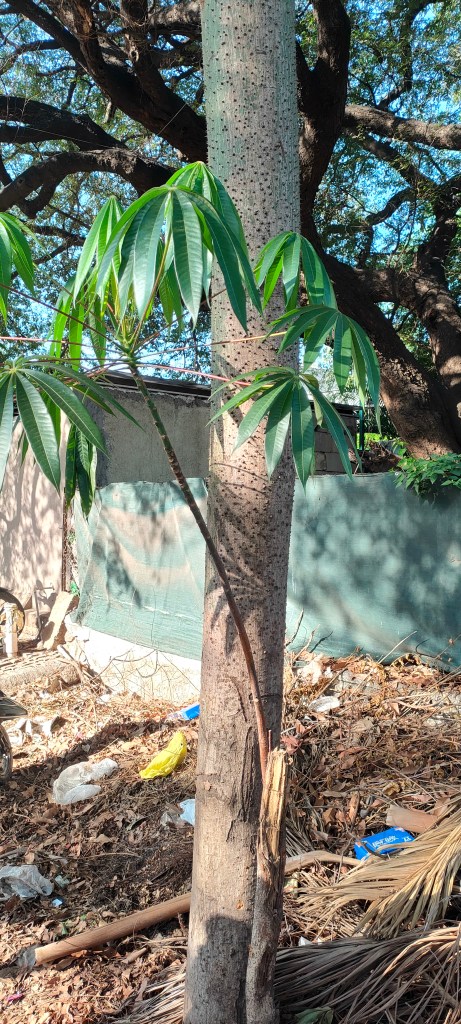
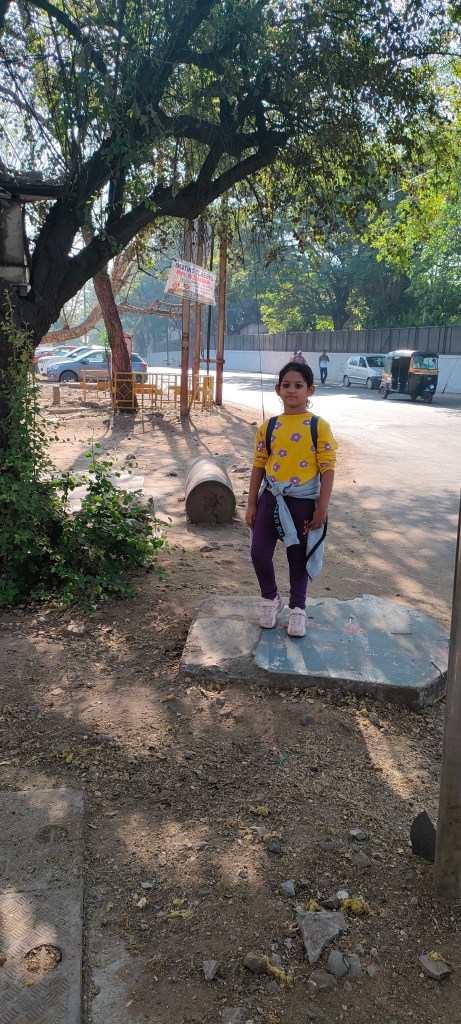
My daughter and I went for a Tree Walk in Camp, Pune on 26 March 2023. This follows the star party that we went together for.
We travelled to Camp by car and parked opposite Bishop’s school in Camp. We met with the group of about 10 people who had also come there. After a brief round of introductions, we started the walk.
The main thrust of the walk was not to make us overnight experts on all things trees. It was to get us to look at the trees in our surroundings with more curiosity. Learn how they transform through the seasons. How to identify them using the Internet and thereafter, by yourself. Observe how they flower and grow.
I tried to get my daughter to climb one of the trees but she was afraid to go more than a couple of feet off the ground. She collected a lot of fallen flowers, fruits, berries, etc. Being the youngest in the group, she got the attention of many others in the group, who helped her collect these things.
I did not follow all the tree related guidance too closely.
I delivered a lot of writing work this week. Left me in a high. But, this did not overflow to other writing. No blog posts. No newsletter. No other writing.
I am probably going to focus on one and not on both. I stopped the badminton middle of this week. I am going to focus on cycling.
I cycled for a day for about 11.3 km.
YouTube
Twitter
All of you #space#isro enthusiasts who wanted to know why the C25 Cryo stage of LVM3 now sports a white colour, as opposed to the usual black/grey… the reasons are environmental-friendly manufacturing, reducing Solar absorptivity and using a light weight material.. read on.. https://t.co/CpSAMqhlq2
How did an ordinary estuary fisherman become Kerala's dreaded 'Ripper Jayanandan'? Is he really the dangerous killer the police have made him out to be, or is he truly innocent as he claims?
 Parallel Spirals